


Bathroom Door Ideas: 17 Styles That Solve Your Space (and Privacy) Problems
You're renovating your bathroom and suddenly realize the door swings directly into the toilet. Or maybe it bangs against the vanity every single time someone opens it.
If this sounds familiar, you know it isn’t just annoying—it's a design flaw that makes a small bathroom feel even more cramped. And if you're dealing with a standard 32-inch hinged door, you're losing roughly 11 square feet of usable space to that swing radius.
The good news?
There are dozens of door solutions specifically designed for bathrooms that save space, enhance privacy, and actually look incredible. From sliding options that disappear into walls to glass designs that flood dark bathrooms with light, the right door can completely transform how your bathroom functions.
Let's walk through 17 bathroom door ideas that address real problems—from tight quarters to privacy concerns to moisture issues—so you can find the perfect fit for your space.
The Best Space-Saving Bathroom Door Solutions
1. Pocket Doors That Vanish Into Walls
Pocket doors slide completely into a wall cavity when opened, making them invisible and freeing up maximum floor space. They're particularly brilliant for powder rooms where every inch counts.

One homeowner on the Garage Journal forum shared 45 years of experience with a pocket door on a master bathroom: "It seals well and feels quite private when you're in the bathroom."
The tight seal around three sides also provides better sound dampening—reducing noise transmission by 30-50% compared to other sliding options.
The catch?
Installation requires modifying your wall to create that hidden cavity. If you're already doing a renovation, it's manageable. But retrofitting an existing doorway gets pricier. Pocket doors typically cost $60-$1,000 for the door itself, plus $100-$350 for hardware.
Best for: Small bathrooms, new construction, situations where wall space for decorations matters more than installation complexity.
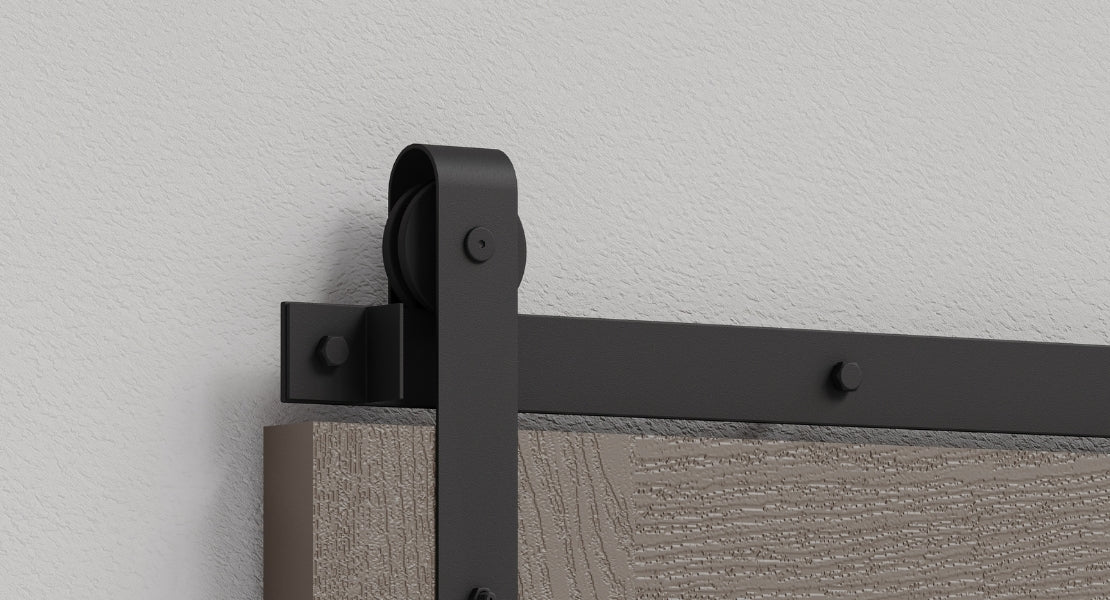
2. Sliding Barn Doors (With Important Caveats)
Sliding barn doors save the same floor space as pocket doors but mount on the outside of your wall, making installation far simpler. They've become incredibly popular—but there's a critical consideration for bathrooms.

Let's be direct: standard barn doors have privacy gaps.
The design requires 1/2" to 3/4" of space between the door and wall, which means sound, light, and yes, odors can escape. Multiple homeowners on forums have reported this exact issue.
However—and this is important—barn doors absolutely can work in bathrooms with the right modifications. We'll cover exactly how in a dedicated section below.
Pricing runs $200-$250 for lightweight pine or vinyl options, up to $1,000+ for solid wood, plus $150-$300+ for hardware.
3. Bi-Fold Doors for Ultra-Tight Spaces
Bi-fold doors fold in the middle when opened, requiring only about 12 inches of clearance compared to the 24 inches a traditional door needs. This makes them ideal for cramped bathrooms where fixtures are closely spaced.

They're available in wood, glass, PVC, and metal finishes, so you can match virtually any style. The trade-off? They cost more than standard hinged doors, and there's a safety consideration if you have young children—fingers can get pinched in the fold mechanism.
Best for: Bathrooms where the door would otherwise hit the toilet, vanity, or shower when opening.
4. Bypass Sliding Doors
Bypass doors feature two panels that slide past each other on parallel tracks. Think of them as closet-style doors adapted for bathroom entrances. They're particularly useful when you don't have wall space for a single barn door to slide across.

The design provides decent privacy (better than barn doors, not as good as pocket doors) while still saving that crucial swing space. Lowe's notes that these work well for smaller bathrooms where every configuration matters.
5. Frameless Sliding Glass
Frameless sliding glass doors deliver a contemporary, spa-like aesthetic while maximizing light transmission. The lack of bulky frames means nothing interrupts your sightlines or breaks up tile work.
According to 2025 design trends, frameless options are gaining traction because they make compact spaces feel significantly more open. Pair them with frosted glass for privacy, and you get brightness without sacrificing discretion.
Glass Door Options
6. Frosted Glass for Privacy Plus Light
Frosted glass solves the eternal bathroom dilemma: how do you maintain privacy while letting natural light flow through?

The frosted surface diffuses light as it passes, creating soft ambient illumination without revealing silhouettes. As one homeowner confirmed on Houzz, "The frosting is thick enough that you couldn't see anyone sitting on the potty or anything."
Frosted doors come in multiple styles—hinged, sliding, French, barn—so you're not locked into one look. They also make windowless bathrooms feel less cave-like by allowing hallway light to filter in.
7. Textured and Reeded Glass
Moving beyond plain frosted, textured glass options like reeded (vertical grooves) and rain patterns is trending heavily in 2026. These finishes add visual character while still obscuring views.

Reeded glass has become particularly popular because it feels less clinical than standard frosting—warmer and more intentional. It's showing up everywhere from boutique hotels to residential renovations.
8. Clear Glass Panels with Strategic Placement
Clear glass doors create an airy, open feeling that can make small bathrooms appear more spacious. Obviously, privacy becomes a concern—but smart layout planning addresses this.
If your bathroom layout positions the toilet and shower around a corner from the door, clear glass on the entry works beautifully. You get the visual expansion and light benefits without exposing anything private.
Clear glass also works well in en-suite bathrooms where the door opens only into a private bedroom, not a hallway.
9. Smart Switchable Glass
Technology has entered the bathroom door market. Switchable privacy glass transitions from clear to frosted at the touch of a button, giving you complete control over privacy and light.
This technology uses electricity to change the glass opacity, and while it sounds futuristic, it's now available for residential applications. The cost is higher—but for shared bathrooms or luxury master suites, the convenience factor is significant.
When the bathroom is unoccupied, leave it clear to maximize light flow throughout your home. When someone's using it, flip the switch for instant frosting.
Modern and Statement Styles
10. Pivot Doors with Floor-to-Ceiling Drama
Pivot doors rotate on a vertical axis rather than swinging on side hinges. The mechanism attaches to the top and bottom of the doorframe, allowing for larger, heavier doors that make a bold architectural statement.
These doors are trending in 2026 for their sleek, modern aesthetic. They slide neatly against the wall when open, requiring less clearance than traditional hinged doors while delivering visual impact.
The hardware is typically more substantial and decorative, becoming a feature rather than something you hide.
11. Bold Colored Doors
White bathrooms have dominated for decades, but 2026 is bringing bold color. Dark green, navy blue, and matte black bathroom doors are making serious design statements.

These bold tones create stunning contrast against white tiles or marble walls. Matte black hardware—handles, hinges, frames—adds sophistication that fits modern and industrial design schemes.
12. Natural Wood with Matte Finishes
While waterproof materials dominate, natural wood doors maintain their appeal—especially with the shift away from glossy varnishes toward raw, understated elegance.
Lighter woods like oak and birch are particularly trendy, offering a clean, calming effect. The key is proper treatment: seal all six sides with moisture-resistant finishes to prevent warping in humid bathroom environments.
When done correctly, wooden doors remain beautiful for years while resisting moisture damage.
Classic and Traditional Choices
13. Solid Core Hinged Doors
Sometimes the traditional solution really is the best one. Solid core hinged doors provide superior sound blocking and complete privacy—crucial for shared bathrooms or powder rooms off main living areas.
The solid construction (versus hollow core) significantly reduces noise transmission. This makes solid core doors the optimum choice for bathrooms that guests may use or that multiple household members share.
Installation is straightforward, hardware options are endless, and everyone intuitively knows how to operate them. If you have the swing space, don't overlook this reliable option.
14. French Doors for Elegance
French doors feature glass panels in a traditional frame, offering timeless sophistication. Narrow French door styles work even in tighter spaces while maintaining that elegant aesthetic.
Pair them with frosted or reeded glass for privacy, and you get both natural light transmission and classic style. The glass panels create a bright, welcoming atmosphere—particularly valuable in bathrooms without windows.
Budget-Friendly Alternatives
15. Curtains and Drapes
For extremely tight budgets or temporary solutions, curtains offer surprising functionality. You can find options under £50 that add color, texture, and personality while providing adequate privacy.
Velvet drapes create a luxurious feel. Beaded curtains deliver bohemian charm. Both can be tied back when not in use, maximizing that precious space. House Digest highlights that curtained doors are making a comeback as elegant, space-saving solutions.
The obvious downside? Zero sound blocking. But for en-suite bathrooms or situations where noise isn't a concern, they're remarkably practical.
16. Mirrored Doors
Mirrored doors serve double duty—functioning as your bathroom door while providing a full-length mirror. In small bathrooms, the reflection creates an illusion of expanded space, making the room feel notably larger.
You can add mirrors to sliding doors, bi-fold doors, or even barn doors. The practical benefit of checking your outfit before leaving adds genuine daily value beyond the aesthetic appeal.
Unique and Unexpected Options
17. Saloon-Style Swinging Doors
Saloon doors (also called cafe doors) swing in both directions and traditionally sit at half-height, though full-height versions are available for enhanced privacy.
These doors close automatically, so you can move in and out effortlessly without pushing them shut. They add quirky vintage charm while saving space—the swing mechanism requires less clearance than standard doors.
They work particularly well for water closets within larger bathrooms, creating separation without completely closing off the space.
Can You Use a Barn Door for a Bathroom?
This deserves its own section because the answer is more nuanced than a simple yes or no.

The honest truth: Standard barn doors have genuine privacy limitations. The gaps required for operation allow sound, light, and odors to escape. Multiple homeowners have reported uncomfortable experiences, particularly in hotels.
However, sliding barn doors absolutely can work in bathrooms—with proper modifications.
Solving the Privacy Problem
The Barn Door Hardware Store offers specific solutions that address every privacy concern:
- For gaps between door and wall: Install rubber seal strips sized to your specific gap (typically 1/2" to 3/4"). These create tighter seals than brush strips and help contain humidity and odors.
- For bottom gaps: Use floor guides that include rubber gaskets. These serve dual purposes—keeping your door aligned while sealing the floor gap. Premium versions include rubber "shoes" that block drafts.
- For visual privacy: Size your door 2-4 inches wider than the doorway opening on the latch side. This overlap eliminates angled sightlines into the bathroom.
- For locking: Install teardrop or hook locks for basic privacy (surface-mount, no edge drilling required), or bolt locks for more security. Some jurisdictions require bathroom locks to be unlockable from outside for emergencies, so check local codes.
- Most of these fixes cost under $50 each and can be DIY-installed after the door is up. This means you can enjoy all the glorious benefits, style, and design that barn doors have to offer, without any of the drawbacks.
Addressing Moisture Concerns
Bathrooms are high-humidity environments, and solid wood doors are susceptible to moisture absorption and warping.
Material solutions:
- Choose engineered wood or MDF instead of solid wood—they resist the expansion and contraction cycles that damage unsealed wood
- If using solid wood, seal all six sides with moisture-resistant varnish before installation
- Consider metal-framed doors with frosted glass inserts for humid climates
- WPC (Wood Plastic Composite) doors resist swelling, warping, and mold
Ventilation is critical: Proper exhaust fans remain your primary defense, actively removing moisture from the air and protecting both the door material and metal hardware from corrosion.
Smart positioning: If possible, design your bathroom so the shower and tub sit on the wall opposite the door, minimizing direct steam exposure.
When Barn Doors Actually Work
Barn doors are genuinely appropriate for:
- En-suite master bathrooms where privacy from the bedroom isn't critical
- Situations with proper sealing hardware and modern installation techniques
- Rooms with excellent ventilation and moisture-resistant materials
- Homeowners who prioritize aesthetics and space-saving over maximum sound blocking
With the right approach, barn doors combine functionality with striking visual appeal. Just skip the shortcuts, invest in quality hardware, and implement the sealing solutions that address the inherent design gaps.
Wrapping Up
Choosing the right bathroom door comes down to three factors: available space, privacy requirements, and your home's overall style.
For maximum space savings in tiny bathrooms, pocket doors or bi-fold options deliver the most usable square footage.
For better sound blocking and complete privacy, solid-core hinged doors or pocket doors win. For easier installation and bold design statements, barn doors (properly sealed) or sliding options work beautifully.
The bathroom door isn't just a functional necessity—it's an opportunity to solve real problems while adding personality to one of the most-used rooms in your home.
And if you're ready to explore sliding barn door hardware that addresses every privacy and moisture concern we've discussed, The Barn Door Hardware Store offers quality systems designed specifically for bathroom applications, complete with the sealing solutions that make these doors work beautifully in any space.
