


Choosing Modern Interior Doors: A 2026 Guide for Homeowners
You’ve worked on paint, furniture, and decor, turning your property into an actual home. Now, you're finally updating those builder-grade doors throughout your home.
But there are a lot of doors and naturally a lot of cost. One homeowner even found themselves paying $10,000 to replace 15 interior doors. It’s a lot, and if you get it wrong, that doesn’t just mean wasted money.
It means living with squeaky hinges, doors that swing open on their own, or replacing everything again in five years when your "budget-friendly" options fail.
Here's what you need to know about modern interior doors in 2026—and how to avoid expensive mistakes.
What "Modern" Actually Means in 2026
Modern interior doors don't mean boring white slabs that all look identical.
The current definition of modern emphasizes clean lines, functionality, and minimalist aesthetics—but that leaves plenty of room for personality.
Think of modern as "intentionally simple" rather than "stripped of character."
The styles dominating 2026:
Shaker doors remain the undisputed champion.

Their flat panels with clean frames work everywhere from traditional homes to ultra-contemporary spaces.
Design experts note they're choosing painted Shaker finishes in soft neutrals like matte white, beige, and light gray—a shift from the stark white that dominated the 2010s.
Flush or flat panel doors deliver ultra-minimalism.

These smooth-surfaced doors create seamless, uninterrupted looks perfect for contemporary spaces. They're growing in popularity for open-concept homes where doors need to blend rather than stand out.
Frameless or "invisible" doors are the new luxury detail.
Designed without visible frames, hinges, or handles, these doors create an almost seamless transition between walls and doorways. They're perfect for minimalist homes where the architecture itself is the statement.
Glass and steel combinations bring industrial elegance.

Modern doesn't mean abandoning light and openness. Steel-framed glass doors let natural light flow while maintaining structure—ideal for home offices or dividing open spaces without creating caves.
What's genuinely trending right now?
Natural wood finishes are making a comeback. Light oak, walnut, and visible grain patterns add warmth to minimalist spaces. Matte finishes dominate over glossy. And vertical grain patterns running floor-to-ceiling create visual height without clutter.
The biggest shift?
Solid core doors for soundproofing have moved from luxury to standard. Remote work made everyone realize how much noise their hollow doors let through.
The Biggest Mistakes People Make (And How Much They Cost)
Let's talk about what actually goes wrong when people buy modern interior doors, and absolutely what you need to be avoiding.
Mistake #1: Going cheap on materials where it matters
The $150 hollow core door seems like a smart budget choice. It's not. Hollow core doors have a honeycomb interior with a wood veneer outside.
They're lightweight and affordable, but they offer zero soundproofing, dent if you bump them with furniture, and feel cheap every time you close them.
One homeowner described spending months on a DIY door replacement project, only to have his wife hire a contractor to finish because it took so long.
The lesson?
Time is money, and cheap materials often mean doing the project twice.
Here's the smart approach: use solid core for bedrooms, bathrooms, offices, and main living areas. Save the hollow core for closets and low-traffic spaces where soundproofing doesn't matter.
Mistake #2: Measuring incorrectly (or not at all)
Wrong measurements are the number one DIY door failure. You order custom doors based on rough estimates, they arrive, and nothing fits. Now you're stuck with £800 worth of unusable doors and have to reorder.
Standard door sizes exist for a reason: 80 inches tall, widths of 24, 28, 30, 32, or 36 inches. If your openings match these, life gets easier and cheaper.
If they don't, you need precise measurements—width, height, and thickness—taken at multiple points because old houses settle unevenly.
Mistake #3: Install before checking if walls and floors are level.
This causes doors that swing open on their own, like they're haunted. The problem? The door is out of plumb, and gravity pulls it open or closed, depending on which way it's leaning.
Professional installers check walls both vertically and horizontally before installing. They check the opposite wall too, because walls that look parallel often aren't. They ensure the sill is level—it's the foundation for your door.
Skip these steps, and you get uneven reveals that cause warping, doors that stick, and expensive adjustments later.
Mistake #4: Treating hardware as an afterthought
You spend $600 on a beautiful door, then grab whatever handles are cheapest at the hardware store.
The result?
A gorgeous door that looks wrong because the brushed chrome handle clashes with your matte black light fixtures.

Hardware trends for 2026: matte black leads, followed by brass and brushed nickel. The finish should match other metals in the room—light fixtures, cabinet hardware, faucets. Consistency creates flow. Mixing metals within the same sight line looks unfinished.
Mistake #5: Ignoring what each door actually needs to do
Not all doors serve the same purpose. Your bedroom needs soundproofing so your partner's late-night TV doesn't wake you. Your bathroom needs privacy and moisture resistance. Your home office needs to block sound during video calls. Your closet? It just need to hide your clothes.
Match the door to the job. Solid core for spaces needing sound control. Moisture-resistant finishes for bathrooms. Glass panels for light flow. Budget hollow core only where function doesn't matter.
Solid Core vs Hollow Core: What You're Actually Buying
-
- Hollow core doors: Honeycomb interior with wood veneer outside. Lightweight, affordable ($150-300). Works for closets and pantries. Zero soundproofing. Dents easily. Feels cheap.
- Solid core doors: Engineered wood core with natural veneer. Better weight, sound barrier, durability ($200-500). Remote work made this standard for bedrooms, offices, bathrooms. Close one, and conversations become indistinct murmurs.
- Solid wood doors: Natural hardwoods throughout. Beautiful, substantial, repairable ($400-1,200+). Humidity sensitive. Higher maintenance.
Smart approach: solid core where you spend time. Hollow core for closets. Solid wood for statement doors if the budget allows.
2026 Trends Worth the Investment
Some trends last for decades. Others look dated fast. Here's what's worth buying.
- Matte black has staying power. Black doors, hardware, and frames create dramatic contrast and work with any design style. Unlike trendy colors, black isn't going anywhere.
- Natural wood finishes add warmth. Lighter woods like oak or maple create calm spaces without clutter. Visible grain adds texture while working with any accent color.
- Shaker panels stay timeless. These clean recessed panels adapt to any aesthetic and work with painted or natural.
- Glass and steel enable light flow. These combinations let natural light travel between rooms. Frosted glass provides privacy without darkness.
- Soundproofing matters more than ever. Solid core construction is becoming the baseline for home offices, bedrooms, and media rooms.
Skip these: ultra-bright colors that date quickly, overly complex designs, and cheap "designer look" knockoffs that age poorly.
Pre-Hung vs Slab: The Decision That Determines Your Sanity
This choice affects installation difficulty, final cost, and whether your doors actually work correctly.
Pre-hung doors include the frame (jamb), hinges, and sometimes hardware. Everything's assembled and fits together. You remove the old door and frame, install the new unit, shim it level, and you're done.
The advantages: easier installation, everything sized to fit together, better for old houses with non-standard openings. The door swings freely because the manufacturer already fitted it correctly.
The disadvantage: higher upfront cost. You're paying for the frame, pre-installation labor, and precision fitting.
Slab-only doors are just the door leaf. You're reusing your existing frame, hinges, and hardware. This saves money if everything's in good shape and properly sized.
The reality?
One experienced DIYer spent so long installing slab doors that his wife hired a contractor to finish the job. His advice: "Don't even think about slab only." The savings vanish when you factor in the time spent planing edges, mortising hinges, and adjusting fit.
Slabs work for professionals, replacing standard doors in newer homes with perfect frames. For everyone else—especially in older homes with settled walls and non-standard openings—pre-hung doors eliminate headaches.
The math: a slab saves $100-200 per door but might take three times longer to install. Pre-hung costs more upfront, but installs faster and works the first time.
For most homeowners, pre-hung is the wise choice.
Installation: When DIY Makes Sense (And When It Doesn't)
Installing interior doors looks straightforward. Reality?
- Projects take 2-3 times longer than contractors need. One homeowner's door project stretched to weeks before his wife hired professionals to finish.
- Common DIY failures: doors swinging open on their own, squeaky hinges, gaps between the door and the frame, and visible misalignment.
- Professional installation costs $350-800 per door. Usually includes removal, level installation, shimming, hardware, and adjustments.
- When to hire: old houses with non-standard openings, multiple doors, expensive custom doors, and zero carpentry experience.
The hybrid approach: buy quality pre-hung doors, hire for installation. One homeowner did half the job himself before realizing the pros were worth roughly $350 per door.
Making Smart Choices That Last
The perfect modern interior door doesn't exist—only the right door for your specific situation and budget.

Start by honestly assessing what each door needs to do. Bedrooms, offices, and bathrooms deserve a solid core for soundproofing. Main entries might warrant solid wood for impact. Closets can use budget hollow core without compromise.
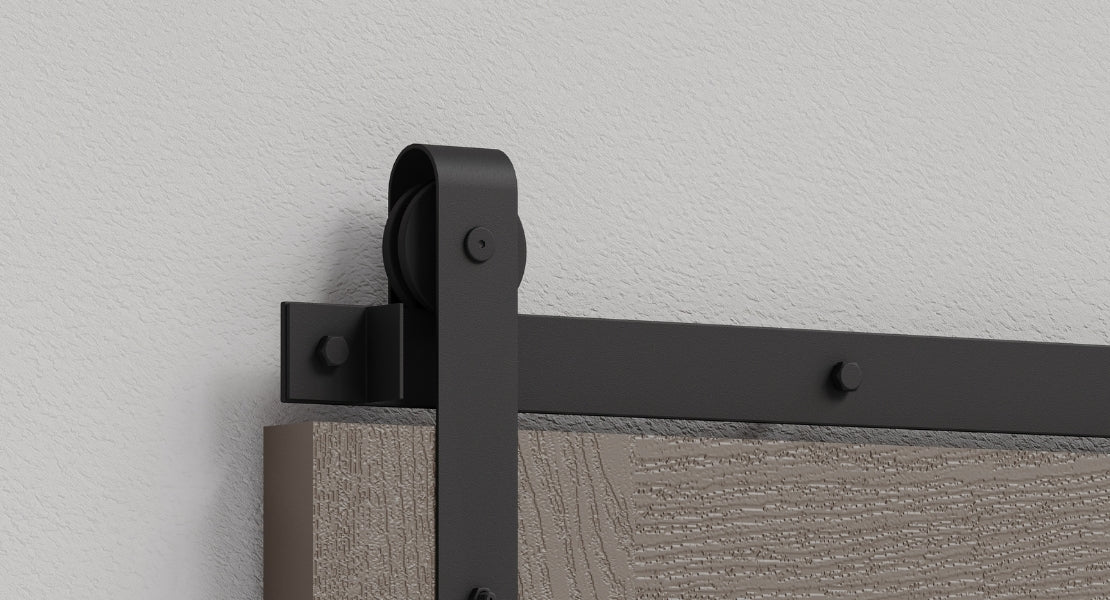
One final consideration: if you're incorporating sliding doors into your modern design, hardware quality determines everything. Cheap sliding mechanisms stick, make noise, and require constant adjustment.
Professional-grade components glide smoothly, stay aligned, and look as good as they function.
Ready to modernize your interior doors the smart way?
The Barn Door Hardware Store specializes in quality sliding door systems that eliminate the frustration of cheap hardware.
From precision-engineered tracks to smooth-rolling components, they provide the professional-grade materials that transform sliding doors from a design idea into a daily feature you love.
