


Closet Door Ideas: How to Choose the Right Style Everyone Loves
You're staring at your closet doors—again. Maybe they're the same boring bifolds that came with the house, constantly jumping off their tracks. Perhaps your husband’s complaining that he hates the design you’ve got.
Or they're sliding mirrors that only let you access half your wardrobe at once, making getting dressed feel like a daily puzzle.
Whatever the case, you’re reading this because you’ve decided it’s time to change things up, so here are some of the best ideas you need to know.
How to Choose a Closet Door: What Actually Matters

Before you fall in love with a door style, understand five critical factors that determine whether it'll work in your space.
Space constraints are non-negotiable.
Traditional swinging doors need clear floor space—usually at least 36 inches. Barn doors require unobstructed wall space equal to the door's width, with no light switches, outlets, or furniture in the way. Sliding doors save the most space but come with trade-offs in access.
Access needs vary by closet type.
For a walk-in closet where you step inside, partial access isn't a big deal. But for a standard bedroom closet where you're grabbing clothes from outside? Only seeing half your wardrobe at once gets old fast.
Budget reality spans a massive range.
Curtain alternatives start under $50. Basic bifold doors with installation run $200-400. Custom barn doors or mirrored sliding systems can easily hit $2,000.
Maintenance requirements differ dramatically.
Some doors need frequent track adjustments. The cheapest option upfront often costs more in frustration and repairs.
Look at your space first, cut out what won’t work, then you’ll know what styles you can work with and what options you have available.
Bifold Doors: The Number #1 Choice (mostly)
Bifold doors came standard in millions of homes. They fold in half as they open, providing decent access without eating floor space. They're affordable and relatively easy to install.

They're also the source of endless complaints.
The number one problem? Doors that constantly jump off their tracks.
Now, this is very much a quality issue.
Quality bifold doors with solid construction last for decades.
Cheap pressed wood doors with flimsy hardware fail within months.
In this light, there’s usually one of three culprits: screws backing out of the track, holes where rollers attach getting worn out in cheap wood, or doors not opening level with the track. Most bifold problems trace back to poor installation or bottom-tier materials.
Therefore, track maintenance is essential. Doors need adjustment when houses shift seasonally. Plastic catches wear out. If you're not comfortable doing minor hardware adjustments, bifolds might frustrate you.
When bifolds work well: Small closets needing reasonable access without floor space for swinging doors. When properly installed with quality materials. For those willing to do occasional maintenance.
When to avoid them: If you want zero-maintenance doors. If you need to access the full closet width at once.
Sliding/Bypass Doors: Space-Savers With a Trade-Off
Sliding doors glide in front of each other on tracks. They're popular for saving space since they don't swing into your room or require adjacent wall space.

But here's what stores don't emphasize: you can only access half your closet at any given time.
As blogger home and lifestyle Emily Henderson describes it: "I can't tell you how bothersome it can be when I'm sliding doors side to side to side to grab a pair of leggings….sliiiddee….get a shirt…sliiiddeee….pick a sweater."
That's the daily reality of bypass doors.
Mirrored sliding doors are most common. Mirrors make rooms appear larger and brighter—genuinely helpful in smaller bedrooms. But they show every fingerprint and smudge. And some find floor-to-ceiling mirrors unsettling at 3 AM.
Track maintenance is another consideration. Like bifolds, sliding doors need periodic adjustment. One owner noted needing "frequent adjustment of the top & bottom runners, especially before and after travel."
The space-saving benefit is real. If you're working with a small room where even bifold doors feel intrusive, sliding doors don't extend beyond the closet opening at all.
Choose sliding doors when: Space is extremely limited. You're okay with the access trade-off. You want mirrors to enlarge the room. The closet is a walk-in where partial access works.
Barn Doors: Stunning Design, But Know the Downsides
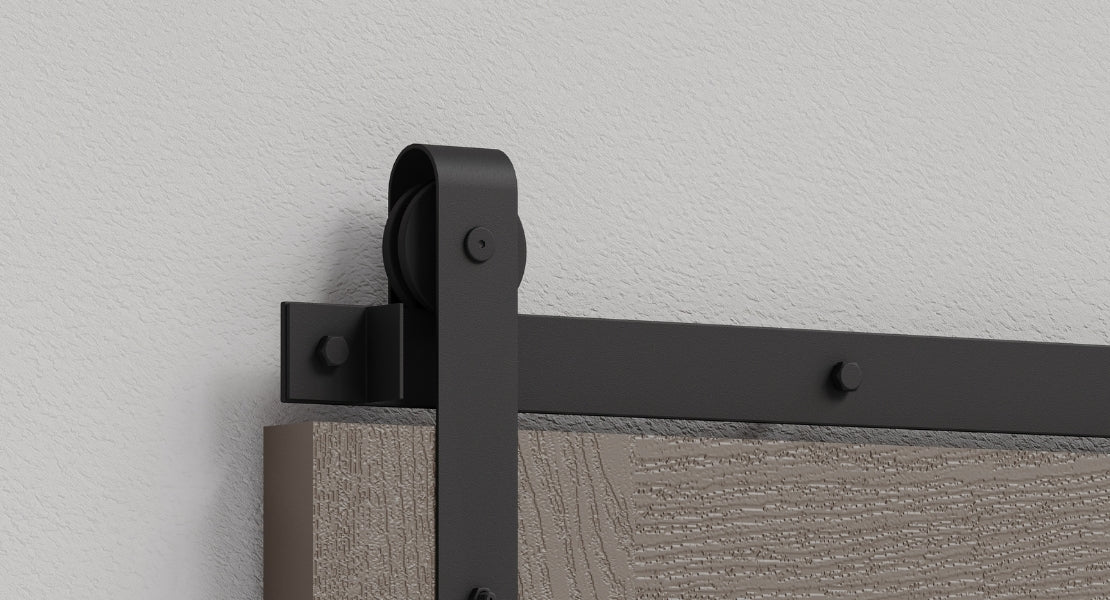
Barn doors have exploded in popularity. Their rustic charm, beautiful materials, and easy slide along an exposed track above the doorway offer modern versatility and genuine space savings.

But they come with real limitations that many discover after installation.
You need clear wall space equal to the door's width. That entire section can't have switches, outlets, vents, or artwork.
Unlevel floors create problems. If your door isn't positioned right, it won't stay closed. Older homes with settled floors face this constantly. The solution is adding a sliding latch, but that's an extra step many don't anticipate.
Hardware quality makes or breaks the experience. Cheap barn door hardware creates loud, thunderous rumbling when opening. It may not slide smoothly. The door can scrape the wall. Professional-grade hardware with proper installation eliminates these issues.
For 2026, barn door trends are evolving.
Matte black hardware remains dominant for clean lines and bold contrast. Hidden track systems that make doors appear to float are gaining popularity. Textured and reclaimed wood adds warmth. Frosted or reeded glass inserts work beautifully for laundry closets or pantries.
Barn doors are perfect when you have the required wall space. You're choosing them for a closet. You're willing to invest in quality hardware and professional installation. You want a design statement.
Avoid barn doors if: You lack wall space. You need acoustic privacy. You have very unlevel floors. You're on the cheapest possible budget.
If you're going the barn door route, don't compromise on hardware. Quality sliding mechanisms ensure smooth, quiet operation for years. Professional installation prevents gap issues and alignment problems that plague DIY projects.
This is where expert suppliers make the difference—providing hardware knowledge and installation guidance that transforms barn doors from a Pinterest idea into a functional, beautiful addition.
French Doors and Traditional Swinging Options
French doors bring elegance to closet openings, especially larger walk-in closets. They feature glass panes that add light and visual interest. They provide complete, unobstructed access.
The requirement is simple: you need clear floor space for doors to swing fully open.
Typically, at least 36 inches of unobstructed space. In small bedrooms where every square foot matters, that's space you might not have.
French doors work beautifully in master bedroom walk-in closets. They're less practical for standard reach-in closets in compact rooms.
Budget-Friendly Alternatives That Work
Not ready for full door replacement? Several affordable options can transform your existing setup.
- Curtains are the ultimate budget solution. For under $50, install a tension rod and fabric panels. They're effective in children's rooms or casual spaces. The downside? Zero structural privacy and an informal look.
- A fresh coat of paint costs almost nothing and completely changes how doors look. Add new hardware—brushed gold handles or matte black knobs—for $20-100, and boring doors suddenly have personality.
- Peel-and-stick wallpaper or contact paper adds pattern and color without permanence. It removes cleanly when you want a change. Works best on flat, single-panel doors.
- Going doorless is increasingly popular for the right spaces. Removing doors makes rooms feel larger and provides complete closet access. Keep it polished with coordinated storage bins and organized shelving.
What's Actually Worth It in 2026
Design trends come and go, but several current movements offer genuine long-term value.
- Matte black hardware isn't going anywhere. Its clean lines and versatility work with virtually any door style or color. Brushed nickel and brass maintain popularity for durability and timeless appeal.
- Frosted and reeded glass provides privacy with light. This works beautifully for closets, pantries, and laundry areas where you want visual interest without full transparency.
- Shaker-style panels remain timeless rather than trendy. Their simple recessed panel design adapts to any aesthetic from traditional to contemporary.
- Mirrored doors are making a sophisticated comeback. Modern versions feature thick frames in champagne, white, or matte black rather than frameless 1980s mirrors. They make small rooms feel larger while serving a practical function.
- Skip overly trendy styles that'll date your home quickly. Bold colors or ultra-specific design motifs might look amazing now, but feel dated in five years.
Making the Right Choice for Your Space
The perfect closet door doesn't exist—only the right door for your specific situation.
Start by honestly assessing your space constraints, access needs, and maintenance willingness. Don't choose a door style because it looks good in someone else's home. Choose it because it solves your specific problems without creating new ones.
If you're considering barn doors for their space-saving benefits and design appeal, the hardware you choose determines everything.
Cheap kits from big-box stores leave gaps, create noise, and require constant adjustment. Professional-grade hardware glides smoothly, stays aligned, and actually looks as good as it functions.
Ready to do it right?
The Barn Door Hardware Store specializes in quality sliding door systems that eliminate the common problems plaguing DIY installations.
From smooth-rolling tracks to precision-engineered components, they provide everything needed to transform your closet doors from a Pinterest dream into a daily reality you'll actually enjoy using.
