
By Evan Christensen · Owner, The Barn Door Hardware Store
Published January 27, 2026 · Updated April 2026
Evan has owned and operated The Barn Door Hardware Store since 2016. Gap-sealing questions are some of the most common post-installation inquiries his team receives, especially for bathrooms and bedrooms. He and the team are available 7 days a week at info@thebarndoorhardwarestore.com.
You installed a beautiful barn door — and now you're dealing with an awkward reality. There's a gap on the sides wide enough to see through. Light bleeds under the door at night. Sound travels like the wall isn't even there.
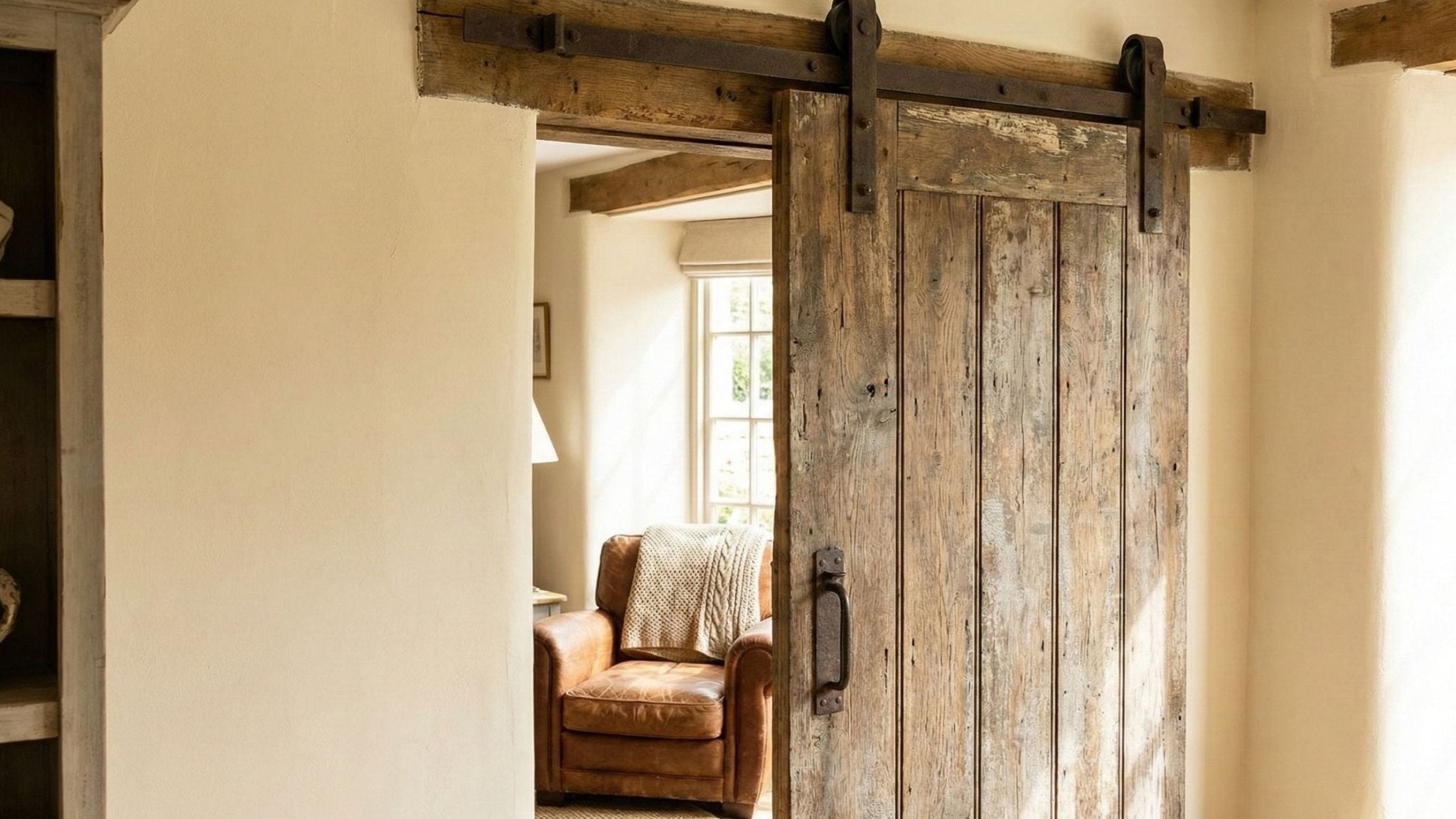
Here's what most people don't know before they install: the gaps aren't a defect. They're a structural consequence of how barn doors work. Because the door slides along a track mounted in front of the wall, it physically cannot seal against the frame the way a hinged door does. The door hangs proud of the wall surface, which means clearance on all four sides — always.
That doesn't mean you're stuck with them. Since 2016, we've helped a lot of customers close up gaps after installation. This guide covers seven solutions — from quick $10 fixes to permanent upgrades with barn door accessories — organized by which gap you're dealing with and what problem matters most to you. We'll tell you honestly what works, what doesn't, and when a barn door just isn't the right tool for the job.
Why do barn doors have gaps?
Unlike a hinged door that swings into a frame and compresses against a stop, a barn door hangs from a track and slides parallel to the wall. The hardware holds the door about 3/8" off the wall surface so it can slide freely — a gap that can't be eliminated by design. Around the sides and top, that standoff is typically 3/8" (anywhere from 1/4" to 1/2" is normal); it runs wider where trim around the opening adds to it, or where the header board is thicker than the wall and trim behind it. That clearance is what you're looking at when you see a gap around the door.

| Gap location | Typical size | Why it exists |
|---|---|---|
| Sides | 3/8" (1/4"–1/2") | The door stands off from the wall to slide; trim around the opening — and a header board thicker than the wall or trim — can widen it. |
| Top | 3/8" (1/4"–1/2") | Same as the sides — the door's standoff from the wall, widened where trim or a thicker header board adds to it. |
| Bottom | 3/8" | Clearance for the door to slide above the floor. Larger only with stainless steel hardware in exterior installs, where the ground often isn't level. |
The good news: every one of these gaps has a reliable fix.
Which solution do you actually need?
Different gaps cause different problems. Identify your main issue first, then jump to the right section.
| Your problem | Best solution | Approx. cost | DIY time |
|---|---|---|---|
| People can see in | Brush privacy sweep (both vertical edges) | $15–40 | 30 min |
| Sound travels through | Dense pile weatherstrip + bottom sweep | $20–50 | 45 min |
| Light bleeds through at night | Pile weatherstrip on all four sides | $20–35 | 45 min |
| Drafts and cold air | Dense pile weatherstrip | $15–30 | 30 min |
| Odors escaping (bathroom) | Pile weatherstrip on sides + brush bottom sweep | $30–55 | 45 min |
| Door drifts open | Privacy latch | $15–35 | 20 min |
| Want a clean permanent fix | Wood trim strip on door edge | $10–20 | 1–2 hrs |
How to fill the gap on the sides of a barn door
Side gaps are the most common complaint — and the most visible privacy concern. Here are three solutions, from easiest to most permanent.
1. Brush privacy sweeps
A brush privacy sweep is a metal channel filled with soft nylon bristles. When the door slides closed, the bristles compress gently against the wall, blocking the line of sight without scratching the wall surface or adding friction to the slide.
This is the most popular fix we recommend for bathroom and bedroom barn doors, and for good reason: the bristles flex around obstacles — light switches, outlets, uneven wall surfaces — without losing their seal. Most sweeps come in 7–8 foot lengths and trim with a hacksaw. Mount them to the door edge or directly to the wall on the latch side.
- Works on uneven surfaces and around wall obstacles
- Won't scuff or mark walls
- Available in black, silver, and brushed nickel to match standard hardware finishes
- Standard density — good for privacy, moderate for sound
Cost: $15–40 per strip
2. Pile weatherstripping (denser brush profile)
For better sound and draft blocking than a standard brush sweep, dense pile weatherstrip — sometimes called fin seal or brush pile — uses a taller, denser brush fill that compresses more fully against the wall. It's still a brush-family product — not foam or rubber compression seal — which matters: foam tape and rubber compression seals don't work on a sliding door. They're designed to compress against a stationary frame the way a hinged door closes, and on a sliding door they create constant drag along the wall, eventually prevent the door from closing fully, and wear out quickly.
Pile weatherstrip avoids that problem because, like a standard brush sweep, the bristles flex and glide rather than compress and resist. Measure your actual gap width before ordering — don't estimate. The denser the pile, the better the seal, but very dense pile can start to drag on a narrow gap, so test a short section before committing to the full perimeter. For a deeper look at choosing between pile and brush weatherstrip — and what each realistically achieves — see our barn door privacy seal guide.
- Best brush-family option for sound and draft reduction
- Available in multiple pile heights and widths — match to your actual gap size
- Flexes around obstacles the same way a standard brush sweep does
- Avoid foam tape and rubber compression seals entirely — both create drag on a sliding door and fail over time
Cost: $10–30 for a 20-foot roll (enough for the full door perimeter)
3. Wood trim strip (permanent fix)
For larger gaps — particularly on the wall side where trim and baseboards push the door well out from the wall — adding a wood strip to the door edge is the cleanest permanent solution. Cut a piece of 3/4" wood to match your door height, attach it to the door edge, fill the seam, sand, and paint to match. When the door closes, the strip overlaps the gap entirely.
This requires basic woodworking tools and a miter saw, but the result looks intentional rather than retrofitted. If you have a large gap that weatherstripping can't bridge, this is the fix. It also adds slight weight to the door — verify your hardware's rated capacity before attaching additional material to a door near the limit.
- Permanent — no maintenance or re-adhesion
- Professional finish, paintable to match any door
- Requires scribing around baseboards if they're in the path
- Adds slight weight — confirm hardware weight rating before proceeding
Cost: $10–20 in materials
How to seal the gap at the bottom of a barn door
The bottom gap is usually the biggest light leak in the room — and often the easiest to fix. Two options cover most situations.
4. Door sweeps
A door sweep attaches to the bottom edge of the door and creates a barrier against the floor. Brush sweeps handle uneven floors well — the bristles conform to surface irregularities and glide without catching. Rubber sweeps create a tighter seal but only work correctly on smooth, level flooring. On uneven floors, rubber sweeps either drag constantly or still leave gaps where the floor dips.
For barn doors, screw-on sweeps are more reliable than adhesive versions. The door moves frequently and adhesive sweeps tend to peel loose over time, especially near the floor where humidity and foot traffic take a toll. Before you install anything, measure the clearance between the bottom of your door and the floor — if a sweep will drag on carpet, you need to account for that before it's attached.
- Brush style: best for hardwood, tile, or any floor with slight variation
- Rubber style: best for smooth concrete or a perfectly level subfloor
- Screw-on preferred over adhesive for long-term durability
Cost: $10–40 depending on length and material
5. Floor guide with integrated seal
If you don't already have a barn door floor guide installed — or you're upgrading — some floor guides include a built-in rubber gasket at the bottom that seals the gap as part of their function. It keeps the door tracking straight while simultaneously sealing the bottom gap. Two problems solved with one hardware piece.
This is the option we'd point to first if you're also dealing with a door that swings or wobbles, which is a separate and very common issue once a barn door is installed on a floor with any slope.
- Best for high-traffic doors that get bumped frequently
- Eliminates the need for a separate door sweep
Cost: $20–40
How to seal the gap at the top of a barn door
The top gap is the most overlooked — but it matters more than most people expect for light and sound control, especially in bedrooms. A sealed perimeter on three sides that leaves the top open will still let light flood in from above at night.
6. Brush seal on the header
The same brush privacy sweeps used on the sides can be installed horizontally above the door — mounted to the wall or header board with the bristles facing down, contacting the top of the door as it travels. This creates a consistent seal across the full width regardless of where the door is positioned along the track.
Some barn door track systems include a valance or track cover that bridges this gap structurally as part of the hardware design. If you're still in the planning stage or upgrading your hardware, look for kits that address the top gap structurally — it's cleaner than retrofitting a brush seal after the fact. Measure the clearance between the top of the door and the wall above before ordering any header seal; some track configurations don't leave enough room for the seal to mount flush.
- Most effective fix for light bleed at the top
- Works for sound reduction in bedrooms and home offices
- Requires horizontal mounting above the track — measure clearance before ordering
Cost: $15–40 for a header brush seal
The fix most people forget: a privacy latch
Sealing the gaps is only half the bathroom barn door problem. The other half: barn doors don't stay closed on their own. A door that drifts open defeats everything else you've done.
7. Privacy latch
A privacy latch gives the door a positive stop in the closed position and — for bathrooms — a way to lock from the inside. Latches mount to the door edge and engage with a strike on the wall or door frame when the door slides fully closed. Most work with the existing gap between the door and wall; you don't need to narrow the gap to zero for a latch to function correctly.
For pantry and closet doors where locking isn't needed, a privacy latch is still a valid option — it just won't get used as often. The more important thing in low-traffic spaces is that the door doesn't drift open on its own, which is usually a sign the track needs a soft-close add-on or an anti-jump adjustment rather than a latch.
- Required for functional bathroom privacy — seals without a latch still drift open
- Locks from inside for bathrooms and powder rooms
- Most mount to the door edge — no modification to the floor or wall required
- For doors that drift open without a lock being needed, check whether a soft-close add-on is the better fix — or read our full guide on why barn doors slide open and how to stop it
Cost: $15–35 — see our barn door locks and latches
Best gap solutions by room
Different rooms have different priorities. Here's what actually matters in each space — and what a complete solution typically costs.
| Room | Priority | Recommended solution | Approx. cost |
|---|---|---|---|
| Bathroom | Privacy + odor control | Pile weatherstripping all sides + brush bottom sweep + privacy latch | $50–80 |
| Bedroom | Light + sound blocking | Brush sweeps (sides) + bottom sweep + header seal; add soft-close hardware if door slam is an issue | $60–100 |
| Closet / pantry | Mostly aesthetic | Basic brush sweep on latch side only; bottom sweep optional; privacy latch if door drifts | $15–30 |
| Home office | Sound reduction on calls | Pile weatherstripping all four edges; solid-core door if upgrading | $40–80 |
A note on bathroom barn doors
Bathrooms are the room where gap sealing matters most — and the room where we see the most installation mistakes. Foam tape and rubber compression seals are not the right material for a bathroom door — or for any sliding barn door. Both absorb moisture or compress against the wall in a way that creates drag, and foam specifically loses compression and starts peeling within months in a steamy environment. Use dense pile weatherstrip on all four sides. Add a brush bottom sweep for odor control. Install a privacy latch so the door holds closed. That combination gets you to functional privacy. Skip any of the three and you'll notice it.

Common mistakes to avoid
- Using foam or rubber compression seals. These are designed for hinged doors that close against a stationary frame. On a sliding door they create constant drag against the wall, eventually prevent the door from closing fully, and wear out quickly. Use brush or pile weatherstrip instead — it flexes and glides rather than compressing and resisting.
- Installing on a dirty surface. Adhesive-backed seals fail within weeks on dusty or painted drywall. Wipe down with isopropyl alcohol first and let it dry completely. This is one of the most common reasons gap fillers don't last.
- Wrong sweep type for your floor. Rubber bottom sweeps on uneven floors drag or leave gaps. If you have hardwood or tile with any variation, use a brush sweep.
- Over-sealing. Your door needs to slide. If it's dragging after you install a seal, trim back the material until operation is smooth. A seal that creates friction will eventually damage your hardware.
- Measuring wrong. Brush seals come in 1/2" and 1" widths. The wrong width either won't seal or will compress too hard and drag. Measure your actual gap — don't estimate.
- Only sealing one side. Barn doors have gaps on both the latch edge and the wall-side edge. If privacy matters, seal both vertical sides.
- Skipping the bottom. The bottom gap is usually the biggest light leak. If you seal three sides and light still bleeds through, this is why.
- Skipping the latch. No amount of gap sealing makes a bathroom barn door functional if the door drifts open. A privacy latch is not optional for bathroom applications.

Can you completely seal a barn door?
Honestly — no. Not the way a hinged door seals.
Barn doors need small clearances to slide without binding. The goal of a barn door gap filler isn't an airtight seal — it's reducing gaps enough that no one can see in at normal angles, sound is noticeably dampened, light doesn't flood through, and drafts are cut down.
With good sealing on all four sides, most barn doors achieve roughly 70–80% of the privacy and sound blocking of a comparable hinged door. For bathrooms, bedrooms, and home offices, that's enough for practical daily use.
If you genuinely need full acoustic isolation — a recording studio, a soundproof office, a home theater — a barn door isn't the right choice regardless of how well it's sealed. For everything short of that, our complete guide to barn door privacy covers latching, sizing, sealing, and sound together, and our barn door soundproofing guide goes deeper on noise specifically. Pocket doors and solid-core hinged doors outperform barn doors for sound isolation by design. Barn doors win on style, space efficiency, and ease of installation — not on sealing. We'd rather tell you that upfront than have you seal every gap and still be disappointed.
Frequently asked questions
What is the best barn door gap filler for a bathroom?
For bathrooms, the full solution is: dense pile weatherstrip on both vertical sides and the top, a brush-style bottom sweep for odor control, and a privacy latch so the door holds closed. Pile weatherstrip handles humidity significantly better than foam tape — foam absorbs moisture, loses compression, and starts peeling within months in a steamy bathroom. Rubber compression seals aren't suitable either, since they create drag against the wall on a sliding door. The latch isn't optional: most bathroom privacy complaints we get are as much about the door drifting open as they are about the gaps themselves.
How do I fill the gap between a barn door and the wall on the side closest to the wall?
That gap is created by your hardware spacers — the standoff that holds the track away from the wall — plus any trim or baseboards that project from the wall surface. A brush privacy sweep or dense pile weatherstrip mounted to the door edge on that side is the standard fix. For very large gaps caused by thick trim (some base moldings project 1" or more), a wood trim strip attached to the door edge is the cleanest permanent solution: it overlaps the gap entirely when the door is closed.
Can barn door weatherstripping cause the door to drag?
Brush and pile weatherstrip create the least friction for barn door applications, which is why we recommend them. Foam tape and rubber compression seals are a different story — they're built to compress against a stationary frame and will drag on a sliding door regardless of thickness, which is why we don't recommend them at all for this application. Always test the door's slide operation after installing any seal. If it drags or slows noticeably, trim back the material or switch to a lighter pile density.
What is the minimum gap a barn door needs to operate?
Goldberg hardware is built around a 3/8" standoff from the wall and a 3/8" floor gap — that's the design spec, and each value already accounts for clearance to slide without binding. Some installs should allow more at the bottom: sheds, outdoor openings, and uneven or raised floors. Check your specific kit's installation guide before adding any gap fillers — sealing too tightly can cause the door to bind or, over time, damage the track or rollers.
Do gap fillers work for bifold barn doors?
Yes, but the approach is different. Bifold doors fold rather than slide straight across, so the seal needs to flex through the fold without pulling away or binding. Brush seals work well for bifold applications specifically because of that flexibility. The bottom gap on a bifold door is typically handled by the bifold floor guide as part of its function — a separate bottom sweep is rarely needed.
Why does my barn door keep drifting open after I seal it?
Sealing the gaps doesn't hold the door in the closed position — that's a separate job. If your door isn't staying closed, you have two options depending on what you need: a privacy latch if you want a positive stop with the ability to lock from inside (required for bathrooms), or a soft-close add-on if the door is sliding open due to floor slope or foot traffic rather than a locking need. Soft-close hardware can be retrofitted to most existing kits. This is the most common thing people miss after they've gone through the work of sealing everything else.

If you've measured your gaps and aren't sure whether a brush sweep or pile weatherstrip is the right call — or if your gap is large enough that you're wondering whether a trim strip makes more sense — email us at info@thebarndoorhardwarestore.com with your gap measurements (side, top, and bottom), your floor type, and whether you're dealing with a bathroom, bedroom, or another space. We'll tell you exactly what to order.
We're available seven days a week and typically respond same day.
