
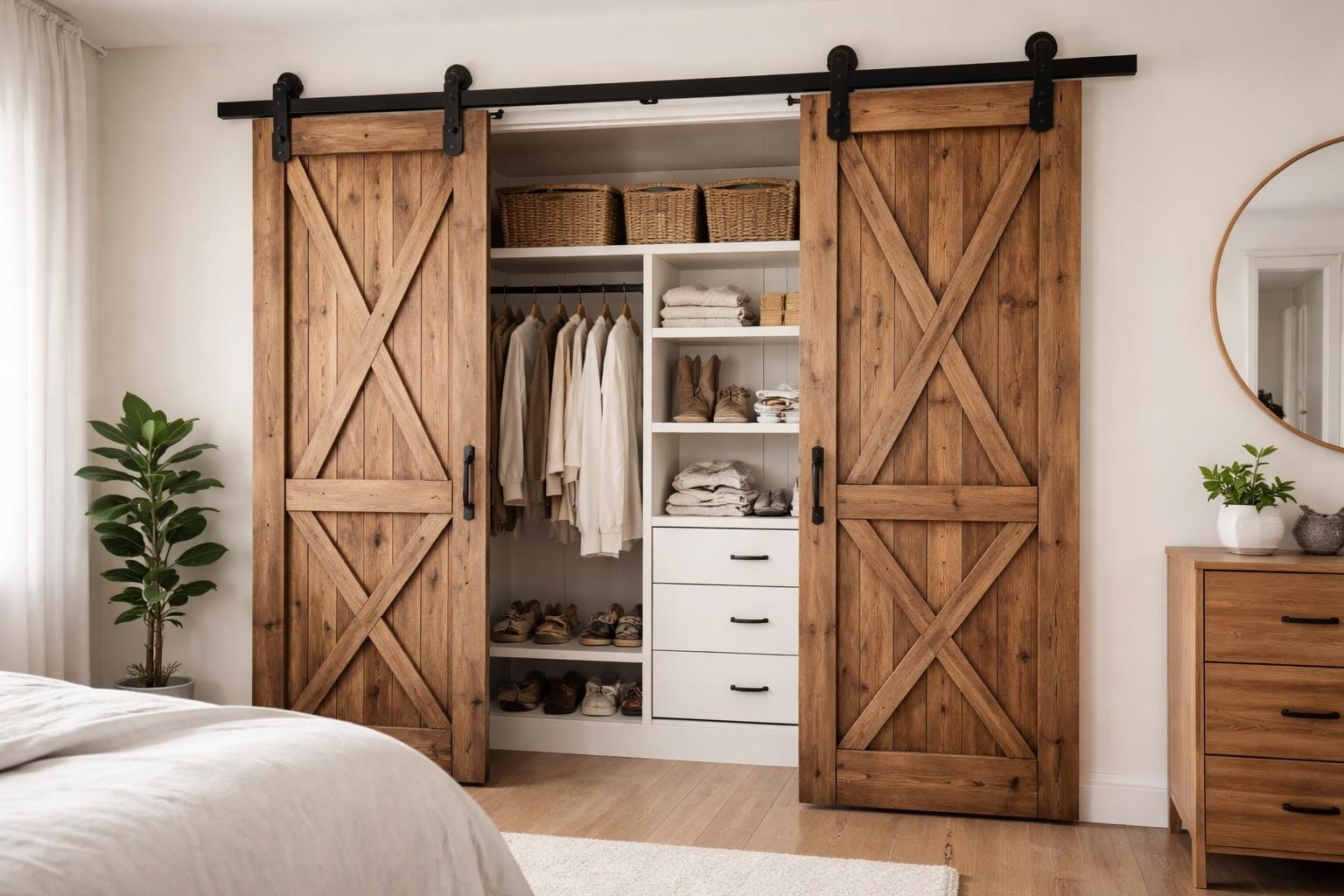
When Sarah renovated her 1920s bungalow in Austin last year, she faced a common challenge: the master bedroom closet's traditional swinging door needed about three feet of clearance, eating up valuable floor space in an already compact room. She'd been admiring barn door styles online but worried a standard sliding barn door would block half her closet opening. That's when her contractor introduced her to the folding barn door for closet installations. Within a week, she had a beautiful bifold system that gave her full closet access while adding farmhouse charm to her bedroom. Her story mirrors what thousands of homeowners discover each year: sometimes the best solution combines multiple design approaches.
Why Choose a Folding Barn Door for Closet Spaces
Have you ever felt frustrated by how much space a regular door demands? Traditional hinged doors require a clear swing radius that can make small rooms feel even more cramped. Meanwhile, standard sliding barn doors overlap the doorway, typically covering about half the opening even when "open."
A folding barn door for closet applications solves both problems elegantly.
These bifold systems feature two door panels connected by hinges that fold together as they glide along an overhead track. When you open them, the panels collapse toward one side, giving you nearly full access to your closet opening without requiring floor space for door swing.
The Space-Saving Advantage
Let's look at the numbers. A standard 36-inch closet door needs approximately 36 inches of clear floor space when fully open. That's a semicircular area of over 1,000 square inches that must stay empty. In a 10x12 bedroom, that represents nearly 8% of your total floor space dedicated solely to door clearance.
Compare that to a folding barn door for closet use, which requires zero floor clearance and only projects about 3-4 inches from the wall when open. The space savings become even more dramatic in larger closet openings.
| Door Type | Floor Clearance Needed | Usable Opening Width | Wall Space Required |
|---|---|---|---|
| Traditional Hinged | 36-48 inches | 100% | None |
| Standard Sliding Barn | None | 50% | 2x door width |
| Folding Barn Door | None | 95%+ | 1.5x door width |
Design Styles That Work With Bifold Barn Doors
The beauty of a folding barn door for closet installations is their versatility across design aesthetics. Mark, a contractor based in Denver, told me he's installed these systems in everything from ultra-modern lofts to rustic mountain cabins. "The hardware style determines the overall look," he explained. "Same functional concept, totally different visual impact."
Farmhouse and Traditional Spaces
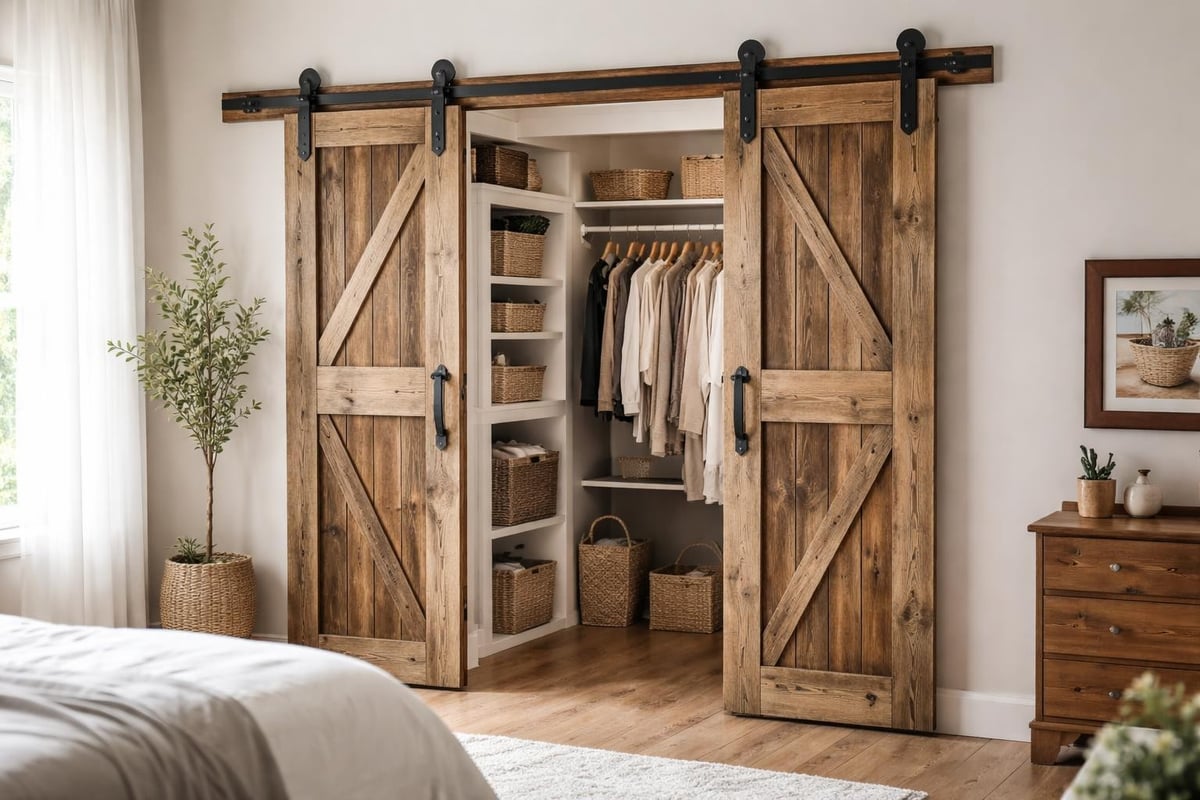
Classic J-strap hardware brings that iconic curved roller design that's defined barn door aesthetics for generations. When paired with reclaimed wood panels or shiplap-style doors, bifold systems create an authentic farmhouse feel that works beautifully in country homes and suburban renovations alike.
The warm wood tones and visible hardware become focal points rather than just functional elements. Many homeowners exploring folding interior door designs discover that bifold barn doors offer the perfect blend of rustic charm and modern practicality.
Modern and Contemporary Settings
Hidden roller systems deliver clean lines for modern interiors. These minimize visible hardware, letting sleek door panels take center stage. Pair them with smooth-painted doors in whites, grays, or bold accent colors for a contemporary look.
Glass-paneled bifold doors work exceptionally well in modern spaces. Frosted or seeded glass maintains privacy while allowing light to filter through, making walk-in closets feel more spacious and integrated with the bedroom.
Transitional and Industrial Vibes
Black matte hardware creates that popular industrial aesthetic that bridges traditional and modern styles. Combined with mixed materials like wood and metal accents, a folding barn door for closet spaces becomes an architectural statement piece.
Jennifer, an interior designer in Nashville, recently completed a project where she specified black hardware with weathered gray oak doors for a client's primary suite. "The bifold system gave them complete access to their walk-in closet while the dark hardware anchored the entire bedroom's color palette," she shared.
Measuring and Planning Your Installation
Getting accurate measurements makes the difference between a smooth installation and a frustrating experience. I learned this the hard way during my first barn door project when I forgot to account for the track mounting brackets.
Critical Measurements You Need
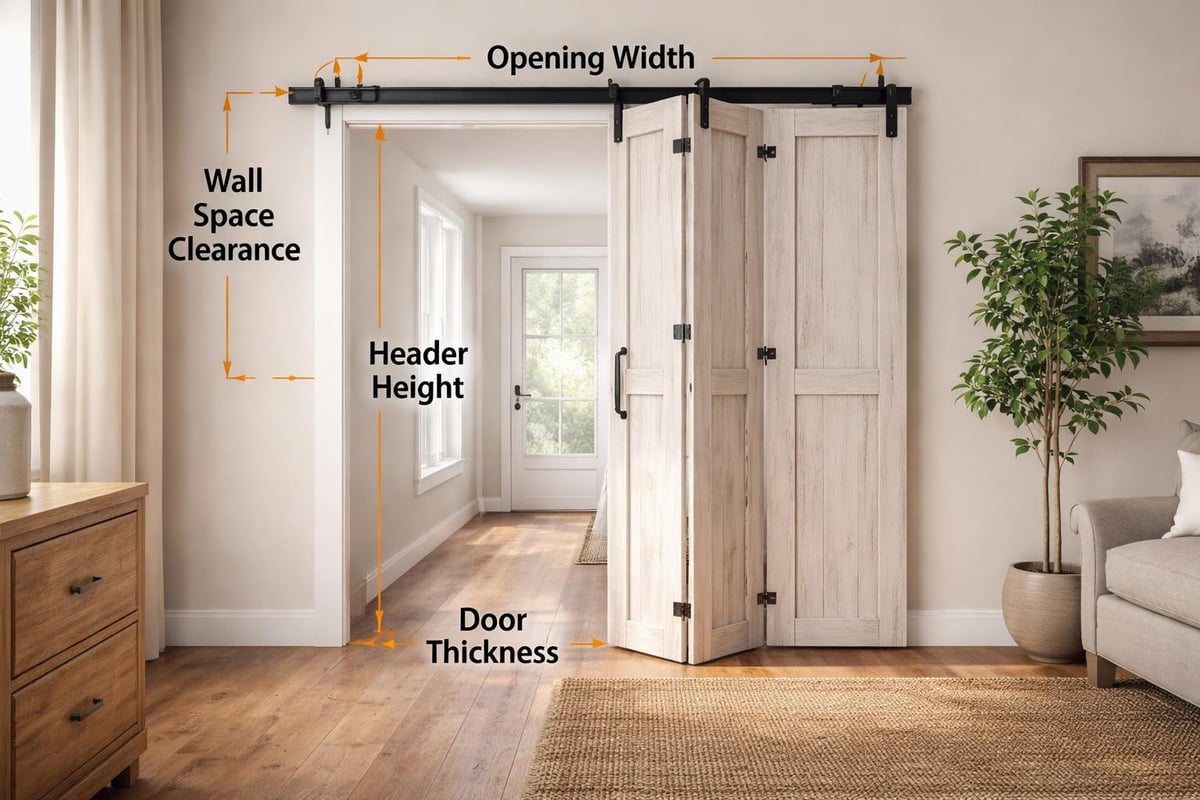
Start by measuring your closet opening width at three points: top, middle, and bottom. Use the smallest measurement as your baseline. Walls settle over time, and openings aren't always perfectly square.
For a folding barn door for closet installations, you'll need:
- Opening width: The actual closet opening dimension
- Door panel width: Typically half the opening width plus 1-2 inches overlap per panel
- Wall space: At least 6-8 inches beyond the opening on the stacking side
- Ceiling height: Minimum clearance above the opening for track mounting
- Door thickness: Most hardware supports 1-3/8" to 1-3/4" thick doors
The header space above your closet matters tremendously. You need enough clearance for the track, mounting hardware, and the rollers that suspend from the top of the door. Plan for at least 6 inches of clear space above the opening.
Weight Capacity Considerations
Door weight directly impacts hardware selection. Solid wood bifold panels can weigh 60-100 pounds per panel, while hollow-core doors might only weigh 25-30 pounds each.
Most residential bifold barn door hardware handles 100-200 pounds total system weight comfortably. If you're building doors from reclaimed lumber or using glass panels, verify the weight capacity before purchasing hardware. The bifold hardware collection offers systems rated for various weight ranges to match your specific door materials.
Installation Process and Common Challenges
Tom runs a handyman service in Portland and has installed over 200 barn door systems since 2020. He walked me through the typical installation timeline and the mistakes he sees DIYers make most often.
Step-by-Step Installation Overview
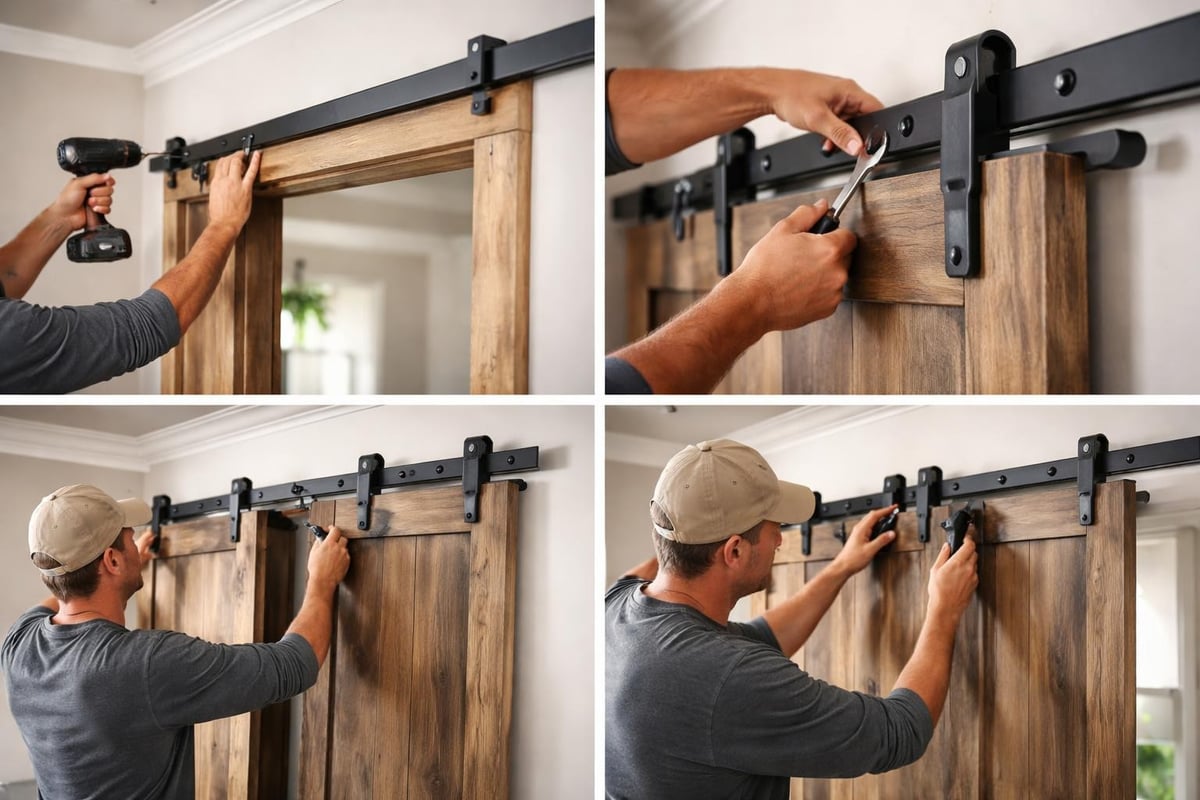
- Locate and mark studs in the wall above your closet opening
- Install backing board if studs aren't positioned correctly for track mounting
- Mount the track ensuring it's perfectly level using a quality level
- Attach rollers to the top of each door panel at specified spacing
- Hang door panels by lifting rollers into the track channel
- Connect panels with bifold hardware brackets that allow folding
- Install floor guides to prevent door swing and maintain alignment
- Adjust and fine-tune roller positions for smooth operation
The entire process typically takes 3-4 hours for someone with moderate DIY skills. Professional installation runs 1-2 hours.
Challenges and Solutions
Challenge: Track won't mount level because studs are positioned awkwardly.
Solution: Install a mounting board across multiple studs first, then attach the track to this board. This gives you flexibility in track placement while maintaining structural support.
Challenge: Doors drag on carpet or uneven floors.
Solution: Install proper floor guides that allow slight clearance. Many bifold systems use guides that keep doors aligned without actually supporting weight, preventing floor drag while maintaining stability.
Challenge: Panels don't fold smoothly or bind at the hinge point.
Solution: Check that your bifold brackets are properly aligned and that door panels are truly vertical. Even slight angles cause binding as panels try to fold.
Hardware Choices for Folding Barn Doors
The hardware you choose defines both functionality and aesthetic impact. Having worked with various systems over the years, I've learned that quality hardware makes operation smooth and maintenance minimal.
Traditional Exposed Roller Systems
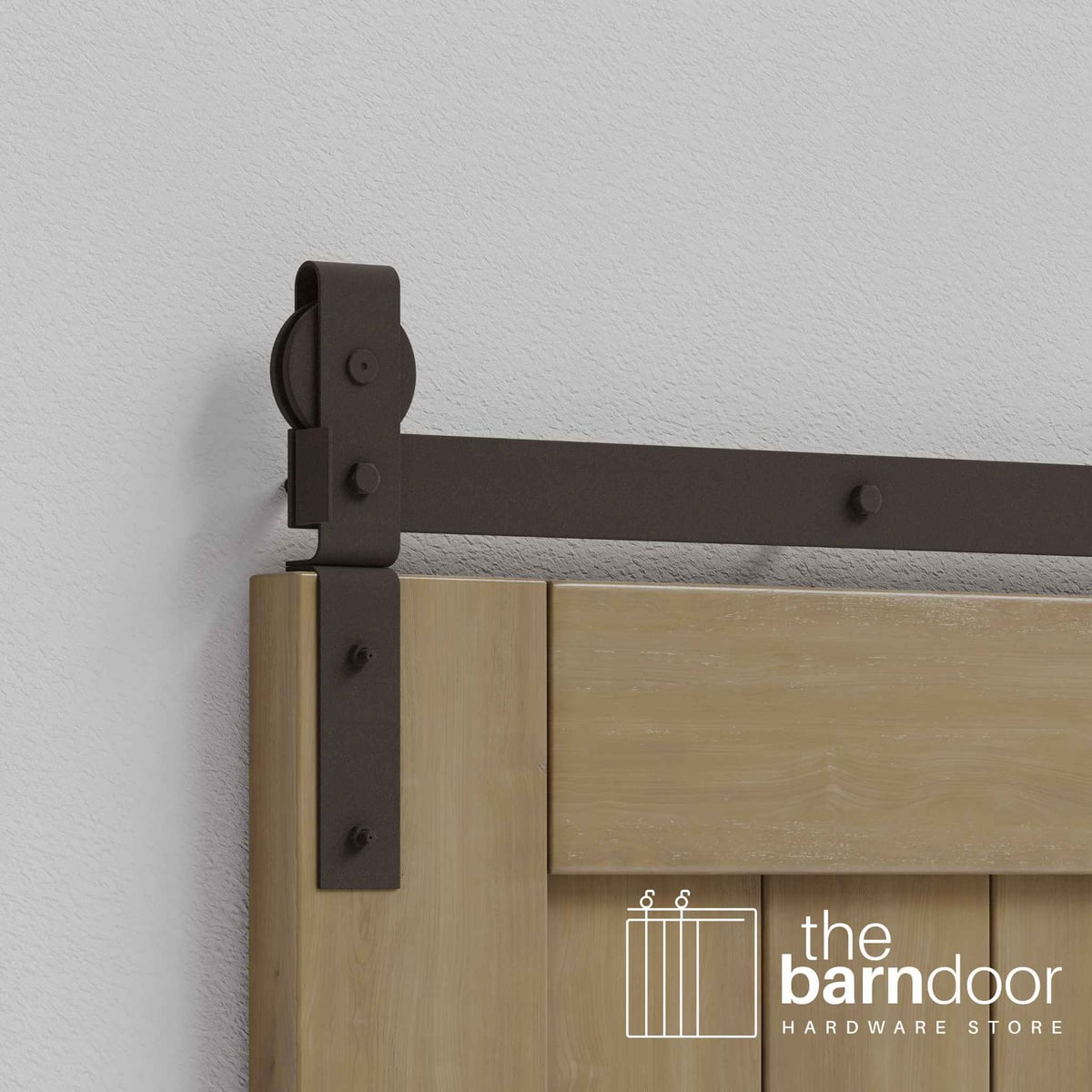
The Classic J-Strap Bifold Barn Door Hardware Kit represents the gold standard for bifold installations. Its iconic curved design has defined farmhouse aesthetics for generations, and for good reason. This American-made hardware supports doors between 1-3/8" and 1-3/4" thick, delivering the reliable performance you need for daily use. The visible rollers and track become design features rather than mere functional components, adding character to any closet installation.
Finish Options and Durability
Hardware finishes dramatically impact your room's overall aesthetic. Common options include:
- Oil-rubbed bronze: Warm, traditional appearance that hides fingerprints well
- Matte black: Contemporary industrial look with broad design compatibility
- Brushed nickel: Clean, modern finish that works in transitional spaces
- Stainless steel: Commercial-grade durability with sleek contemporary appeal
Quality matters more than finish. Look for solid steel components rather than hollow or aluminum alternatives. The constant sliding motion of a folding barn door for closet use means hardware endures thousands of operating cycles. Cheap components wear quickly, developing wobbles and rough spots within months.
Door Panel Materials and Construction
What you build your door panels from affects weight, cost, durability, and overall aesthetic. Each material brings different characteristics to your project.
Solid Wood Panels
Real wood delivers authenticity and substance. Pine, cedar, and fir work well for lighter weight at reasonable cost. Oak, maple, and walnut provide premium appearance with greater weight and expense.
Solid wood requires proper sealing to prevent warping from humidity changes. This matters especially for closet doors, where clothing can release moisture over time.
Engineered and MDF Options
Medium-density fiberboard (MDF) offers a smooth, paint-ready surface at lower cost than solid wood. It's heavier than comparable wood panels but remains dimensionally stable without warping.
For painted finishes, MDF often outperforms wood since it doesn't show grain patterns or wood movement. Many contemporary bifold barn door designs feature MDF construction with various painted or laminate finishes.
Glass and Mixed Materials
Frosted or textured glass panels bring modern elegance while maintaining privacy. They're heavier than wood, requiring hardware rated for higher weight capacities.
Mixed-material doors combining wood frames with glass, metal, or fabric panels create custom looks that express personal style. Rachel, a designer in Charleston, created stunning bifold closet doors using reclaimed window frames with seeded glass inserts for a client's vintage-modern bedroom renovation.
Maintaining Your Bifold Barn Door System
Proper maintenance keeps your folding barn door for closet applications operating smoothly for decades. The good news? These systems require minimal ongoing attention.
Monthly Maintenance Tasks
- Wipe down the track with a dry cloth to remove dust and lint
- Check roller operation by opening and closing doors, listening for unusual sounds
- Inspect hinge points on bifold connections for loosening
- Verify floor guide alignment to ensure doors stay properly positioned
Annual Deep Maintenance
Once yearly, perform more thorough maintenance:
- Remove doors from track for complete inspection
- Clean track channel thoroughly with vacuum and damp cloth
- Apply dry lubricant (never oil-based) to roller mechanisms
- Tighten all mounting hardware at track and door attachment points
- Check for door warping or damage requiring repair
Kevin, who's operated the same bifold barn door on his bedroom closet since 2018, spends maybe 20 minutes annually on maintenance. "I vacuum the track during spring cleaning and tighten a couple screws," he told me. "That's literally it. The door operates as smoothly today as when I installed it."
Cost Considerations and Budgeting
Understanding the full cost picture helps you plan appropriately. A folding barn door for closet projects involves several expense categories.
Hardware Costs
Quality bifold barn door hardware kits range from $200-$600 depending on:
- Weight capacity rating
- Finish and material quality
- Brand reputation and warranty
- Door panel quantity and configuration
The hardware kits from family-owned suppliers often include better support and lifetime warranties compared to big-box alternatives, making them worthwhile investments despite potentially higher upfront costs.
Door Panel Investment
| Material | Cost Per Panel | Pros | Cons |
|---|---|---|---|
| Hollow-core | $50-$100 | Lightweight, affordable | Less durable, sounds hollow |
| Solid pine | $150-$300 | Authentic wood, moderate weight | Requires sealing, can warp |
| MDF painted | $100-$200 | Smooth finish, stable | Heavy, damage shows easily |
| Premium hardwood | $400-$800 | Beautiful grain, durable | Expensive, very heavy |
| Glass panel | $300-$600 | Modern look, light-transmitting | Fragile, shows smudges |
Installation Expenses
DIY installation costs essentially nothing beyond your time. Professional installation typically runs $150-$400 depending on complexity and regional labor rates.
Factor in potential backing board material if your wall studs aren't positioned favorably. This adds $30-$60 in materials plus additional installation time.
Common Questions From First-Time Installers
After years of helping customers select and install barn door systems, certain questions come up repeatedly. Let me address the most common concerns.
Do folding barn doors provide adequate privacy?
Yes, when properly installed. The bifold panels meet in the center and overlap slightly at all edges, creating effective privacy barriers. Adding soft-close mechanisms prevents gaps from developing as doors age.
Can I install these on angled or cathedral ceilings?
Standard bifold hardware requires level track mounting. For angled ceilings, you'll need to build out a level mounting surface using a header board. Some ceiling-mounted systems accommodate angles, but these cost significantly more.
Will my existing closet opening work without modification?
Most standard closet openings accommodate bifold barn doors easily. The main requirement is adequate wall space beside the opening (about 6-8 inches) for panels to stack when open. Measure carefully before ordering hardware.
How much clearance do I need above the closet opening?
Plan for 6-8 inches minimum above the opening for track and hardware clearance. If you have exactly 8 feet ceilings with an 80-inch tall opening, you'll need to reduce door height or use specialized low-profile hardware.
Design Integration Tips From Interior Designers
Making your folding barn door for closet installations feel intentional rather than afterthought requires thoughtful design integration. Three professional designers shared their favorite approaches.
Match or Complement Existing Trim
Lisa from Chicago always specifies door panels that coordinate with existing room trim. "If the bedroom has white baseboards and crown molding, white or cream bifold doors create cohesion," she explained. "For rooms with stained wood trim, matching wood tones on the barn door ties everything together."
Use Doors as Accent Features
Alternatively, make the bifold system a contrasting focal point. A bold navy blue folding barn door for closet openings in an otherwise neutral bedroom creates visual interest without overwhelming the space.
Black hardware against light-colored doors delivers striking contrast that draws the eye upward, making rooms feel taller.
Consider the Sight Lines
Think about what's visible when doors are both closed and open. If your closet interior tends toward organized chaos, you might want opaque door panels. For beautifully organized closets you're proud to display, consider glass panels or open-frame designs that showcase your organization skills.
Jamie, designing homes in San Diego, often specifies frosted glass bifold doors between bedrooms and walk-in closets. "The translucent panels allow natural light to flow between spaces while maintaining privacy. It makes both rooms feel more spacious and connected," she noted.
Troubleshooting Common Operation Issues
Even with quality installation, minor issues occasionally arise. Here's how to address the most frequent problems.
Doors Won't Glide Smoothly
Possible causes: Debris in track, misaligned rollers, binding at fold point, floor drag
Solutions: Clean track thoroughly, adjust roller positions to ensure equal spacing, verify panels are truly vertical, raise door height slightly if dragging on flooring
Panels Don't Stay Closed
Possible causes: Floor guide misalignment, track not perfectly level, door warping
Solutions: Reposition floor guides for proper alignment, re-level track using shims if needed, consider soft-close mechanisms that hold doors in closed position
Excessive Noise During Operation
Possible causes: Dry roller bearings, loose hardware, track obstructions
Solutions: Apply dry lubricant (never oil) to roller mechanisms, tighten all mounting screws, inspect and clean track channel
Alternative Applications Beyond Closets
While we're focusing on closet installations, the same folding barn door for closet technology works beautifully in other spaces around your home.
Pantry Doors
Kitchen pantries often suffer from the same space constraints as closets. Bifold barn doors provide full access to pantry shelving without requiring floor clearance in already-crowded kitchens.
Laundry Room Concealment
Hide washer and dryer units behind elegant bifold barn doors that disappear to the side during laundry day. This works especially well in homes where laundry facilities share space with mudrooms or hallways.
Home Office Privacy
Create flexible workspace privacy in open-plan homes. Bifold doors can separate home offices from living areas when you need focused work time, then fold completely aside for open-concept living.
Room Dividers
Larger bifold systems work as room dividers in studio apartments or converted spaces. Four-panel or six-panel configurations can effectively separate sleeping areas from living spaces while maintaining the ability to open everything up for entertaining.
The versatility of these systems explains their growing popularity. Once homeowners experience the functionality of a folding barn door for closet spaces, they often find additional applications throughout their homes.
Working With Professional Installers
Deciding between DIY and professional installation depends on your skill level, available time, and project complexity. Here's what to consider.
When to Hire Professionals
Consider professional help if:
- Your walls aren't standard drywall over studs (plaster, concrete, etc.)
- The closet opening requires modification or framing work
- You're installing multiple bifold systems simultaneously
- Your ceiling height creates clearance challenges
- You want integrated electrical work (lighting above doors, for example)
Questions to Ask Potential Installers
Before hiring, verify experience with bifold barn door systems specifically. Ask:
- How many bifold barn door installations have you completed?
- Can you provide references from similar projects?
- Do you handle any necessary framing or backing board installation?
- What warranty do you offer on installation labor?
- How do you handle unexpected issues like misaligned studs?
Request photos of completed installations similar to your project. This reveals their attention to detail and finish quality.
Maximizing Closet Functionality With Bifold Doors
Beyond just door operation, think about how a folding barn door for closet installations impacts your overall closet organization strategy.
Lighting Integration
Bifold doors create opportunities for creative lighting. Install LED strip lights along the track header for ambient illumination. Motion-activated closet lights turn on automatically when doors open, improving visibility without requiring wall switches.
Organization Systems
With full-width access, you can implement more sophisticated organization systems. Floor-to-ceiling shelving becomes practical since you're not constantly working around a door that blocks half the opening.
Consider pull-out drawers, rotating shoe racks, and tiered hanging systems that require full access to operate effectively. These options remain impractical with standard sliding doors that always cover part of your closet.
Mirror Integration
Many homeowners incorporate full-length mirrors into one or both bifold door panels. This provides functional mirror space while saving wall space elsewhere in the bedroom. Just ensure hardware is rated for the additional weight of mirrored panels.
Material Sourcing and Shopping Tips
Finding the right components at fair prices requires knowing where to look and what quality markers indicate good value.
Where to Buy Hardware
Family-owned specialty retailers often provide better hardware quality and customer support than mass-market retailers. The American-made options typically cost 20-30% more than imported alternatives but include lifetime warranties and superior engineering.
Online shopping provides access to broader selections than local stores typically stock. Look for retailers offering free shipping since hardware kits can weigh 30-40 pounds, making shipping costs significant.
Door Panel Options
For pre-made door panels, check:
- Local lumber yards and millwork shops for custom sizing
- Architectural salvage yards for unique vintage options
- Online retailers specializing in barn door panels
- Home improvement stores for budget-friendly standard sizes
Building custom panels from scratch gives you complete control over dimensions and design but requires woodworking skills and tools.
A folding barn door for closet installations offers the perfect balance of space efficiency, accessibility, and style for modern homes. Whether you're drawn to farmhouse charm or contemporary minimalism, bifold systems deliver full closet access without sacrificing valuable floor space. When you're ready to transform your closet with quality hardware that's built to last, The Barn Door Hardware Store provides American-made bifold systems backed by expert support and a limited lifetime warranty. Their family-owned business has been helping homeowners create beautiful, functional spaces since 2016, with free shipping and the expertise to guide you through every step of your project.
