

When Sarah decided to renovate her 1920s farmhouse last spring, she faced a common problem: the doorway between her kitchen and pantry was exactly 36 inches wide, and a traditional swing door kept blocking her workspace. After researching space-saving solutions, she discovered that a 36x84 barn door with hardware could transform her cramped kitchen into a functional, stylish space. Her story isn't unique. Thousands of homeowners are discovering that this specific door size offers the perfect balance of accessibility and style for standard doorways throughout American homes.
Why the 36x84 Size Matters for Your Space
The 36x84 barn door dimension isn't random. It's actually one of the most common door sizes in residential construction, and here's why that matters for your project.
Standard interior doorways in homes built after 1950 typically measure 32 to 36 inches wide. When you're installing a barn door, you need to cover not just the opening but also the surrounding wall space to prevent light gaps and create a finished appearance. A 36-inch-wide door covers a standard doorway perfectly while adding that extra coverage on either side.
The 84-inch height is equally intentional. Most interior door heights range from 80 to 84 inches, with 80 inches being standard and 84 inches accommodating slightly taller openings or providing extra coverage at the top and bottom. This height works beautifully in homes with standard 8-foot ceilings, leaving just enough clearance for the hardware while maintaining proper proportions.
Common Applications for This Door Size
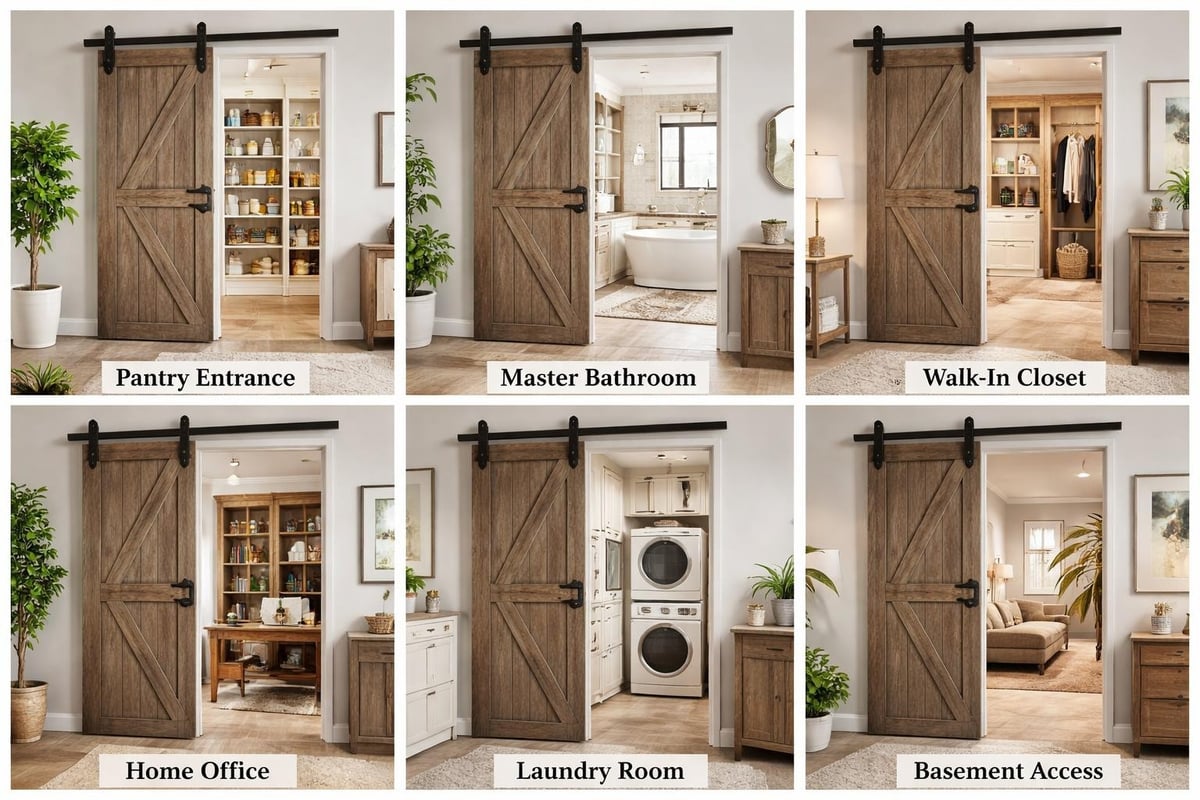
You'll find 36x84 barn doors working overtime in these popular locations:
- Pantry entrances in kitchens
- Master bathroom doorways
- Walk-in closet openings
- Home office entries
- Laundry room access points
- Basement stairway doors
Choosing the Right Hardware for Your 36x84 Door
Let me tell you about Mike's mistake. He bought a beautiful 36x84 barn door online, assuming any hardware kit would work. When the pieces arrived, he realized the track was too short, the rollers couldn't support the door's weight, and the mounting brackets didn't fit his wall studs. He spent three frustrating weekends returning parts and starting over.
Don't be like Mike. Choosing hardware for a 36x84 barn door with hardware requires understanding several key specifications.
Weight Capacity Requirements
Your door's material determines the hardware strength you'll need. Here's a realistic breakdown:
| Door Material | Approximate Weight | Recommended Hardware Capacity |
|---|---|---|
| Hollow Core MDF | 40-60 lbs | 150 lb minimum |
| Solid Core MDF | 80-100 lbs | 200 lb minimum |
| Solid Wood Pine | 90-120 lbs | 250 lb minimum |
| Solid Wood Oak | 120-150 lbs | 300 lb minimum |
Most quality hardware kits designed for residential use offer 200-pound weight capacities, which handles the majority of 36x84 doors comfortably. However, if you're working with solid hardwood or adding decorative elements like metal straps or glass panels, you'll want to confirm the total weight before purchasing.
Track Length Calculations
This is where many DIYers get confused. The track for your 36x84 barn door shouldn't be 36 inches. It needs to be significantly longer.
Here's the formula: Door width × 2 + 4 to 6 inches = minimum track length
For a 36-inch door, that means you need at least 76 to 78 inches of track. Most installers prefer an 84-inch (7-foot) track for a 36-inch door, giving you comfortable clearance and smooth operation. This extra length allows the door to slide completely past the doorway opening, which is essential for functionality.
When you're shopping for a complete sliding door track and hardware system, verify the track length is appropriate for your door width.
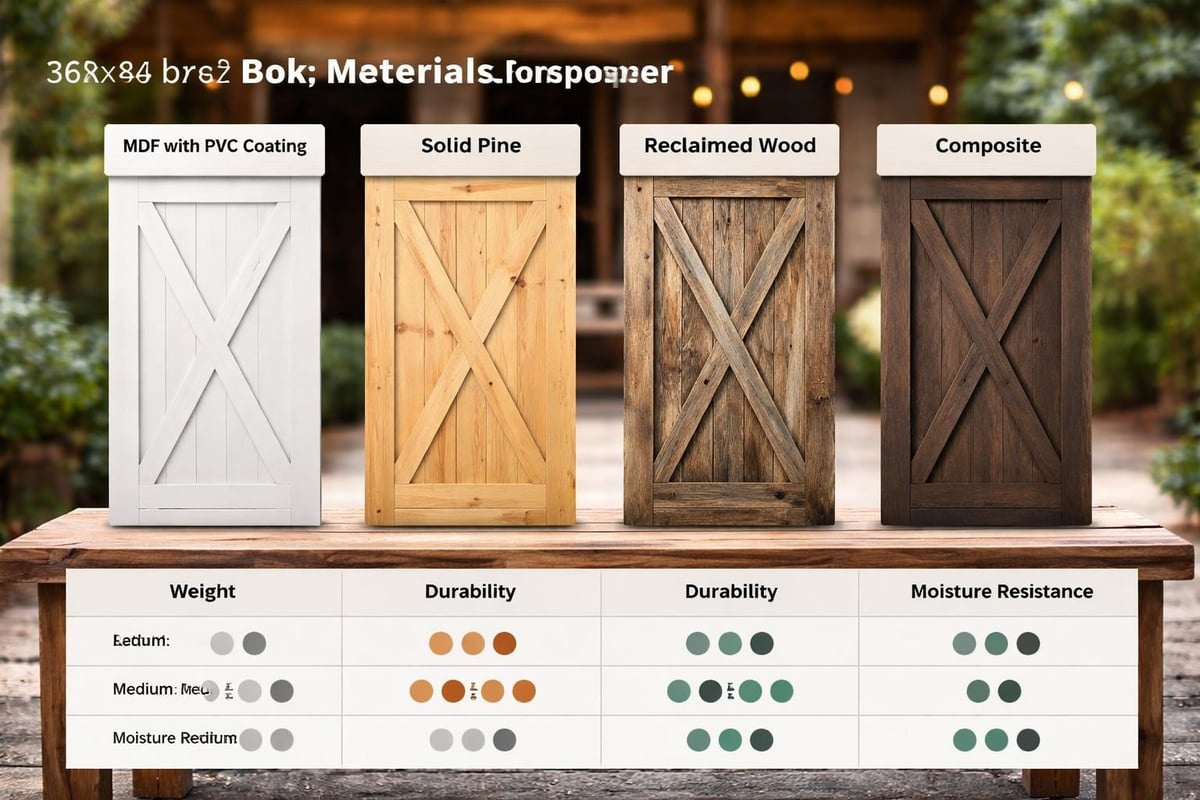
Material Options for 36x84 Barn Doors
Walking through a building supply store in 2026, you'll encounter an overwhelming variety of 36x84 barn door materials. Each option brings distinct advantages and challenges to your project.
MDF and Engineered Wood Doors
Medium-density fiberboard (MDF) dominates the affordable barn door market, and for good reason. These doors offer consistent quality, resist warping, and accept paint beautifully. Many manufacturers now offer waterproof PVC surface treatments that make MDF doors suitable for moisture-prone areas like bathrooms.
The trade-off? MDF doors are heavier than you'd expect and can be damaged by excessive moisture despite protective coatings. They're perfect for interior applications in climate-controlled spaces but think twice before using them in unheated mudrooms or garages.
Solid Wood Construction
Nothing matches the character of solid wood. A reclaimed pine 36x84 barn door brings authentic texture and warmth that manufactured materials can't replicate. The grain patterns, natural variations, and aging characteristics create one-of-a-kind installations.
Jennifer, a designer in Charleston, exclusively uses reclaimed wood for her clients' barn doors. She told me that each door tells a story through its nail holes, weathering, and patina. The challenge is finding properly dried, dimensionally stable wood that won't warp after installation.
Installation Considerations You Can't Ignore
The hardware might arrive in a neat box, but successful installation requires careful planning. I've seen beautiful doors ruined by rushed installations that ignored basic structural requirements.
Wall Structure Assessment
Your wall needs to support not just the door's weight but also the dynamic load created when opening and closing. Here's what you're looking for:
Solid wood studs: Ideal. Standard 2x4 or 2x6 studs provide excellent support for barn door hardware. You'll mount your track brackets directly into these studs for maximum strength.
Steel studs: Common in newer construction and commercial spaces. These require special toggle bolts or snap toggles rated for the door's weight. Standard wood screws won't hold.
Drywall only: Never mount barn door hardware to drywall alone. If studs aren't positioned where you need them, install a header board across multiple studs first, then mount your hardware to that board.
Before purchasing your 36x84 barn door with hardware, locate your wall studs with a quality stud finder. Mark their positions and verify they align reasonably with where your track needs to mount. If you're working with challenging stud spacing, additional blocking between studs might be necessary.
Clearance Requirements for Proper Operation
Think three-dimensionally when planning your installation. A barn door doesn't just move left and right; it also requires specific clearances above, beside, and in front of the wall surface.
The track mounts 1 to 2 inches above the door's top edge, depending on your hardware style. Add the track's height (typically 2 to 3 inches), and you need roughly 4 to 6 inches of clear wall space above your doorway. In homes with standard 8-foot ceilings and 80-inch door openings, this works perfectly. But if you're installing an 84-inch door with only 90 inches from floor to ceiling, you'll be cutting it close.
Floor clearance matters too. Most barn doors require a 1/2 to 1-inch gap at the bottom for smooth operation and to prevent carpet or floor unevenness from catching the door. You can adjust this with the roller mounting positions, but plan for it during installation.
Step-by-Step Installation Process
Let's walk through installing your 36x84 barn door with hardware. This isn't a quick afternoon project. Budget 4 to 6 hours for a first-time installation, and don't rush the process.
Preparing the Doorway and Wall
Start by removing your existing door, casing, and trim. You might be tempted to leave the casing, but barn door installations look cleaner with a smooth wall surface extending around the entire opening. Save the trim pieces in case you ever want to convert back to a traditional door.
Fill any holes, sand rough spots, and paint or finish the wall area where your door will slide. Once the door is installed, reaching these areas becomes difficult or impossible.
Measure your doorway opening width and height precisely. Double-check these measurements. Triple-check them. Your door should overlap the opening by 2 inches on each side (4 inches total) and extend 2 to 3 inches above and below the opening for proper coverage.
Mounting the Track System
This is where precision matters most. The track must be level, or your door will slide open or closed on its own. I've visited homes where frustrated owners wedged books under their barn doors to keep them in place because someone skipped the leveling step.
Use a quality 6-foot level to mark a perfectly horizontal line where your track will mount. Position this line according to your hardware's specifications. Most systems place the track 1 to 2 inches above the door's top edge.
Locate wall studs along your level line. Your track brackets need to anchor into studs every 16 to 24 inches for adequate support. If your studs don't align perfectly with bracket positions, you have two options: install a header board across multiple studs first, or use heavy-duty mounting hardware designed for the spacing you have.
Following the detailed installation steps specific to your hardware type helps ensure you don't miss critical details. Each hardware style has slightly different requirements.
Hanging and Adjusting Your Door
With the track securely mounted, you're ready to hang the door. This typically requires two people. One person supports the door's weight while the other attaches the roller assemblies.
Most quality hardware, like the Classic J-Strap Barn Door Hardware Kit, includes adjustable rollers that let you fine-tune the door's height and ensure it hangs plumb. This adjustability is crucial because few walls are perfectly flat, and minor tweaks make the difference between a door that operates smoothly and one that binds or drags.
After hanging the door, test its movement across the full track length. It should glide smoothly without sticking, rubbing, or requiring excessive force. If you notice resistance, check for:
- Obstructions in the track channel
- Roller wheels not properly seated in the track
- Door hitting wall irregularities or trim
- Floor guide positioned incorrectly (if your hardware includes one)
Hardware Style Options That Match Your Aesthetic
The functional requirements stay the same, but hardware styles vary dramatically. Your choice impacts both appearance and budget.
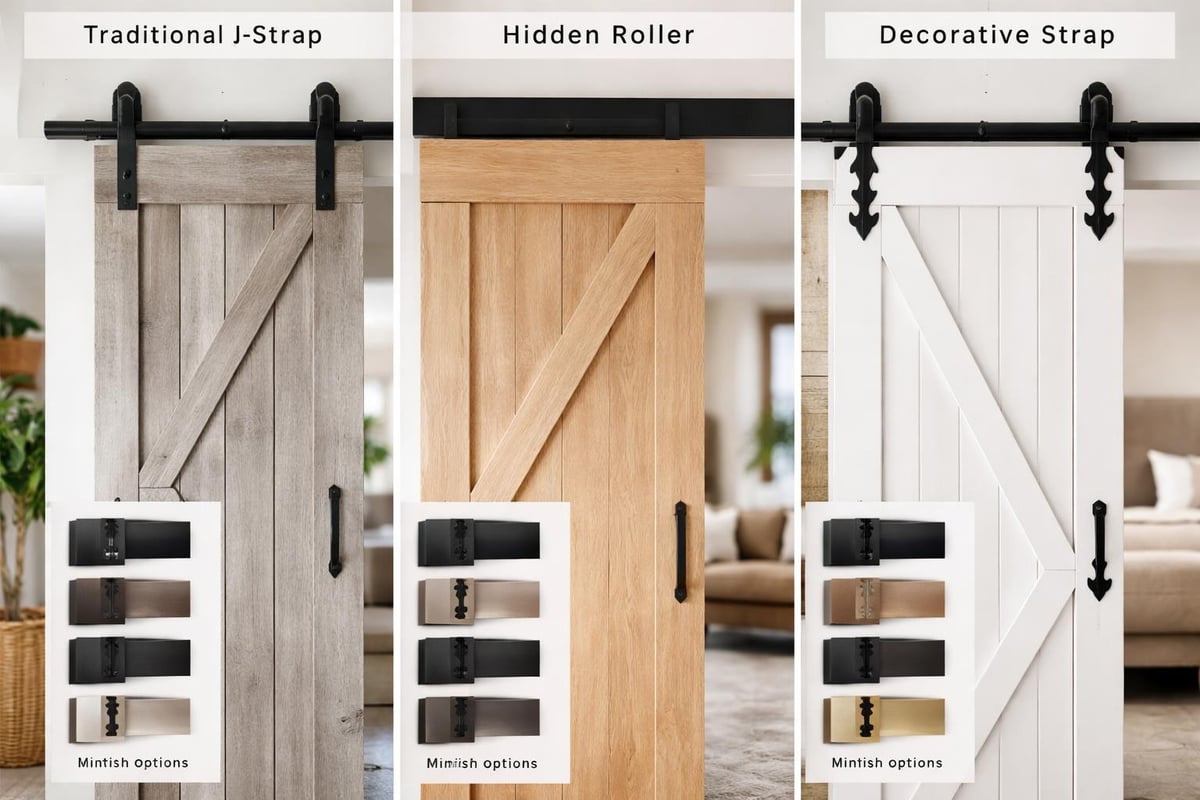
Traditional Exposed Roller Systems
The classic barn door aesthetic features visible rollers mounted outside the door on decorative straps or brackets. These rollers sit in an exposed track mounted to the wall above the doorway, creating the authentic industrial or farmhouse look that made barn doors popular in modern homes.
Exposed roller systems come in various finishes: matte black, oil-rubbed bronze, brushed nickel, stainless steel, and even custom powder-coated colors. The roller design ranges from simple industrial wheels to decorative styles with vintage character.
Contemporary Hidden Roller Designs
Prefer a cleaner, more minimal appearance? Hidden roller systems conceal the rolling mechanism behind the door panel while keeping the track visible. This creates a more streamlined profile that works beautifully in modern and transitional spaces.
The trade-off is typically a slightly higher price point and more precise installation requirements. The door needs to be perfectly flat for hidden roller systems to function properly, so warped or twisted doors won't work well with this hardware style.
Finish Selection Guide
| Finish Type | Best For | Durability | Maintenance |
|---|---|---|---|
| Matte Black | Modern, industrial, farmhouse | Excellent | Minimal, occasional dusting |
| Oil-Rubbed Bronze | Traditional, rustic, warm tones | Very Good | Gentle cleaning, avoid abrasives |
| Brushed Nickel | Contemporary, cool tones | Excellent | Easy cleaning, resists fingerprints |
| Stainless Steel | Commercial, wet areas | Superior | Regular cleaning, shows water spots |
Pricing Expectations and Budget Planning
Let's talk numbers. What should you expect to invest in a complete 36x84 barn door with hardware in 2026?
Door Costs
Basic MDF doors with simple panel designs start around $200 to $350. Step up to solid core MDF or add decorative elements like metal accents or glass panels, and you're looking at $400 to $700. Custom solid wood doors from specialty manufacturers can exceed $1,000, especially if you're sourcing reclaimed or exotic wood species.
Pre-finished doors cost more upfront but save you the time and expense of finishing. If you're handy with paint or stain, unfinished doors offer flexibility and cost savings.
Hardware Investment
Quality hardware kits that can safely support your 36x84 barn door range from $150 to $400 for residential-grade systems. This includes the track, rollers, mounting brackets, and installation hardware. Premium finishes, heavier-duty construction, and American-made components push prices toward the higher end.
Budget hardware under $100 exists, but I've seen too many failures with these systems. Broken rollers, bent tracks, and stripped mounting screws create safety hazards and cost more to replace than investing in quality hardware initially.
Don't forget the smaller components that complete your installation:
- Floor guides: $15 to $40
- Soft-close mechanisms: $30 to $80
- Door handles or pulls: $20 to $150
- Privacy locks (for bathrooms): $30 to $100
Installation Costs
Many homeowners successfully install barn doors themselves, especially with comprehensive door hardware guidance available online. If you're comfortable with basic carpentry, have the necessary tools, and can recruit a helper, DIY installation is realistic.
Professional installation typically runs $200 to $500 depending on your location and any wall modifications needed. Complex installations requiring header boards, wall repairs, or custom modifications can exceed $800.
Maintenance and Long-Term Performance
Your 36x84 barn door with hardware isn't maintenance-free, but caring for it takes minimal effort when you know what to watch for.
Regular Cleaning Schedule
Every three months, remove dust and debris from the track channel using a vacuum with a brush attachment. Accumulated dust creates resistance and accelerates roller wear. Wipe the track with a slightly damp cloth and dry thoroughly.
Clean the door surface according to its material. Painted MDF accepts gentle all-purpose cleaners. Wood doors need wood-specific products that don't strip finish. If you opted for a waterproof PVC-coated door, standard household cleaners work fine.
Roller and Hardware Inspection
Twice yearly, inspect your hardware components for wear or damage. Check that:
- Mounting screws remain tight in wall studs
- Roller wheels spin freely without wobbling
- Track remains level and secure
- Door hangs plumb without twisting
Most quality roller systems don't require lubrication. In fact, adding lubricants can attract dust and create buildup that interferes with smooth operation. If your rollers start making noise, cleaning them usually solves the problem better than lubricating.
Addressing Common Issues
Doors that slide poorly usually have simple causes. Check the track for obstructions first. A small pebble or broken drywall fragment can stop a door cold. Next, verify the rollers are properly seated in the track channel and haven't popped partially out.
If your door won't stay closed, adjust the floor guide position to create slight resistance at the closed position. Some systems include adjustable stops that you can fine-tune for the perfect hold.
Design Integration Tips for Maximum Impact
Installing a 36x84 barn door with hardware creates an architectural focal point. Make it count by considering how it integrates with your overall design scheme.
Color and Finish Coordination
Think beyond matching. The most striking barn door installations use the door and hardware as intentional contrast elements. A black door with matte black hardware against white shiplap walls creates dramatic impact. Weathered gray barn wood with oil-rubbed bronze hardware brings warmth to modern spaces.
Consider your room's existing metal finishes. If your light fixtures, cabinet hardware, and faucets feature brushed nickel, barn door hardware in the same finish creates cohesion. Alternatively, mixing metal finishes intentionally (like pairing black barn door hardware with brass lighting) adds sophisticated layering when done thoughtfully.
Functional Design Decisions
Privacy requirements influence door design. Solid doors work for bathrooms and bedrooms. Panel doors with glass inserts bring light while maintaining semi-privacy for spaces like home offices or pantries. Some homeowners install double 36-inch doors on a bypass track system for wider openings, though this requires different hardware than single door installations.
The door's panel configuration affects its visual weight. A five-panel design feels traditional and breaks up a large surface area. Clean, single-panel doors emphasize minimalism and contemporary aesthetics. Your choice should reflect the architectural style of your home.
Warranty and Support Considerations
Before finalizing your purchase, understand what protection you're getting. Quality manufacturers stand behind their products with comprehensive warranties.
Look for hardware backed by lifetime warranties that cover manufacturing defects. This protection matters because you're mounting heavy components to your walls that need to perform reliably for years. Understanding warranty terms before problems arise saves frustration later.
Door warranties vary more widely. MDF doors might carry 1 to 5-year warranties covering delamination or defects. Solid wood doors often have shorter warranties because wood naturally moves with humidity changes, which isn't considered a defect.
Installation support makes a significant difference, especially for first-time installers. Companies offering phone or video installation assistance, detailed instruction manuals, and responsive customer service add value beyond the physical products. When you're standing in your hallway at 2 PM on Saturday with a door that won't hang level, access to expert guidance becomes priceless.
Transforming a standard doorway with a 36x84 barn door with hardware combines practical space-saving benefits with the character and style that makes a house feel like home. Whether you're tackling a single door replacement or planning a whole-home renovation, choosing quality components and following proper installation practices ensures years of smooth, reliable operation. The Barn Door Hardware Store has been helping homeowners and contractors select the perfect hardware solutions since 2016, offering American-made products backed by limited lifetime warranties, free shipping across the continental US, and the expert support that turns challenging installations into successful projects.
