
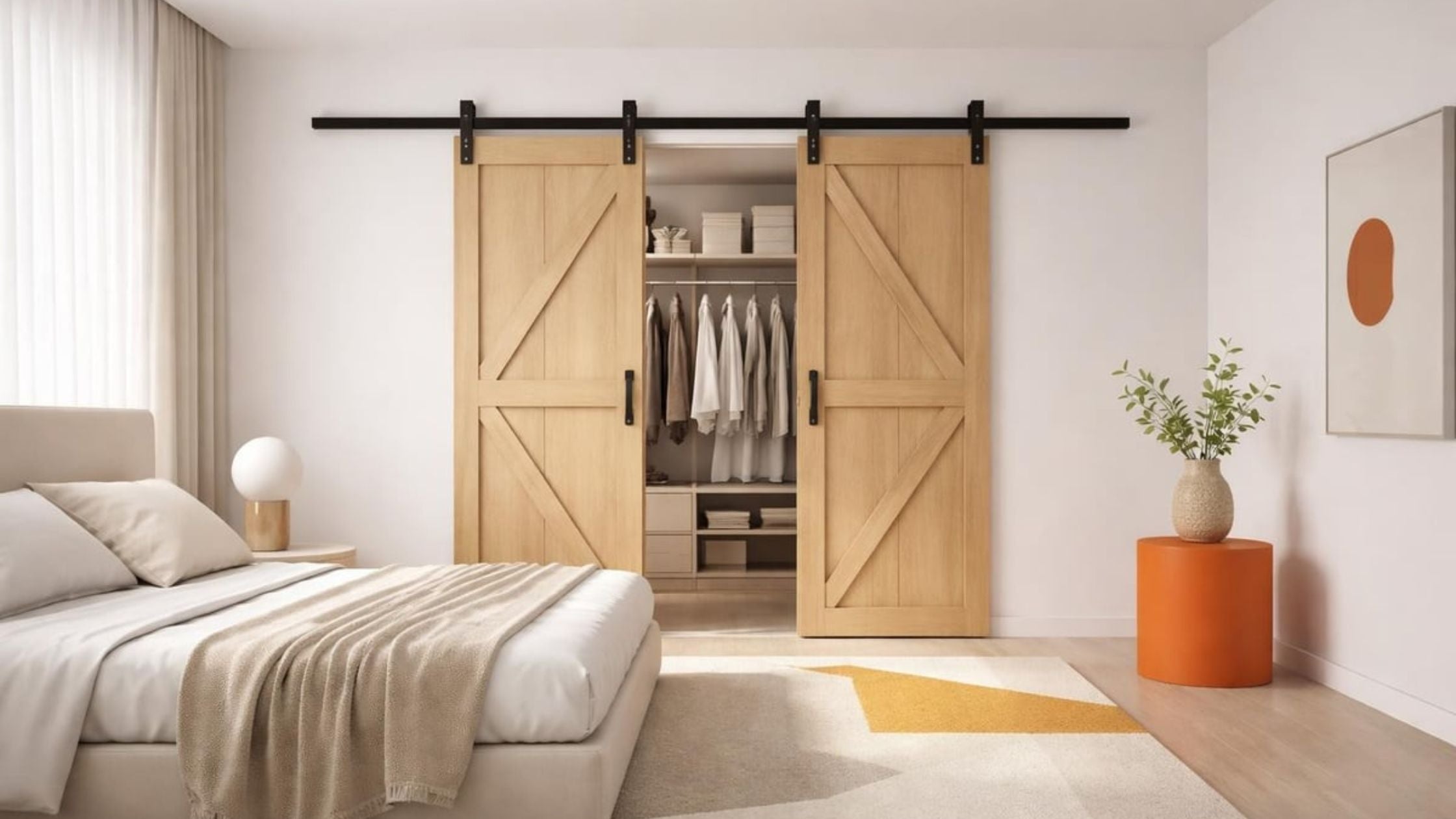
You've probably walked past a cramped hallway and thought, "There has to be a better way than these swinging closet doors." Enter barn door closet sliding doors, the design solution that's been transforming homes since this trend really took off in the mid-2010s. I remember helping my sister renovate her 1920s bungalow back in 2019, where her master bedroom closet doors constantly banged into her dresser. After we installed sliding barn door hardware, she gained nearly three feet of usable floor space. That single change completely shifted how she used her bedroom. What makes these doors so special isn't just the farmhouse aesthetic everyone loves-it's the practical magic of reclaiming space you didn't know you were wasting.
Why Barn Door Closet Sliding Doors Make Sense in 2026
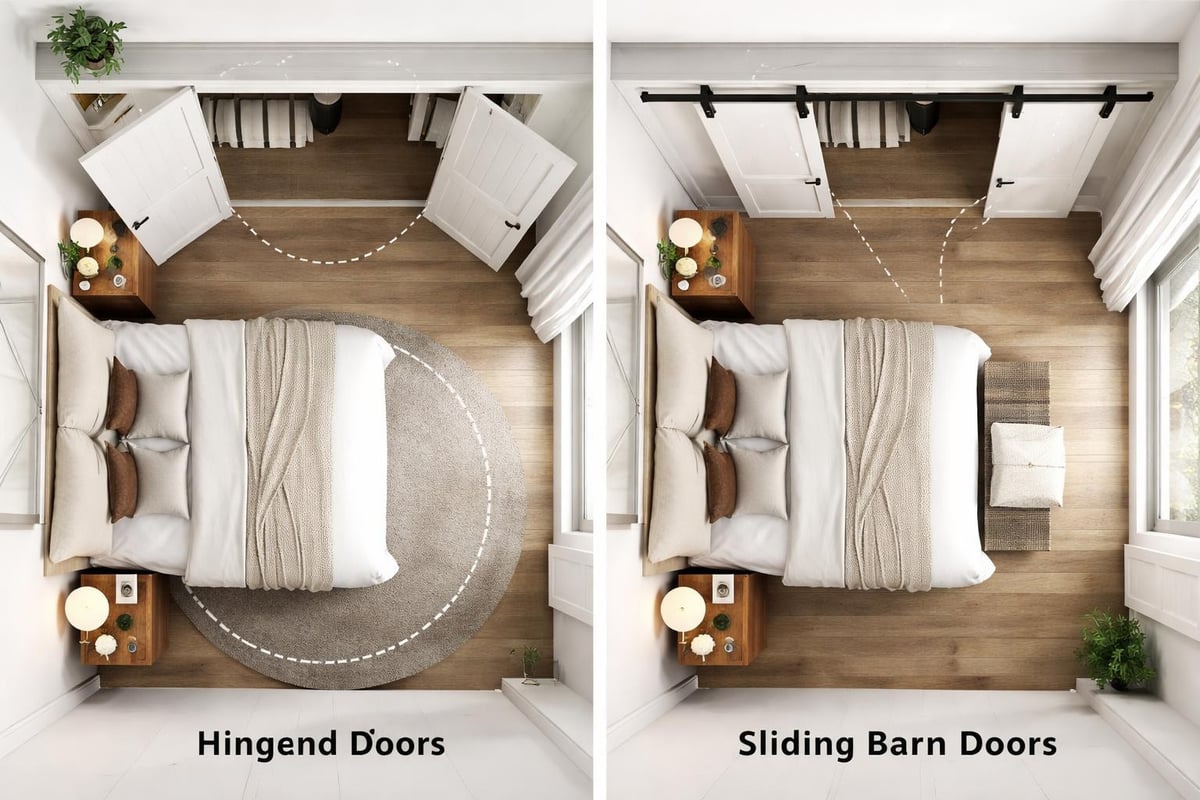
The beauty of barn door closet sliding doors lies in their fundamental design advantage. Traditional hinged closet doors require a swing radius that eats up valuable floor space. Think about it: a standard 30-inch closet door needs about 30 inches of clearance to open fully. That's nearly eight square feet of your room dedicated to door movement alone.
Sliding barn doors eliminate this swing radius entirely. The door panel glides along a track mounted above the doorway, staying parallel to the wall throughout its movement. This means you can place furniture, decor, or even another doorway right where a swinging door would have blocked access.
Space Efficiency That Actually Matters
Let me tell you about the Johnson family in Portland who reached out to us last year. They lived in a converted loft with exposed brick walls and original hardwood floors. Beautiful space, but their kids' closets opened directly into the play area, creating constant bottlenecks during the morning routine.
After measuring their space, we helped them understand exactly how much room they'd reclaim:
| Room Type | Traditional Door Clearance | Barn Door Clearance | Space Reclaimed |
|---|---|---|---|
| Master Closet | 36" swing radius | 2" from wall | 34 square inches |
| Kids' Closet | 30" swing radius | 2" from wall | 28 square inches |
| Hallway Linen | 24" swing radius | 2" from wall | 22 square inches |
Those numbers transformed how they thought about their home's layout. Suddenly they could add a reading nook where the closet door used to swing open.
Design Styles That Work With Your Vision
One of the biggest misconceptions about barn door closet sliding doors is that they only work in farmhouse-style homes. I've seen these systems absolutely shine in mid-century modern condos, industrial lofts, and even minimalist Scandinavian-inspired spaces. The secret lies in choosing the right hardware style and door material.
Hardware Styles for Every Aesthetic
The hardware you choose shapes the entire character of your installation. Let's break down the most popular approaches:
Classic farmhouse hardware features traditional curved straps and exposed wheels. This look works beautifully when you want that rustic, agricultural heritage feel. The Classic J-Strap Barn Door Hardware Kit remains incredibly popular because its curved design delivers that authentic barn door appearance while supporting doors up to 200 pounds. It's American-made hardware that bridges the gap between traditional aesthetics and modern reliability.
Contemporary minimalist hardware takes a completely different approach. These systems often hide the roller mechanism, leaving just a sleek track visible along the wall. For homeowners who want barn door functionality without the rustic aesthetic, this creates a clean, almost invisible installation.
Industrial-style hardware embraces the mechanical elements with raw steel finishes, exposed bolts, and chunky components. This look pairs perfectly with urban loft spaces and works especially well when you're mixing materials like reclaimed wood and metal.
Door Materials and Finishes
The door panel itself offers another layer of customization. Here are the combinations I've seen work beautifully:
- Reclaimed wood planks with natural finish for maximum rustic appeal
- Smooth painted panels in white or gray for transitional spaces
- Glass-paned doors with metal frames for light transmission
- Mirror-faced panels to expand small spaces visually
- Composite materials with wood-grain finishes for budget-friendly options
My neighbor David installed mirrored barn door closet sliding doors in his small guest bedroom last spring. The mirrored surface doubled the perceived size of the room while the sliding mechanism kept the tight quarters functional. His guests consistently comment on how spacious the room feels, despite being only 10x12 feet.
Installation Considerations You Need to Know
Before you fall completely in love with the idea of barn door closet sliding doors, let's talk about the practical side of installation. Understanding these factors upfront saves headaches and ensures your project succeeds.
Structural Requirements
The overhead track mounting system needs solid backing. You're not just hanging a picture frame here-these doors carry significant weight and experience lateral forces every time they slide. Most barn door hardware requires:
- Mounting into wall studs or solid blocking
- Minimum 1.5 inches of clearance above the door opening
- Proper header installation if studs aren't positioned ideally
- Level mounting surface across the entire track length
I learned this lesson the hard way during my first installation back in 2017. I tried mounting a track using only drywall anchors because I didn't want to hunt for studs. Three weeks later, the whole assembly pulled away from the wall. Don't skip the proper backing-it's worth the extra effort.
Measuring for Success
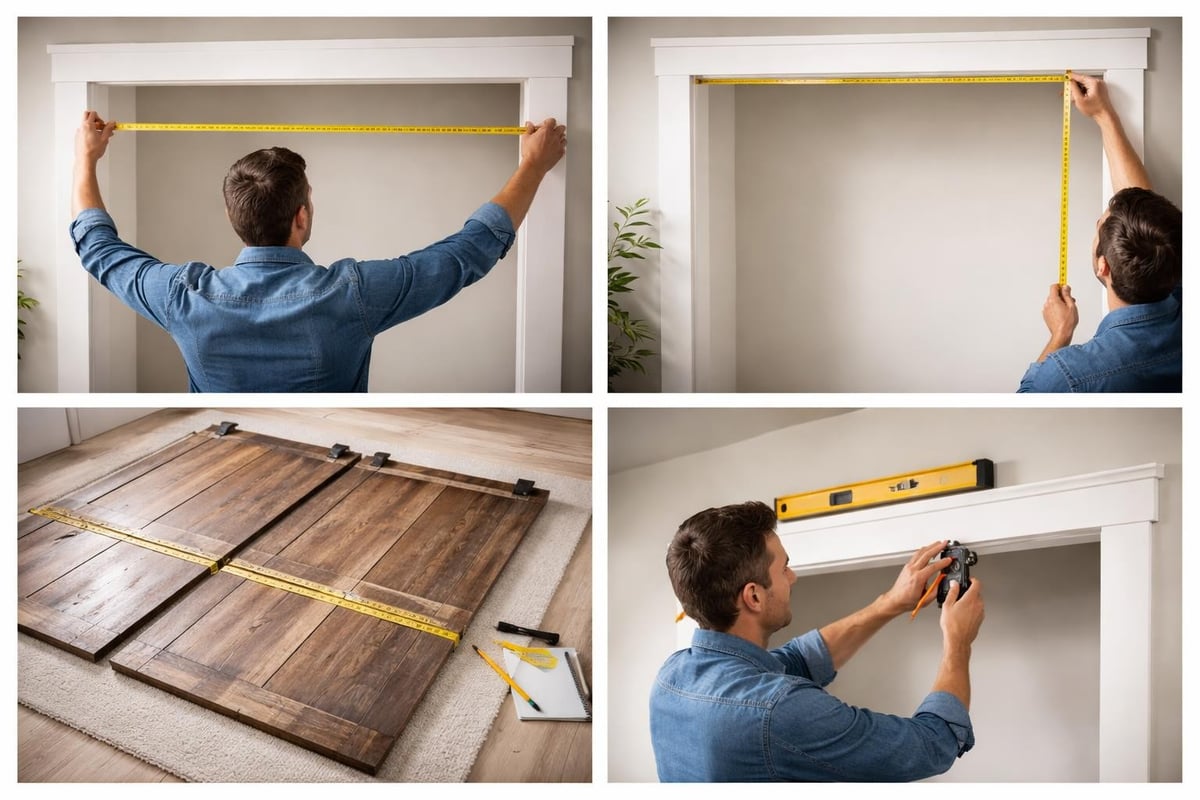
Getting your measurements right makes the difference between a smooth installation and a frustrating do-over. Here's the measurement checklist I use for every project:
Opening dimensions:
- Width of closet opening (measure at top, middle, and bottom)
- Height from floor to top of opening
- Depth of door jamb (affects door thickness selection)
Wall space:
- Available wall space on each side of opening
- Distance from ceiling to top of opening
- Location of electrical outlets or switches
- Position of wall studs
Door sizing:
- Add 2-4 inches to opening width for overlap coverage
- Match door thickness to hardware specifications
- Consider clearance from floor (typically 1/2 to 1 inch)
The general rule is that your door should be at least two inches wider than your opening on each side. This creates proper coverage and prevents light gaps. For more detailed specifications, you can review the technical clearance requirements that apply to different hardware systems.
Real-World Applications That Inspire
Let me share some actual installations that showcase the versatility of barn door closet sliding doors. These aren't just pretty pictures from design magazines-they're real homes with real challenges that found solutions through smart sliding door applications.
The Compact Apartment Makeover
Sarah lived in a 650-square-foot studio in Chicago. Her only closet had bi-fold doors that constantly jumped their tracks and created visual clutter in her already-small space. She reached out to us in early 2025 looking for alternatives.
We suggested barn door closet sliding doors with a minimalist track system. She chose a whitewashed door panel that matched her walls, creating a seamless look when closed. The transformation went beyond aesthetics-she could now place her desk chair right where the old bi-fold doors used to swing open. That single change made her workspace functional for the first time.
What really made the difference was choosing hardware that supported a 1-3/8 inch door panel. Many apartment dwellers assume they need thick, heavy doors, but lighter panels work perfectly for closet applications and reduce the overall visual weight in small spaces.
The Master Suite Upgrade
The Rodriguez family had a builder-grade master bedroom with standard double closet doors. Functional? Sure. Inspiring? Not exactly. They wanted their bedroom to feel more like a boutique hotel suite.
They installed two barn door closet sliding doors that met in the middle, covering a 96-inch-wide closet opening. The doors featured a dark walnut stain with black hardware, creating a dramatic focal point in their neutral bedroom. But here's what made it work: they added soft-close mechanisms to the hardware, eliminating the harsh sliding sounds that would have disrupted the serene atmosphere they wanted.
The installation took about four hours, including the time to properly locate studs and install blocking where needed. One year later, they say it's still their favorite renovation project.
The Kid-Friendly Solution
Here's a scenario many parents face: kids' closet doors that become hazards during play time. The Martinez family had this exact problem. Their two boys shared a room with closet doors that swung into the play area, creating pinched fingers and frustrated parents.
Barn door closet sliding doors solved multiple problems simultaneously. First, the sliding mechanism eliminated the swing hazard. Second, they chose a chalkboard-painted door panel that became part of the play experience. The boys could draw on their closet door, and cleanup was part of the nightly routine. Third, the reclaimed floor space allowed for a small reading corner that wouldn't have fit before.
This installation taught me that barn door solutions work best when they address multiple pain points, not just aesthetics. Houzz discusses ten reasons to love barn-style sliding doors, and child safety combined with space efficiency ranks high on that list.
Customization Options That Make It Yours
The beauty of barn door closet sliding doors extends far beyond basic functionality. You're creating a custom feature that reflects your personal style and meets your specific needs. Let's explore the customization landscape.
Hardware Finishes and Details
Modern barn door hardware comes in an impressive range of finishes:
- Matte black for contemporary and industrial spaces
- Oil-rubbed bronze for traditional and rustic aesthetics
- Brushed stainless steel for modern and transitional designs
- Antique iron for vintage and farmhouse styles
- Powder-coated colors for bold, custom looks
Beyond finish, you can customize the roller style, track profile, handle design, and even add decorative elements like corner braces or clavos (decorative nails). I recently saw an installation that used brass hardware with a clear-coated natural steel track-the mixed-metal look was stunning.
Door Panel Configurations
| Configuration | Best For | Considerations |
|---|---|---|
| Single panel | Standard closets, single-door openings | Requires wall space equal to door width |
| Double panel (meeting) | Wide closets, dramatic entrances | Both panels slide from center outward |
| Bypass system | Maximum opening access | Two doors on parallel tracks |
| Bifold sliding | Compact spaces, limited wall area | Doors fold and slide simultaneously |
The bifold configuration deserves special attention for closet applications. If you have limited wall space on either side of your closet opening, a bifold system lets the door panel fold in half while sliding. This cuts the required wall clearance in half compared to standard sliding doors.
Functional Add-Ons
Consider these functional upgrades that enhance the barn door closet sliding doors experience:
- Soft-close dampeners prevent slamming and extend hardware life
- Floor guides keep the door aligned without a bottom track
- Locking mechanisms for privacy or security needs
- Automatic opening systems for accessibility requirements
- Integrated lighting mounted to the track for closet illumination
My friend Jennifer installed LED lighting along her barn door track that automatically illuminates her walk-in closet when the door opens. It's one of those small details that makes daily life noticeably better.
Maintenance and Long-Term Performance
Let's talk about what happens after installation. Barn door closet sliding doors need minimal maintenance, but a few simple practices keep them operating smoothly for decades.
Regular Maintenance Tasks
You don't need to be particularly handy to maintain your sliding door system. Here's what I do with my own barn doors every few months:
Track cleaning: Dust and debris accumulate in the track channel over time. I use a dry microfiber cloth to wipe down the track, then follow up with a barely damp cloth if there's any sticky residue. This takes about two minutes per door.
Roller inspection: Check that the rollers spin freely and show no signs of wear. Quality hardware uses sealed ball bearings that should last for years, but it's worth a quick visual check.
Hardware tightening: Vibration from daily use can gradually loosen mounting bolts. Every six months, I check all bolts and screws with the appropriate hex key or screwdriver, snugging them up if needed.
Door alignment: If your door starts dragging or sitting crooked, the rollers probably need minor adjustment. Most systems have adjustment screws that let you raise or lower each roller independently.
Troubleshooting Common Issues
Over the years, I've encountered-and solved-just about every barn door problem imaginable. Here are the most common issues and their fixes:
Door won't slide smoothly: Usually caused by track misalignment or debris. Check that the track is level and clean. If the problem persists, verify that your rollers aren't damaged.
Door swings away from wall: Install a floor guide or add a small stop block. The door shouldn't swing more than an inch or two from the wall during normal use.
Noise during operation: Apply a dry lubricant (never oil or grease) to the track and rollers. Some homeowners prefer the natural sound, but others want silent operation.
Door drags on floor: Adjust the rollers to raise the door, or trim the bottom edge of the door panel. Proper clearance is typically 1/2 to 1 inch.
For detailed guidance on hardware selection and maintenance, explore the door hardware for sliding doors resource that covers common questions.
Budget Planning for Your Project
How much should you expect to invest in barn door closet sliding doors? The answer depends on several factors, but let's break down realistic budget ranges based on 2026 pricing.
Cost Components
Hardware kit: Quality barn door hardware kits range from $150 to $500 depending on style, finish, and weight capacity. Basic systems start around $150, while premium options with soft-close mechanisms and designer finishes can exceed $400.
Door panel: This varies wildly based on material and construction:
- Stock solid core doors: $100-$200
- Custom wood doors: $300-$800
- Mirrored or glass doors: $250-$600
- Reclaimed wood custom builds: $400-$1,200
Installation supplies: Budget $50-$100 for additional items like wood screws, wall anchors, stud finders, drill bits, and finishing materials.
Professional installation: If you're hiring a carpenter or handyman, expect $200-$500 for labor depending on your location and installation complexity.
DIY vs. Professional Installation
I'm a strong advocate for DIY installation if you're reasonably handy. The process requires basic tools-drill, level, measuring tape, stud finder, and appropriate bits. Most homeowners complete a single-door installation in 3-4 hours.
However, consider professional help if:
- You're installing multiple doors or complex bypass systems
- Your walls require extensive blocking or structural modification
- You're working with heavy doors (over 150 pounds)
- You lack confidence in finding studs or mounting hardware securely
The Johnson family I mentioned earlier hired a professional for their three-door project. They paid $450 for installation but gained peace of mind knowing everything was mounted to code. For their situation, that made sense.
Comparing Alternatives and Making Your Choice
Should you definitely choose barn door closet sliding doors over other options? Let's honestly compare the alternatives so you can make an informed decision.
Traditional Hinged Doors
Advantages:
- Lower cost (hardware is inexpensive)
- Familiar installation process
- Completely seals opening when closed
- No wall space requirement beside opening
Disadvantages:
- Requires swing clearance
- Can interfere with furniture placement
- Limited design impact
- Hinges wear over time
Bi-Fold Doors
Advantages:
- Reduced swing radius compared to hinged doors
- Wide opening access
- Lower cost than barn door systems
- Common in builder-grade homes
Disadvantages:
- Track systems frequently fail
- Limited style options
- Often look cheap or dated
- Difficult to operate smoothly long-term
Pocket Doors
Advantages:
- Door disappears completely into wall
- Maximum floor space preservation
- Clean, minimalist appearance
- No visible hardware
Disadvantages:
- Must be installed during construction or major renovation
- Expensive retrofit installation
- Cannot access wall cavity for repairs/wiring
- No design statement (door is hidden)
Barn door closet sliding doors occupy a sweet spot: they deliver the space savings of pocket doors without requiring wall demolition, and they create a design statement that hinged or bi-fold doors can't match. Remodelista curates a list of ten favorite barn doors that showcase this design versatility across different home styles.
Addressing Common Concerns
Every time I discuss barn door closet sliding doors with homeowners, certain questions and concerns surface repeatedly. Let's address them directly.
Privacy and Sound Transmission
"Won't there be gaps around the door?" This is the number one concern for bedroom closet applications. Yes, barn doors don't seal completely like hinged doors do. However, for closet applications, this rarely matters.
Think about it: your closet isn't generating noise or requiring absolute privacy. The small gaps around barn door edges (typically 1/4 to 1/2 inch) don't impact closet functionality. If you're concerned about light gaps, you can add brush seals or rubber gaskets to minimize them.
For applications where sound control matters-like bathroom doors or bedroom entries-barn doors may not be ideal. But for closets? The gap issue is largely irrelevant.
Weight and Wall Support
"Will my wall support a heavy door?" This concern is valid and requires proper planning. Standard drywall alone won't support barn door hardware safely. You need one of these backing solutions:
- Mounting directly into wall studs (16 or 24 inches on center)
- Installing a header board across studs before mounting track
- Using specialized wall blocking designed for barn door systems
Most closet doors weigh 60-120 pounds, well within the capacity of properly installed hardware. If you're uncertain about your wall structure, consult a professional before purchasing hardware.
Long-Term Durability
"Will this hold up over years of use?" Quality matters enormously here. Cheap barn door hardware with plastic components or thin steel will fail relatively quickly. American-made hardware with steel construction and sealed bearings will function smoothly for decades.
I installed barn doors on my own home in 2018 using quality hardware. Eight years later, they operate exactly as smoothly as the day I installed them. I've opened and closed these doors thousands of times-probably 10,000+ cycles per door-with zero maintenance beyond occasional track cleaning.
When you invest in proper hardware backed by solid warranties, you're installing a feature that outlasts most home fixtures.
Barn door closet sliding doors transform ordinary closets into functional design features that reclaim space and reflect your personal style. Whether you're working with a compact apartment or a spacious master suite, the right sliding door system solves practical problems while creating visual impact. At The Barn Door Hardware Store, we've been helping homeowners navigate these decisions since 2016, offering quality hardware, expert guidance, and the support you need for a successful installation. Ready to reclaim your space and upgrade your closet? Let's find the perfect barn door solution for your home.
