
When Sarah walked into her friend's farmhouse-style kitchen last summer, she stopped in her tracks. The focal point wasn't the subway tile backsplash or the reclaimed wood shelves. It was the stunning sliding barn door that separated the kitchen from the pantry, gliding effortlessly along its track with just a gentle push. That moment sent her down a rabbit hole of research into barn door manufacturers, trying to understand what makes one system glide like butter while another wobbles and scrapes. The truth is, not all barn door hardware is created equal, and the manufacturer behind your system makes all the difference between a showpiece and a headache.
What Makes a Quality Barn Door Manufacturer Stand Out
You've probably noticed that barn doors have exploded in popularity over the past decade. According to market research tracking the barn door hardware industry, this growth isn't slowing down anytime soon. But here's the thing: as demand increases, so does the number of manufacturers flooding the market with varying levels of quality.
A reputable barn door manufacturer focuses on three core elements that separate exceptional hardware from mediocre alternatives.
Engineering That Actually Works
The best manufacturers don't just copy existing designs. They engineer systems that account for real-world use. Think about it: your barn door will slide open and closed thousands of times over its lifetime. Will the rollers still glide smoothly in year five? Will the track stay straight under constant weight?
Quality manufacturers test for:
- Weight capacity exceeding standard door weights
- Roller durability through tens of thousands of cycles
- Track straightness under sustained load
- Hardware finish resistance to daily wear
I've seen customers discover the hard way that a $50 hardware kit from a bargain manufacturer requires replacement within two years, while a professionally engineered system lasts decades.

Material Selection and American Manufacturing
Here's where the conversation gets interesting. When you're choosing a barn door manufacturer, understanding their material sourcing tells you everything about their priorities.
Premium manufacturers typically use cold-rolled steel for tracks and mounting brackets. This isn't just marketing speak. Cold-rolled steel provides superior strength and a smoother finish compared to hot-rolled alternatives. The rollers themselves often feature sealed ball bearings that protect against dust and debris, maintaining smooth operation for years.
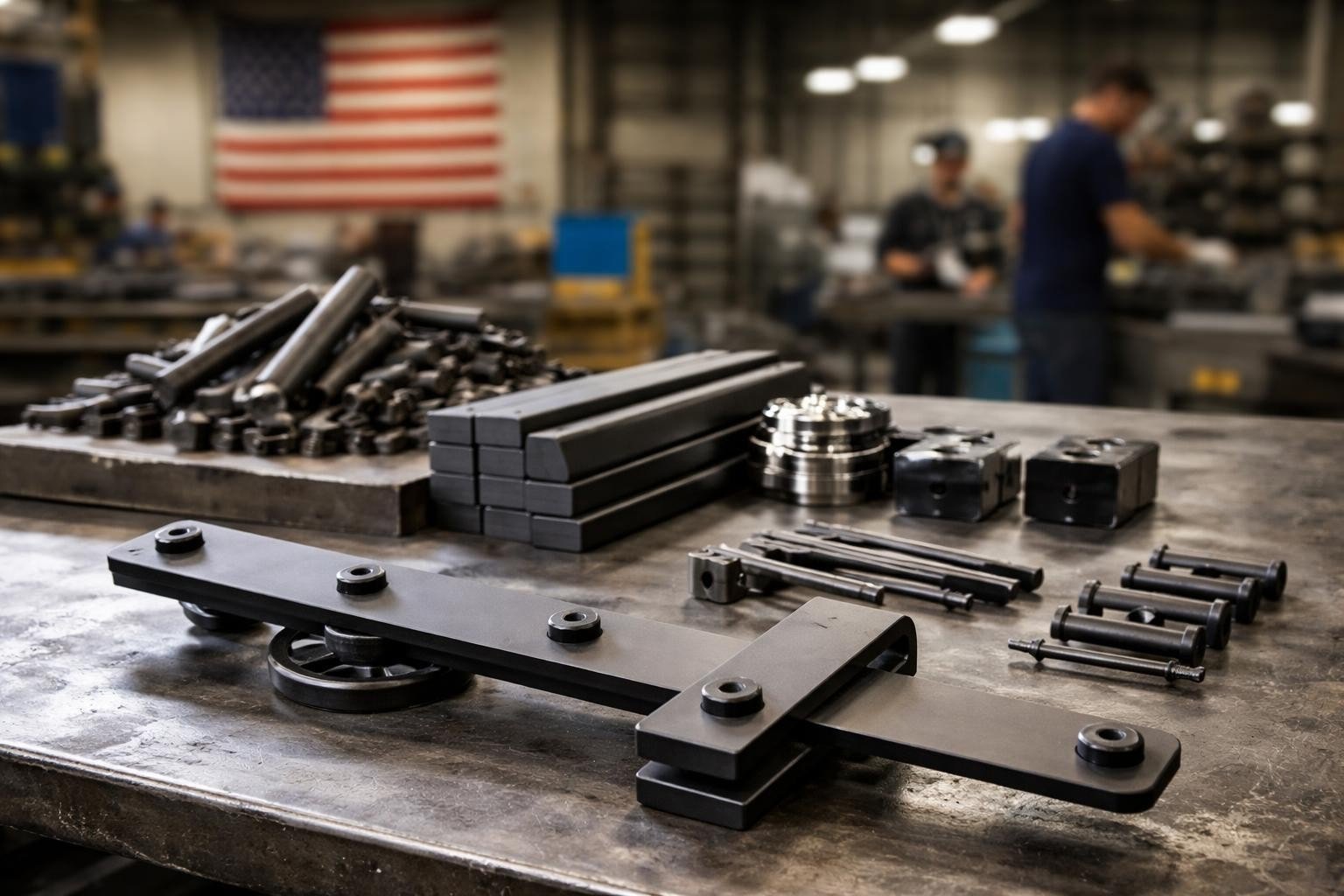
American-made hardware offers distinct advantages. Domestic barn door manufacturers maintain tighter quality control, use higher-grade materials, and stand behind their products with meaningful warranties. Since 2016, family-owned businesses have particularly excelled in this space, combining traditional craftsmanship with modern engineering.
The Evolution of Barn Door Manufacturing
Let's take a step back and look at how we got here. Barn doors originated as practical solutions on working farms, where large openings needed durable, space-efficient closures. The original barn door manufacturer was often the local blacksmith, forging custom hardware by hand.
Fast forward to 2026, and the industry has transformed completely. Modern manufacturers blend that heritage craftsmanship with precision engineering and contemporary design sensibilities.
From Farm Function to Home Fashion
The transition happened gradually, then all at once. Around 2010, interior designers started incorporating barn doors into upscale home renovations. What started as a rustic accent piece evolved into a mainstream design element that works in everything from industrial lofts to coastal cottages.
This shift forced manufacturers to innovate beyond basic functionality. They developed:
| Traditional Farm Hardware | Modern Home Systems |
|---|---|
| Heavy gauge steel only | Multiple finish options (black, bronze, stainless) |
| Exposed roller mechanisms | Hidden roller designs for minimal aesthetic |
| Standard track lengths | Custom sizing and configurations |
| Basic functionality | Soft-close mechanisms and advanced features |
Today's leading barn door manufacturer thinks like both an engineer and a designer, creating hardware that performs flawlessly while enhancing your home's visual appeal.
Innovation Driving the Industry Forward
Remember when the only barn door option was a single sliding panel? Those days are long gone. Modern manufacturers have expanded the possibilities dramatically.
Current innovations include:
- Bifold systems that fold in the middle for tighter spaces
- Bypass configurations allowing multiple doors on parallel tracks
- Heavy-duty hardware supporting doors over 400 pounds
- Stainless steel systems for high-moisture environments
- Cabinet-scale hardware bringing barn door style to furniture
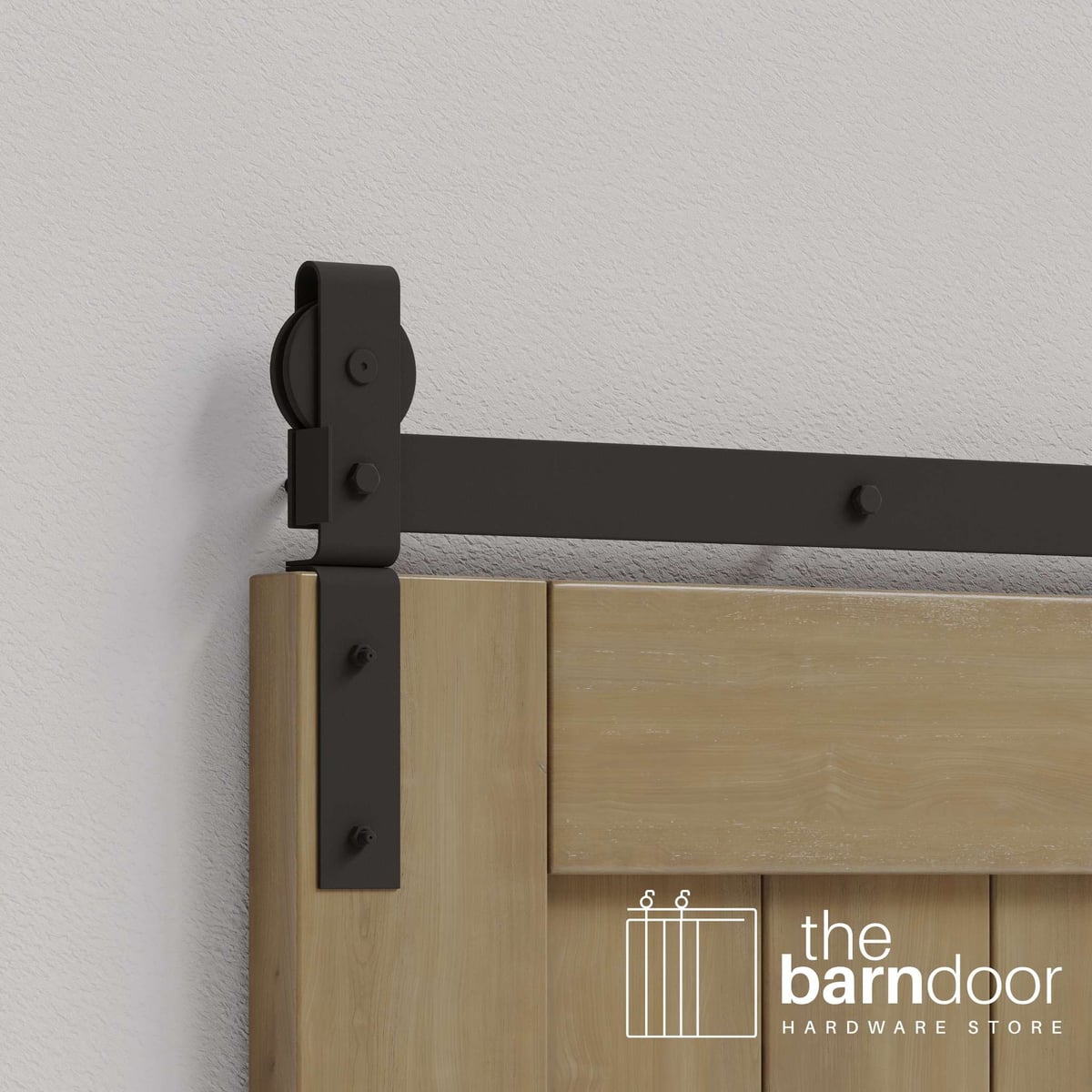
The Classic J-Strap Bifold Barn Door Hardware Kit exemplifies this innovation perfectly. It maintains the traditional curved J-strap aesthetic that's defined farmhouse style for generations while solving the space constraints of modern homes. The bifold mechanism eliminates the swing radius issue entirely, making barn door functionality possible in compact doorways and closets where a full sliding panel wouldn't fit.
How to Evaluate Barn Door Manufacturers
You're ready to commit to a barn door project, but how do you choose the right manufacturer? I'll walk you through the decision-making process that ensures you invest wisely.
Look Beyond the Price Tag
We all love a good deal, but barn door hardware isn't the place to prioritize savings over quality. A cheap system from an unknown barn door manufacturer often costs more in the long run when you factor in replacement, potential wall damage, and the frustration of doors that don't operate smoothly.
Consider the total cost of ownership:
- Initial hardware investment
- Installation complexity (cheaper hardware often requires workarounds)
- Maintenance needs over time
- Replacement timeline
- Warranty coverage and customer support
Warranty and Support Matter More Than You Think
Here's a story that illustrates this perfectly. A colleague purchased barn door hardware from a manufacturer offering a 90-day warranty. Eight months later, one of the rollers developed a grinding noise. The manufacturer offered no support, claiming the warranty had expired. She ended up replacing the entire system.
Compare that to manufacturers offering limited lifetime warranties. They stand behind their products because they're confident in their engineering and materials. When issues arise (and they occasionally do, even with premium hardware), responsive customer support makes all the difference.
Questions to ask any barn door manufacturer:
- What's the warranty period and what does it cover?
- Can you speak with a knowledgeable representative about installation questions?
- Do they provide detailed installation guides and videos?
- What's their response time for customer inquiries?
Check the Specifications and Certifications
Professional barn door manufacturers publish detailed specifications for their products. This transparency allows you to make informed decisions based on your specific project requirements. You should easily find information about proper measurements for your installation and weight capacities.
Look for manufacturers who provide:
| Specification Type | What It Tells You | Why It Matters |
|---|---|---|
| Weight capacity | Maximum door weight supported | Ensures safe operation and longevity |
| Track materials | Steel type, gauge, and finish | Indicates durability and appearance |
| Roller type | Ball bearing vs. nylon | Affects smoothness and noise level |
| Clearance requirements | Space needed above and beside door | Prevents installation surprises |
| Door thickness range | Compatible door dimensions | Ensures proper fit with your door |
The Real-World Impact of Manufacturer Choice
Let me share another real story that drives this home. My neighbor Tom decided to renovate his master bathroom last year, adding a barn door to separate the toilet area from the vanity. He purchased hardware from three different manufacturers over six months because the first two systems failed.
The first was a budget option from an overseas manufacturer with no U.S. presence. The rollers seized up within weeks, and the company never responded to support emails. The second was a mid-range option that worked initially but developed a loud squeak that no amount of lubricant could fix.
Finally, he invested in hardware from an established American barn door manufacturer with a proven track record. That system has operated flawlessly for over a year now, gliding smoothly and silently. Tom calculated that the "savings" from his initial cheap purchase actually cost him an extra $200 in wasted hardware, plus countless hours of frustration and reinstallation labor.
Installation Experience and Manufacturer Support
The quality of installation instructions and support materials varies wildly between manufacturers. Premium manufacturers understand that even perfect hardware can fail if installed incorrectly, so they invest heavily in customer education.
Top-tier barn door manufacturers provide:
- Step-by-step installation manuals with clear diagrams
- Video tutorials showing each installation phase
- Technical support hotlines staffed by knowledgeable representatives
- Detailed specs showing exact clearance requirements
- Templates for track mounting and roller placement
This support transforms a potentially intimidating DIY project into a manageable weekend task. Many homeowners successfully install their own barn door systems with proper guidance from their manufacturer.
Industry Trends Shaping Manufacturing
The barn door hardware market continues evolving rapidly. According to recent industry analysis of the U.S. market, several trends are reshaping how manufacturers approach design and production.
Sustainability and Domestic Production
Consumers increasingly value sustainably produced, locally manufactured products. Smart barn door manufacturers are responding by emphasizing American manufacturing, recycled materials, and reduced packaging waste. This shift benefits buyers through higher quality control, reduced environmental impact, and support for domestic jobs.
Customization and Personalization
Cookie-cutter solutions don't work for every space. Leading manufacturers now offer:
- Custom track lengths cut to exact specifications
- Multiple finish options to match various décors
- Modular components allowing configuration flexibility
- Special-order capabilities for unique projects
This customization extends beyond aesthetics. Whether you need to accommodate an unusually heavy door, work within tight space constraints, or match specific architectural details, quality manufacturers provide solutions.
Smart Home Integration
While still emerging, some forward-thinking barn door manufacturers are exploring automation options. Motorized systems with smartphone controls appeal to accessibility-focused renovations and smart home enthusiasts. Expect this trend to accelerate as the technology matures and costs decrease.
Making Your Final Selection
You've researched manufacturers, compared specifications, and set your budget. How do you make that final decision with confidence?
Read Beyond the Five-Star Reviews
Customer reviews provide valuable insights, but dig deeper than the star rating. Look for reviews mentioning:
- Long-term performance (reviews from 1-2 years after purchase)
- Customer service experiences when issues arose
- Installation difficulty and accuracy of instructions
- How the hardware has held up with daily use
- Whether the manufacturer honored warranty claims
Pay special attention to how manufacturers respond to negative reviews. Do they offer solutions, or do they get defensive?
Consider the Complete Package
The best barn door manufacturer delivers value beyond the physical hardware. When evaluating options, consider what else you're getting:
Free shipping eliminates surprise costs and makes comparison shopping easier. For heavy hardware kits, shipping can add $50-100 to your total, so this benefit matters more than it might seem initially.
Expert guidance helps you avoid costly mistakes. Can you call with questions about the right hardware for sliding doors in your specific situation? Will someone help you troubleshoot installation challenges?
Warranty coverage protects your investment. A limited lifetime warranty signals manufacturer confidence and gives you peace of mind.
Understanding the Investment Timeline
Here's something most people don't consider: your barn door hardware is a long-term investment. When you choose a quality barn door manufacturer, you're selecting hardware that should last 20-30 years or more with minimal maintenance.
Break down the cost per year, and suddenly that premium system doesn't seem expensive at all. A $400 hardware kit that lasts 25 years costs just $16 per year. Compare that to a $100 system that requires replacement every 3 years, costing you $33 per year plus the hassle of repeated reinstallation.
The Manufacturing Process Behind Quality Hardware
Ever wondered what actually happens at a barn door manufacturer's facility? Understanding the process helps you appreciate the difference between mass-produced imports and carefully crafted American hardware.
Material Sourcing and Preparation
Quality starts with raw materials. Premium manufacturers source cold-rolled steel from certified suppliers, ensuring consistent quality and performance. The steel arrives in large sheets or coils, which are then cut, shaped, and formed into tracks, mounting brackets, and roller housings.
The finishing process matters enormously. Powder coating provides superior durability compared to spray painting, creating a hard, chip-resistant surface that maintains its appearance for decades. Some manufacturers offer multiple finish options to complement different design aesthetics.
Precision Engineering and Assembly
Modern manufacturing combines traditional metalworking with computer-controlled precision. CNC machines cut and drill with tolerances measured in thousandths of an inch, ensuring perfect alignment between components.
Ball bearings are pressed into roller assemblies in climate-controlled environments to prevent contamination. Each component is inspected before assembly, and completed kits undergo final quality checks before shipping.
This attention to detail explains why premium hardware operates so much more smoothly than budget alternatives. When components fit together precisely, friction decreases, noise disappears, and longevity increases dramatically.
Testing and Quality Assurance
Reputable barn door manufacturers don't just build hardware and hope it works. They test extensively:
- Load testing verifies weight capacity claims
- Cycle testing runs rollers through thousands of operations
- Finish testing exposes samples to humidity, temperature extremes, and UV light
- Field testing installs systems in real homes before full production
This rigorous testing catches problems before they reach customers, but it also drives product improvements over time.
Selecting Hardware for Specific Applications
Different spaces require different solutions. An experienced barn door manufacturer offers product lines designed for specific scenarios.
Residential Interior Applications
Standard interior barn doors work beautifully for most home applications: bedrooms, bathrooms, closets, pantries, and home offices. These systems typically support doors weighing 150-250 pounds, providing ample capacity for solid wood or composite doors up to 1-3/4 inches thick.
For contemporary spaces where you want barn door functionality without prominent hardware, exploring hidden roller systems offers an interesting alternative. These innovative designs conceal the roller mechanism behind the door while maintaining the sliding functionality.
Heavy-Duty and Commercial Uses
Some projects demand more robust solutions. Room dividers, oversized doors, or commercial installations require heavy-duty hardware engineered for doors exceeding 300 pounds. Quality manufacturers offer specialized systems featuring:
- Reinforced tracks with greater weight capacity
- Larger diameter rollers for improved load distribution
- Additional mounting hardware for enhanced stability
- Commercial-grade finishes resistant to high-traffic wear
Don't try to use standard residential hardware for heavy-duty applications. The wrong system creates safety hazards and premature failure.
Moisture-Prone Environments
Bathrooms, laundry rooms, and certain kitchen applications expose hardware to humidity and occasional moisture. While standard steel hardware with quality powder coating handles typical bathroom humidity fine, spaces with direct water exposure benefit from stainless steel systems.
A specialized barn door manufacturer offers stainless steel options specifically engineered for high-moisture environments, ensuring your hardware won't rust or corrode even in challenging conditions.
Choosing the right barn door manufacturer transforms your renovation from a potential headache into a successful upgrade that delights you every time you slide that door open. The difference between quality hardware and budget alternatives becomes apparent within weeks of installation, affecting both daily function and long-term satisfaction. Whether you're tackling your first barn door project or you're a seasoned renovator, The Barn Door Hardware Store combines American-made quality options, expert guidance, and comprehensive warranty coverage to ensure your installation succeeds from start to finish.
