
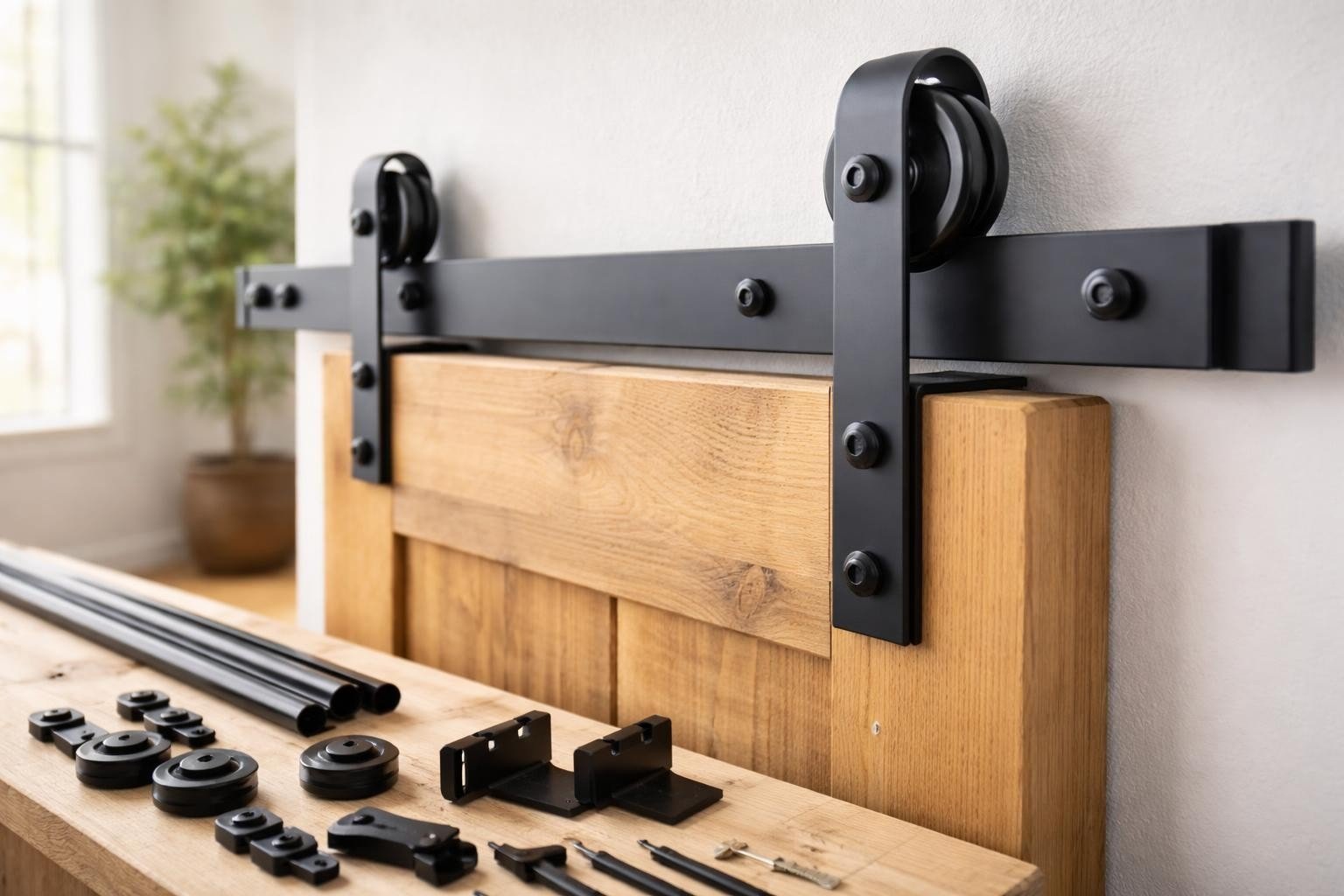
You've probably stood in the hardware aisle, staring at boxes and wondering which sliding door hardware kit is actually right for your project. Maybe you're transforming a guest bedroom closet, or perhaps you're finally tackling that laundry room makeover you've been dreaming about. Whatever your reason, choosing the right hardware can feel overwhelming when you're faced with weight capacities, track lengths, and installation methods you've never heard of before. But here's the thing: once you understand what makes a quality sliding door hardware kit tick, the whole process becomes surprisingly straightforward.
Why a Complete Hardware Kit Matters More Than You Think
Let me tell you about Sarah, a client from Denver who learned this lesson the hard way. She bought a beautiful reclaimed wood door for her master bathroom, then tried to piece together hardware from three different manufacturers. The rollers didn't quite fit the track. The mounting brackets were incompatible with her wall studs. She ended up spending twice as much and wasting an entire weekend.
A complete sliding door hardware kit eliminates these headaches. When you invest in a properly designed kit, everything works together from day one.
Here's what you should expect in a quality kit:
- Heavy-duty steel track (usually 6-8 feet, depending on door width)
- Matched roller assemblies designed for the track profile
- All necessary mounting hardware and screws
- Floor guides to keep the door stable
- Installation instructions with actual measurements
- Spacers and shims for fine-tuning alignment
The difference between buying components separately and getting a complete kit is like comparing a jigsaw puzzle with missing pieces to one that's guaranteed complete. You know everything fits together because it was engineered that way.
Understanding Weight Capacity and Door Compatibility
Your door isn't just wood and paint. It's weight, thickness, and structural integrity. And your sliding door hardware kit needs to handle all three.
Most residential doors fall into predictable categories. Standard hollow-core doors typically weigh 40-60 pounds. Solid wood doors range from 80-150 pounds. Those gorgeous reclaimed barn doors everyone wants? They can easily hit 200 pounds or more.
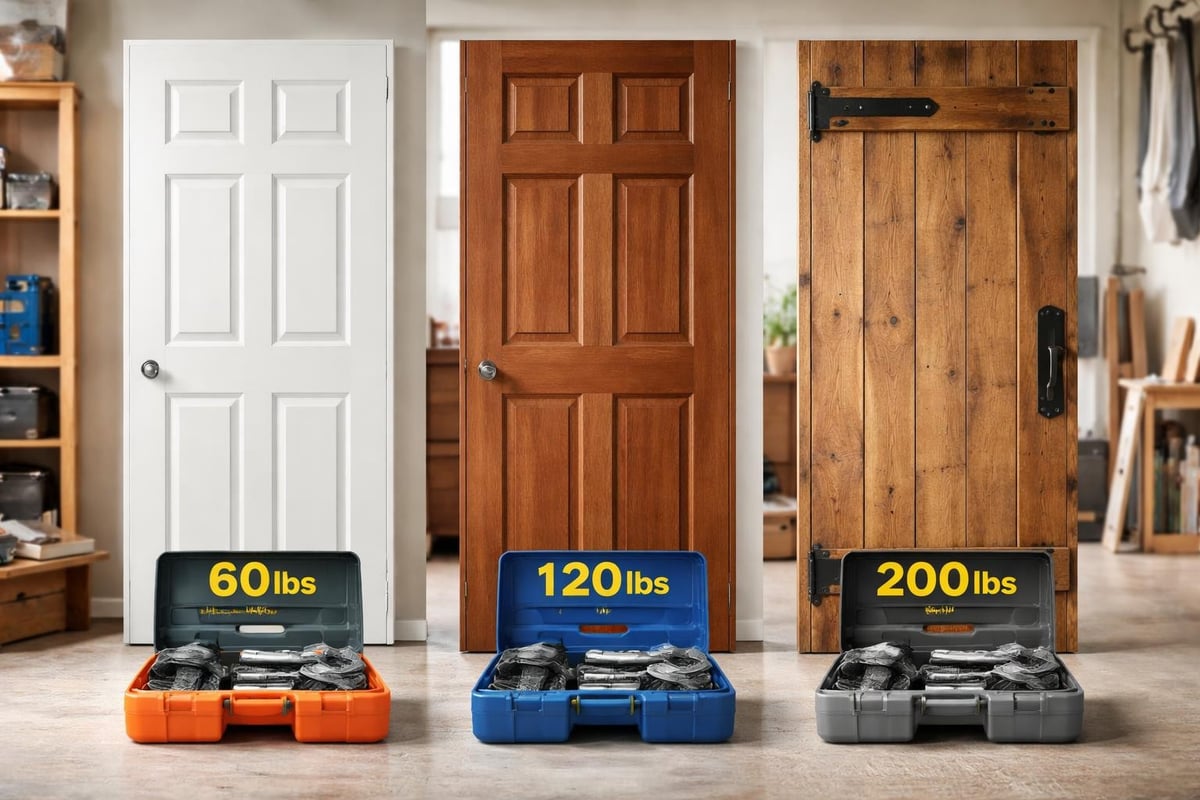
Matching Hardware to Your Door Specifications
I remember working with a contractor in Austin who installed a beautiful 2-inch-thick mesquite door. He'd bought a standard kit rated for 100 pounds. The door weighed 180. Within two weeks, the rollers started grinding, and the track began to sag. He had to completely reinstall with heavy-duty hardware designed for substantial doors.
Here's a practical breakdown:
| Door Type | Typical Weight | Thickness | Recommended Kit Capacity |
|---|---|---|---|
| Hollow Core | 40-60 lbs | 1-3/8" | 100-150 lb capacity |
| Solid Pine | 80-100 lbs | 1-3/4" | 150-200 lb capacity |
| Solid Oak/Hardwood | 120-150 lbs | 1-3/4" | 200-250 lb capacity |
| Reclaimed/Barn Wood | 150-200+ lbs | 2"+ | 300+ lb capacity |
Always buy hardware rated for at least 25% more than your door weighs. This safety margin accounts for door movement, seasonal wood expansion, and long-term reliability.
Installation Complexity: What to Expect
You don't need to be a master carpenter to install a sliding door hardware kit, but you do need realistic expectations. The complexity varies based on your wall type, door size, and the specific hardware style you choose.
Basic installations on solid wood studs usually take 2-4 hours for someone with moderate DIY skills. You'll need a level, drill, stud finder, and measuring tape. The process involves locating studs, mounting the track perfectly level, hanging the door, and adjusting the rollers.
Complex installations might involve steel studs, concrete walls, or custom door configurations. These can take a full day and might require specialty hardware or professional help.
Real Installation Stories
Marcus in Portland installed his first sliding barn door last spring. He had basic carpentry skills and a standard drywall-over-stud wall. Following the instructions that came with his sliding door hardware kit, he completed the installation in about three hours. His biggest challenge? Getting the track perfectly level. He told me he checked it four times before drilling mounting holes.
Contrast that with Jennifer in Miami, who wanted to install sliding doors on a concrete wall in her renovated warehouse loft. She spent an entire weekend because she needed to purchase masonry anchors, rent a hammer drill, and carefully calculate exact placement to avoid cracking the concrete. Different wall materials absolutely change the game.
The key is understanding your specific situation before you start. Choosing appropriate door hardware for sliding doors means considering your wall construction, not just the door itself.
Track Systems and Roller Mechanisms
Not all tracks are created equal, and the roller mechanism might be the most important component in your entire sliding door hardware kit. This is where smooth operation meets long-term durability.
You'll typically encounter three track profiles:
- Flat track systems with exposed rollers that ride along the face
- Box rail tracks that partially enclose the rollers
- Modern concealed tracks where hardware visibility is minimized
Each has advantages. Flat tracks are traditional, reliable, and easy to maintain. Box rail systems offer more stability for heavier doors. Concealed tracks create that clean, contemporary look many homeowners want in 2026.
Roller Quality Makes or Breaks Your Experience
The rollers themselves deserve serious attention. Steel rollers with sealed ball bearings glide smoothly for years. Cheaper plastic rollers work initially but wear down quickly, creating grinding noises and rough operation.
Knape & Vogt offers insights into sliding door hardware that emphasize roller engineering as the foundation of performance. Their research shows that roller quality directly correlates with user satisfaction over the product's lifetime.
Premium rollers feature:
- Steel construction with zinc plating for corrosion resistance
- Sealed ball bearing assemblies that resist dust and debris
- Adjustable mounting heights for fine-tuning alignment
- Noise-dampening rubber or nylon components
Don't skimp on roller quality. It's the difference between a door that whispers smoothly and one that announces every opening with grinding and clicking.
Style Considerations: Matching Hardware to Your Space
Here's where function meets aesthetics. Your sliding door hardware kit isn't just mechanics; it's a design element that either enhances or detracts from your room's overall feel.
The farmhouse aesthetic dominated for years, and it's still going strong in 2026. Those classic curved brackets and exposed hardware create that rustic charm people love. But modern and industrial styles have gained serious ground, especially in urban settings and contemporary homes.
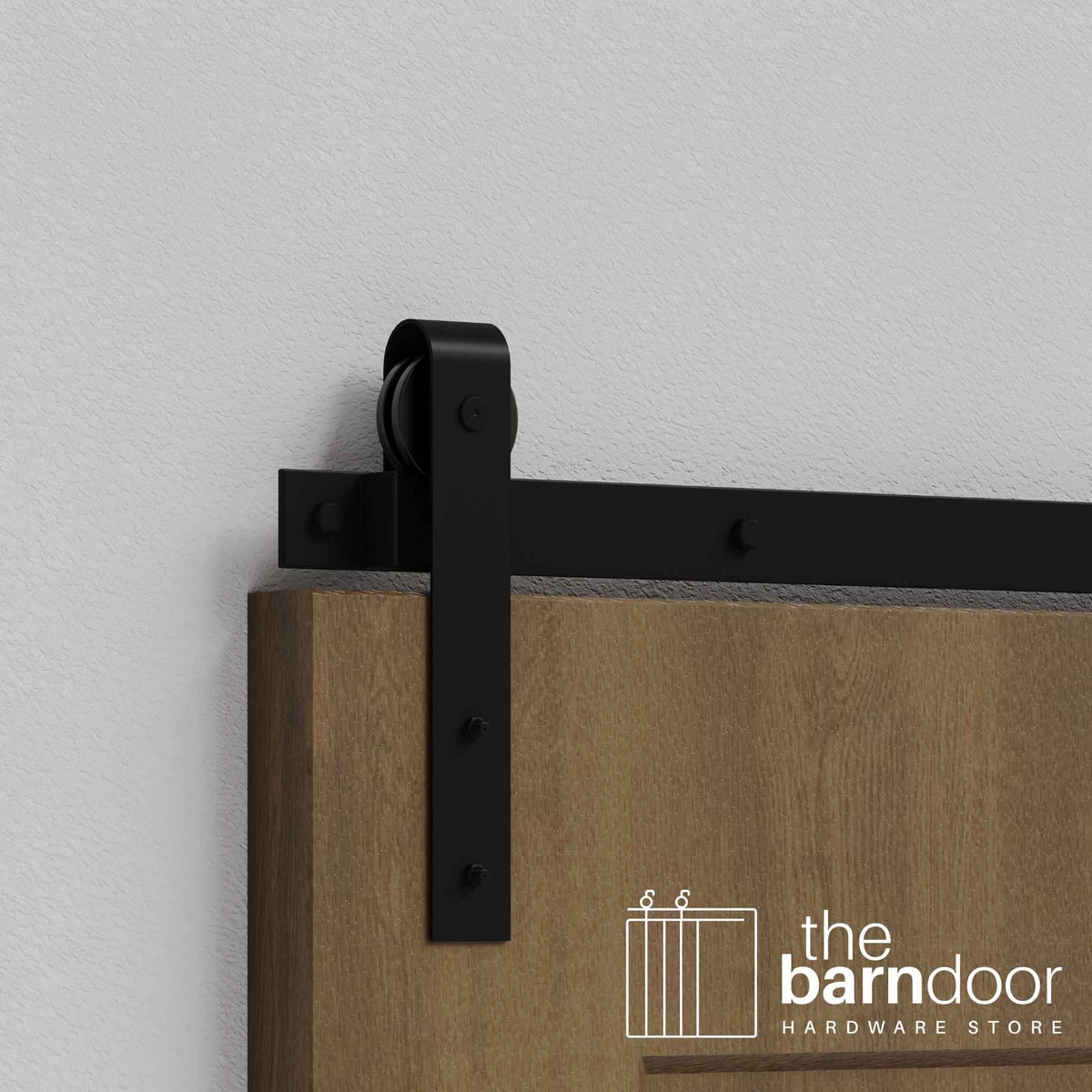
The Classic J-Strap Barn Door Hardware Kit remains popular because its curved, traditional design works in both rustic and contemporary spaces. Supporting doors up to 200 pounds with American-made reliability, this style has literally defined the farmhouse aesthetic for generations.
Design Trends Worth Considering
I've noticed three major trends this year:
Minimalist black finishes continue dominating residential installations. Matte black hardware complements virtually any door color and works in spaces ranging from ultra-modern to traditional farmhouse.
Industrial raw steel looks appeal to loft dwellers and anyone going for that warehouse-chic aesthetic. These unfinished or clear-coated steel systems develop a beautiful patina over time.
Concealed hardware systems attract homeowners who want barn door functionality without visible mechanical components. The track remains visible, but rollers hide behind the door panel for a cleaner look.
Your choice should reflect your overall design vision. Walk through your space and ask yourself: do I want the hardware to be a statement piece, or should it disappear into the background?
Bypass and Specialty Configurations
Standard single-door installations are just the beginning. Many spaces benefit from bypass configurations, bifold systems, or other specialized setups that require different sliding door hardware kit specifications.
Bypass doors use two doors sliding on parallel tracks, allowing one door to pass in front of the other. Perfect for wide closet openings where you need access to the full width. The hardware kit for bypass systems includes double tracks, additional rollers, and specialized mounting brackets.
Bifold sliding doors combine the space-saving benefits of folding doors with smooth sliding operation. These bifold hardware kits are ideal for closets, pantries, and spaces where you want maximum opening width in minimum space.
I worked with a couple in Nashville who converted their traditional double closet doors to a bypass system. They gained about 18 inches of usable floor space in their master bedroom just by eliminating door swing clearance. That might not sound like much, but in their 12x14 bedroom, it was the difference between cramped and comfortable.
When Standard Kits Don't Cut It
Sometimes your project demands custom solutions. Maybe you have 10-foot ceilings and want the drama of an oversized door. Perhaps you're installing multiple doors on a single long track for a unique room divider.
Premium sliding door hardware kits often include extended track lengths and additional rollers for these specialty applications. The key is planning ahead and understanding exactly what your configuration requires.
Material Quality and Longevity Factors
You've probably heard the phrase "buy once, cry once." Nowhere is this more relevant than with sliding door hardware. The difference between budget and quality kits isn't just price; it's measured in years of reliable operation versus frustrating repairs.
Steel gauge matters tremendously. Tracks made from 14-gauge or heavier steel resist bending and maintain alignment even under heavy door weight. Cheaper 18-gauge or 20-gauge steel might save you $30 today but could bend within months under a heavy door.
Finish quality protects your investment. Powder-coated steel resists scratches, corrosion, and wear better than simple paint. Stainless steel or zinc-plated components stand up to moisture in bathrooms and laundry rooms.
What American Manufacturing Means for Quality
American-made hardware typically follows stricter manufacturing tolerances and uses higher-grade materials. Companies like Goldberg Brothers have built reputations over decades by maintaining quality standards that cheaper imports rarely match.
Does this mean you should never buy imported hardware? Not necessarily. But understand the trade-offs. Imported kits can work fine for lightweight doors in low-use areas. For main bathroom doors that get opened 10+ times daily, or heavy doors anywhere, invest in quality materials.
| Component | Budget Material | Premium Material | Longevity Difference |
|---|---|---|---|
| Track | 20-gauge steel | 14-gauge steel | 3-5 years vs. 15+ years |
| Rollers | Plastic with basic bearings | Steel with sealed ball bearings | 2-3 years vs. 10+ years |
| Mounting Brackets | Stamped thin steel | Forged heavy steel | 5 years vs. lifetime |
| Finish | Basic paint | Powder coat or stainless | 1-2 years vs. 10+ years |
Installation Tips from Years of Experience
Let me share some hard-won wisdom that'll save you headaches. These aren't in the instruction manuals, but they should be.
Always install the track first, before hanging the door. This seems obvious, but you'd be surprised how many people try to hold the door and align the track simultaneously. Mount the track securely and perfectly level. Then hang the door. Your back will thank you.
Use a longer level than you think you need. A 48-inch level works better than a 24-inch one for track installation. The longer reference line catches subtle variations that shorter levels miss.
Pre-drill every hole. Even if you're working with soft pine studs, pre-drilling prevents wood splitting and ensures screws go exactly where you want them. This is especially critical with hardwoods or when working close to stud edges.
The Shimming Secret
Here's something most DIYers discover the hard way: walls aren't perfectly flat. Even new construction has slight variations. Professional installers carry a collection of thin shims specifically for hardware mounting.
When your track needs to span studs that aren't perfectly aligned, small wooden or plastic shims behind the mounting brackets compensate for those variations. This keeps your track straight and your door rolling smoothly. Understanding sliding door track and hardware installation nuances like this separates amateur results from professional-looking installations.
Maintenance and Long-Term Care
Your sliding door hardware kit isn't install-and-forget. A little maintenance goes a long way toward ensuring smooth, quiet operation for years.
Every six months, take five minutes to:
- Wipe down the track with a dry cloth to remove dust and debris
- Check all mounting screws for tightness
- Apply a tiny amount of silicone-based lubricant to rollers and track
- Verify the door still hangs level and adjust if needed
Avoid oil-based lubricants. They attract dust and create sticky buildup that actually makes rolling harder over time. Dry silicone spray or white lithium grease works better for this application.
Troubleshooting Common Issues
Door drags or sticks: Usually means debris in the track or dry rollers. Clean the track thoroughly and lubricate rollers.
Door swings away from wall: Your floor guide has shifted or needs adjustment. Realign it so the door stays parallel to the wall throughout its travel.
Grinding or clicking noises: This often indicates worn roller bearings or loose mounting hardware. Inspect rollers closely and replace if you see wear or damage.
Track appears to sag: This is serious. It means your mounting isn't adequate for the door weight. You may need to add support brackets or upgrade to heavier-duty hardware.
Truth Hardware's sliding door hardware information includes detailed maintenance schedules that align with these best practices, emphasizing preventive care over reactive repairs.
Cost Considerations and Value Analysis
Let's talk about money. A basic sliding door hardware kit starts around $80-100 for lightweight applications. Mid-range systems suitable for standard solid wood doors run $150-250. Premium heavy-duty kits with American manufacturing and lifetime warranties can exceed $400.
Is expensive hardware always better? Not necessarily. But there's a clear correlation between price and appropriate application.
For a guest bedroom closet door opened maybe twice a week, a mid-range kit works perfectly fine. You don't need aerospace-grade engineering for light use.
For a master bathroom door that gets opened 15 times daily, investing in premium hardware makes financial sense. The difference between a $120 kit that needs replacement in three years and a $300 kit that lasts 15+ years becomes obvious when you factor in replacement costs and installation labor.
Hidden Costs to Consider
The kit price isn't your only expense. Factor in:
- Door itself (if you don't already have one): $150-500+
- Finishing materials (stain, paint, sealant): $30-80
- Handles or pulls (if not included): $15-60
- Professional installation (if not DIY): $200-500
- Specialty tools you might need: $50-150
Realistic total project costs for DIY installation typically run $400-800 for a single door with quality hardware. Professional installation adds another $200-500 depending on complexity and local labor rates.
M-D Building Products' track hardware kit specifications provide detailed component breakdowns that help you understand exactly what you're paying for in different price ranges.
Special Applications and Unique Challenges
Standard residential installations are one thing. Special situations require adapted approaches.
Concrete or brick walls demand masonry anchors instead of wood screws. You'll need a hammer drill and specific bit sizes. The installation takes longer, and precision becomes even more critical because you can't easily reposition mounting holes.
Steel stud framing complicates things because standard wood screws don't work. You'll need either toggle bolts for hollow areas or self-drilling screws for direct-to-stud mounting. Architectural Builders Hardware Manufacturing provides excellent guidance on specialty mounting situations like these.
Angled or cathedral ceilings sometimes mean your wall isn't vertical. This affects how the door hangs and may require custom spacers or angled mounting brackets to ensure the door hangs plumb even though the wall isn't.
Outdoor and High-Moisture Applications
Can you use a sliding door hardware kit outdoors? Technically yes, but you need specialized hardware. Standard steel track and rollers rust quickly when exposed to weather. Look for stainless steel components specifically rated for exterior use.
Bathrooms and laundry rooms present moisture challenges too, though less extreme than outdoors. Powder-coated or stainless steel hardware handles humidity better than basic painted steel. Ensure you maintain proper ventilation to minimize moisture exposure.
Comparing Different Manufacturer Approaches
The sliding door hardware market offers diverse approaches to solving the same basic problem: making doors slide smoothly and reliably. Understanding these philosophical differences helps you choose what works for your specific needs.
Some manufacturers focus on traditional aesthetics with visible, substantial hardware that makes a design statement. Their kits emphasize the beauty of functional hardware, with curved brackets and exposed wheels that celebrate barn door heritage.
Other manufacturers prioritize minimal visual impact, creating systems where hardware nearly disappears. These kits appeal to modern sensibilities and spaces where you want functionality without prominent mechanical elements.
Industrial-strength manufacturers build systems for commercial applications that happen to work beautifully in residential settings when you have unusually heavy doors or high-use situations.
National Guard Products' sliding door hardware catalog demonstrates the breadth of options available, from basic residential kits to heavy commercial systems.
Reading Between the Lines of Product Specs
Marketing language can obscure important details. Here's how to decode what manufacturers are really saying:
"Easy installation" often means simplified but potentially less durable mounting systems. Great for DIY, but verify weight ratings carefully.
"Heavy-duty" should come with specific weight capacities, not just general claims. If they don't specify pounds, be skeptical.
"Commercial-grade" usually indicates stronger materials and higher tolerances, but also typically means more complex installation.
"Lifetime warranty" sounds impressive until you read the fine print. What exactly is covered? Just defects, or also wear from normal use?
The Environmental and Sustainability Angle
This might not be your first consideration when choosing a sliding door hardware kit, but it's worth thinking about. Quality hardware that lasts 15+ years is inherently more sustainable than cheap hardware replaced every 2-3 years.
American manufacturing generally means better labor standards and environmental regulations than many imported alternatives. It also reduces shipping distances and associated carbon footprints.
Steel is infinitely recyclable. When quality hardware eventually reaches end-of-life, the steel can be completely recycled without degradation. Plastic components in cheaper kits often end up in landfills.
Powder coating produces fewer VOCs than traditional painting processes. It's also more durable, meaning less need for refinishing or replacement over the product's lifetime.
Consider the total lifecycle impact. A $300 kit that lasts 15 years and can be recycled afterward has a smaller environmental footprint than three $100 kits over the same period that end up in landfills.
Final Thoughts on Making Your Choice
Choosing the right sliding door hardware kit ultimately comes down to matching components to your specific situation. Your door's weight and thickness. Your wall construction. Your aesthetic preferences. Your budget and timeline.
Don't get paralyzed by options. Start with the basics: measure your door, weigh it if possible, and honestly assess your DIY skills. That information points you toward appropriate hardware categories.
Research specific products within those categories, paying attention to weight ratings, material quality, and manufacturer reputation. Read actual user reviews, not just marketing copy. Look for patterns in feedback, both positive and negative.
When you've narrowed it down to 2-3 options, consider installation complexity and long-term value, not just initial price. The cheapest kit rarely proves economical over time, but the most expensive isn't always necessary either.
TS Distributors' sliding barn door hardware kit information provides helpful comparison tools for evaluating different options side by side.
Trust your instincts, but verify with facts. If a deal seems too good to be true, it probably is. Quality hardware has real costs in materials and manufacturing. Extremely low prices usually indicate corners cut somewhere that matters.
Finding the perfect sliding door hardware kit transforms your space from ordinary to extraordinary, combining functionality with the style that makes your house feel like home. Whether you're tackling your first barn door installation or you're a seasoned renovator, the right hardware makes all the difference between a project you're proud of and one that frustrates you for years. The experts at The Barn Door Hardware Store have been helping homeowners find exactly what they need since 2016, offering quality American-made options with free shipping and expert support to ensure your installation goes smoothly. Ready to start your project with hardware you can trust?
