
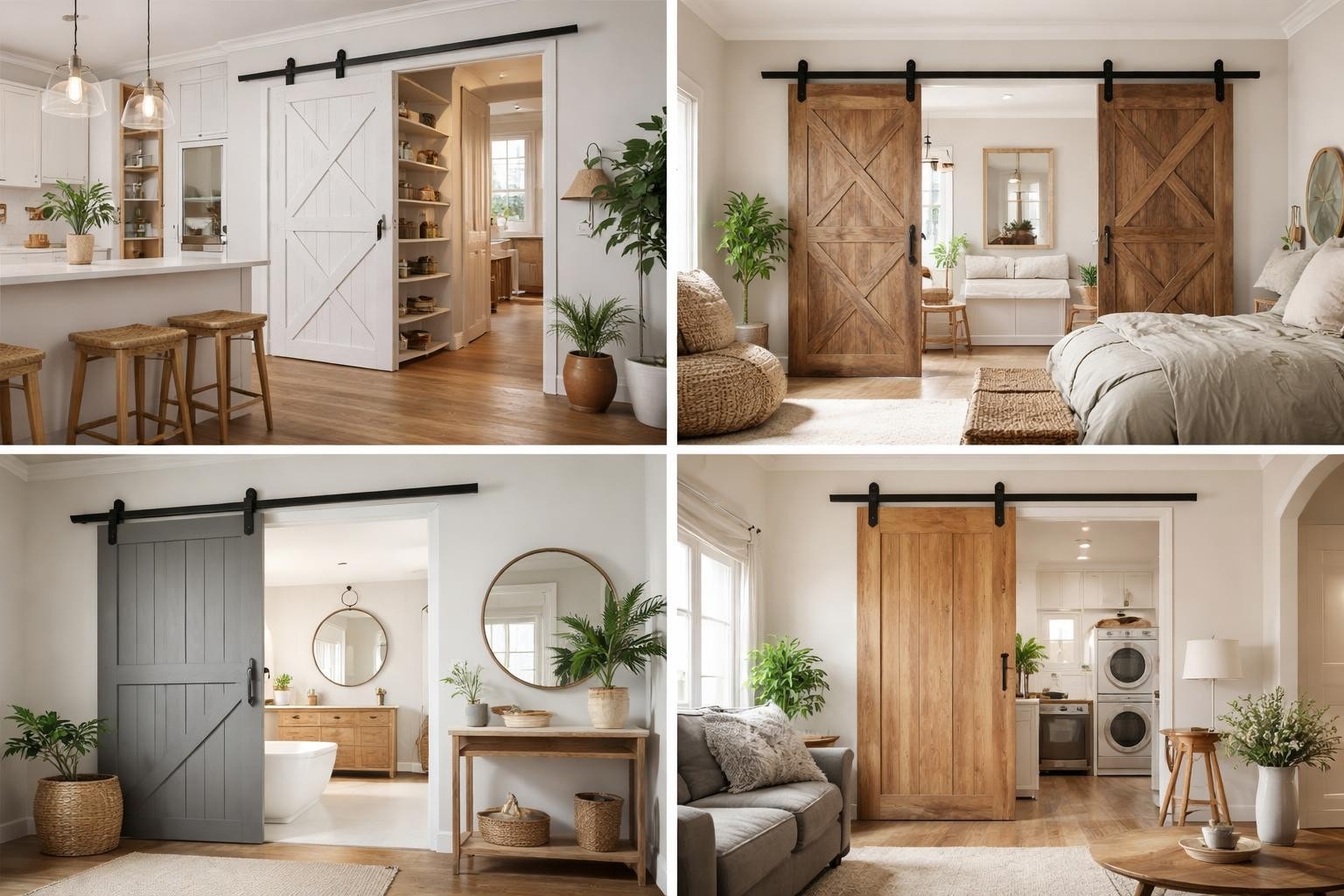
Last month, Sarah called me from her 1920s bungalow renovation, frustrated because her contractor insisted barn door style doors wouldn't work with her transitional design. I walked her through three installations I'd done that same week-one ultra-modern, one farmhouse, one Scandinavian minimalist. By the end of our conversation, she realized these doors aren't just for rustic homes anymore. They're one of the most versatile design elements you can add to any space in 2026, and I'm going to show you exactly why they work and how to get them right.
Understanding What Makes Barn Door Style Doors Different
Barn door style doors operate on a fundamentally different principle than traditional hinged doors. Instead of swinging into a room and requiring clearance space, they slide along a mounted track system parallel to the wall. This simple difference creates massive benefits for tight spaces, awkward layouts, and design-forward homes.
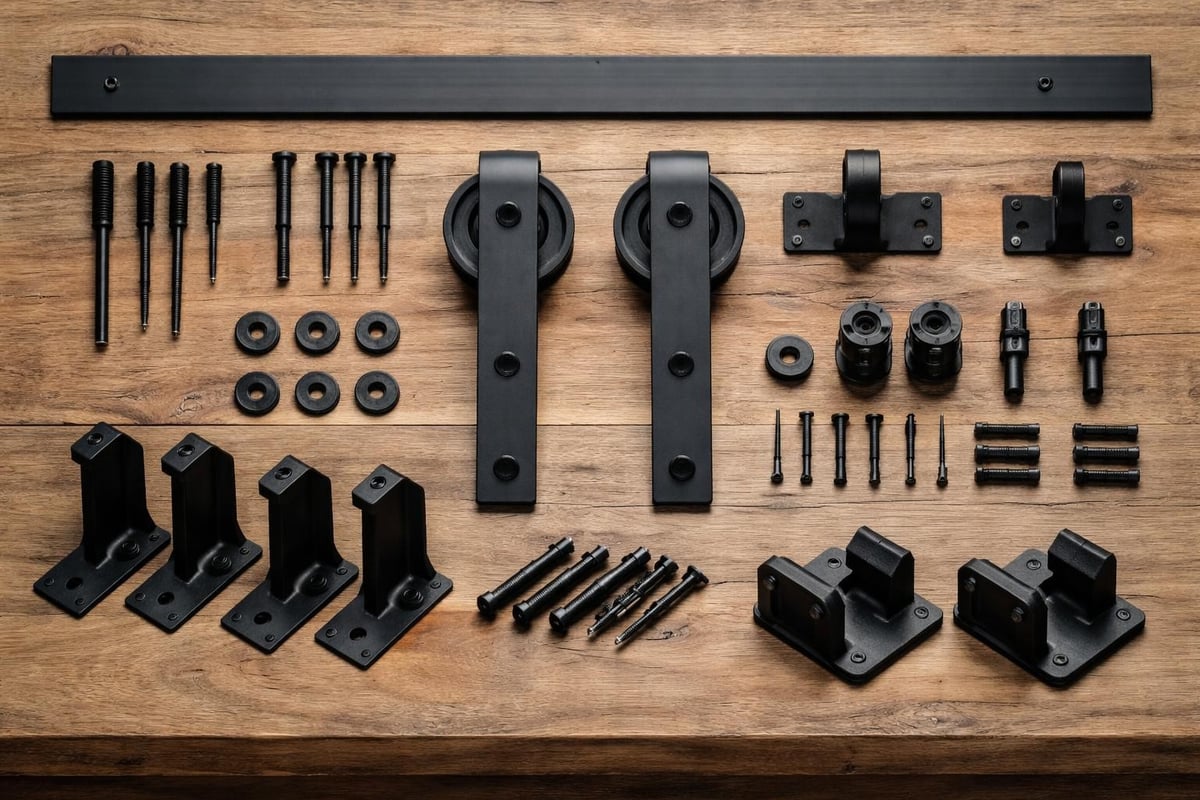
The hardware does all the heavy lifting here. You've got rollers that glide along a steel track, typically mounted above the door opening. The door itself hangs from these rollers, creating that signature floating appearance. Most systems today use ball-bearing rollers that make the movement smooth and nearly silent.
Why People Choose Sliding Barn Doors in 2026
Let me break down the real reasons homeowners are still installing these in droves:
- Space efficiency: No swing radius means you can place furniture right up against the door path
- Accessibility: Easier to operate than traditional doors, especially for aging-in-place designs
- Visual impact: Creates an immediate focal point and architectural interest
- Flexibility: Works for closets, bathrooms, pantries, room dividers, and exterior applications
- Customization: Unlimited finish, material, and hardware style combinations
I installed barn door style doors on a master bathroom last week where the homeowner had literally six inches of clearance. A traditional door would have required a complete layout redesign. The sliding system solved it perfectly while adding a luxury hotel vibe she hadn't even considered.
Exploring Different Styles and Design Approaches
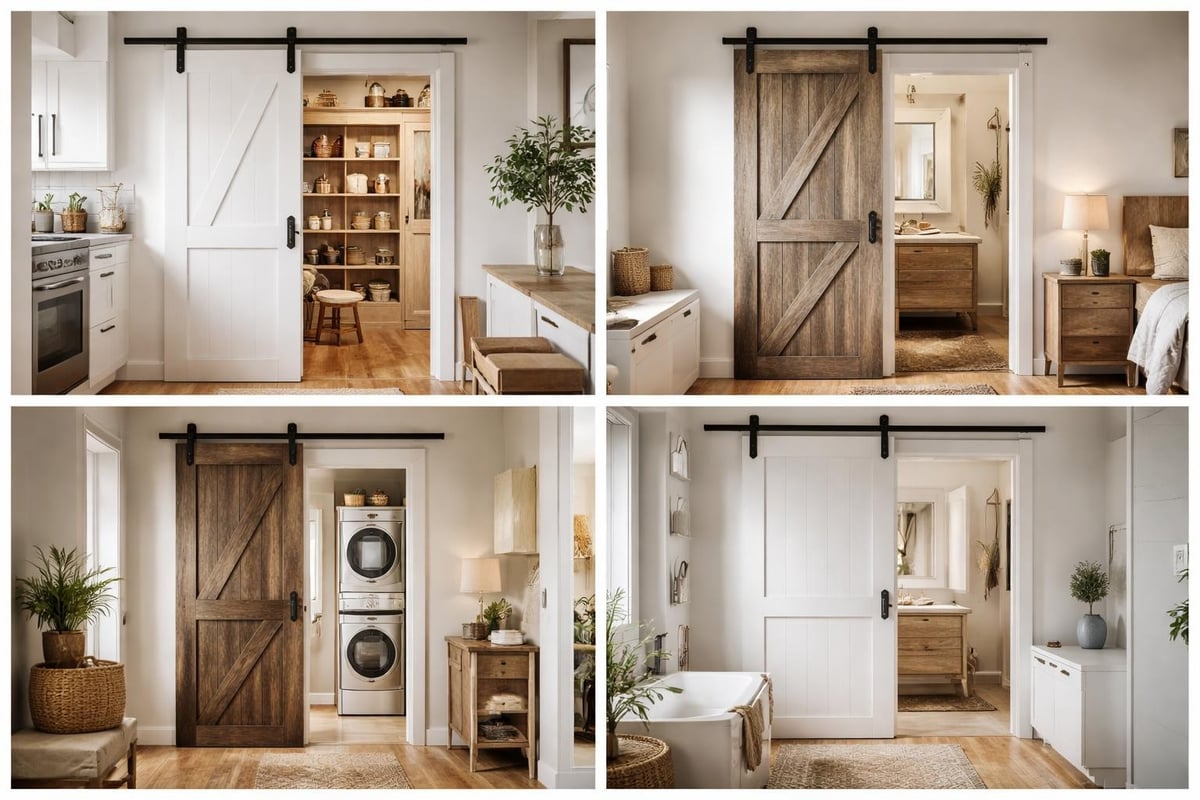
Here's where things get interesting. The versatility of barn doors extends far beyond rustic aesthetics, and 2026 design trends prove it. I've installed everything from reclaimed wood planks to frosted glass panels to sleek steel-framed doors, all using the same basic sliding hardware principle.
Classic Farmhouse and Rustic Styles
The original barn door look still dominates, and for good reason. Z-brace designs, X-patterns, and plank construction create authentic character. You're looking at materials like reclaimed barn wood, knotty pine, or cedar with natural finishes. The hardware typically features black or oil-rubbed bronze finishes that complement the weathered wood aesthetic.
But here's what matters: even rustic styles have evolved. Today's farmhouse doors often incorporate cleaner lines, more refined joinery, and professionally milled wood instead of the rough-cut look from ten years ago.
Modern and Contemporary Applications
This is where I see the most growth. Modern barn door style doors use materials like:
- Glass panels in aluminum or steel frames
- Solid core doors with clean paint finishes (white, gray, black)
- Horizontal plank designs with minimal hardware visibility
- Mirror panels for closets and dressing areas
The hardware for modern applications tends toward stainless steel, matte black, or brushed nickel. Some homeowners even choose hidden roller systems that mount the track inside a pocket or behind trim work, so you see only the door face.
Transitional and Industrial Designs
Right in the middle, you've got transitional styles that blend traditional warmth with contemporary clean lines. Think Shaker-style panels on sliding hardware or board-and-batten doors painted in modern colors. Industrial approaches use metal-framed glass doors, exposed hardware as design features, and materials like corrugated metal or blackened steel.
Hardware Selection: The Foundation of Success
Let me be direct about this: your hardware quality matters more than your door quality. I've seen gorgeous custom doors ruined by cheap hardware that binds, sags, or fails within months. Since starting installations in 2014, I've learned which systems hold up and which don't.
Track Systems and Weight Capacity
Your track needs to match your door weight with a safety margin. Here's my standard recommendation table:
| Door Weight | Minimum Track Rating | Recommended System Type |
|---|---|---|
| Up to 100 lbs | 150 lb capacity | Standard single track |
| 100-200 lbs | 250 lb capacity | Heavy-duty single track |
| 200+ lbs | 350+ lb capacity | Commercial-grade system |
I always spec hardware rated at least 50% above the door weight. Doors are heavier than people expect, especially solid wood or glass panel designs. A standard 36" x 84" solid core door typically weighs 80-120 pounds before you add decorative elements.
The heavy-duty systems from quality manufacturers use thicker steel tracks, larger diameter rollers, and reinforced mounting brackets. The cost difference is maybe $100-150, but the performance difference is night and day.
Roller Types and Performance
Ball-bearing rollers are non-negotiable for me. Nylon sleeve bearings might save you $20, but they wear out fast and start making noise within a year. The ball-bearing systems roll smoothly for decades with minimal maintenance.
For bypass configurations where you need two doors on a single opening, you're looking at either a double-track system or a single-track bypass with offset rollers. The double-track approach gives you better stability for heavier doors.
Finish Durability Considerations
Living in the Midwest, I've learned which finishes hold up to humidity and temperature swings. Powder-coated steel outperforms painted steel every time. Stainless steel works beautifully in bathrooms and coastal areas where moisture is constant.
Here's my finish hierarchy for different environments:
- High-humidity spaces (bathrooms, laundry): Stainless steel or marine-grade powder coat
- Standard interior: Black powder coat or oil-rubbed bronze
- Modern aesthetic: Brushed nickel, matte black, or raw steel with clear coat
- Traditional looks: Antique bronze, vintage brass, or black iron finishes
The stainless steel hardware options cost more upfront, but I've never had a callback for rust or corrosion issues with them.
Installation Considerations and Common Challenges
I've installed probably 200+ barn door style doors over the years, and certain challenges come up repeatedly. Let me walk you through the critical measurements and planning steps that prevent problems.
Wall Structure and Mounting Requirements
Your track needs solid backing-period. Standard drywall anchors won't cut it for a 150-pound door that gets opened and closed daily. I always locate studs and mount directly into them, or I install a header board across multiple studs.
The header board approach gives you maximum flexibility. I use a 1x4 or 2x4 hardwood board, paint or stain it to match the wall, and mount it securely into at least three studs. Then the track mounts to this board, distributing weight across a broader area.
For ceiling-mounted systems, you're dealing with similar principles but need access to joists. These installations work great for glass doors where you want minimal visual hardware.
Clearance and Space Planning
Every system has specific clearance requirements. Here's what you need to measure before ordering anything:
- Header space: Usually 6-8 inches above the opening for track and rollers
- Side clearance: The door needs to slide completely clear of the opening (door width + 2-4 inches)
- Floor clearance: Typically 1/2 to 3/4 inch gap at the bottom for floor guides
- Wall depth: Ensure baseboards and trim won't interfere with the door swing
I keep copies of the specification sheets for different systems on my phone so I can verify clearances on-site. Nothing's worse than ordering hardware and discovering you don't have adequate header space.
Handling Bypass and Bifold Configurations
Bypass systems-where two doors slide past each other-solve the clearance problem when you can't dedicate wall space for a single door to slide completely open. The trade-off is you can only access half the opening at a time.
Bifold barn door style doors give you full opening access while requiring less slide-away space. The door folds in the middle as it slides, so a 72-inch opening only needs 36-40 inches of wall clearance instead of 76 inches.
I use bypass systems for wide closet openings and bifolds for spaces where wall clearance is severely limited but full access is needed. According to current design trends in 2026, both configurations remain popular for their practical benefits.
Material Choices and Door Construction
The door itself can be anything that fits your style and budget, but certain materials work better for sliding applications than others. Weight distribution, warping resistance, and edge detail all matter when a door hangs from top-mounted hardware.
Solid Wood Doors
Solid wood creates that authentic, substantial feel. I typically work with pine, oak, or reclaimed lumber depending on the look we're after. The key with solid wood is ensuring proper drying and sealing to prevent warping. Wood expands and contracts with humidity changes, so I always recommend a good primer and quality paint or stain system.
For stability, I prefer doors constructed with floating panel designs rather than solid planks edge-glued together. The frame-and-panel approach allows for wood movement without the door twisting or binding on the track.
Engineered and MDF Options
Medium-density fiberboard (MDF) offers exceptional stability and takes paint beautifully. For painted modern barn door style doors, MDF often outperforms solid wood because it doesn't expand, contract, or show grain through the paint.
The downside is weight and moisture sensitivity. MDF doors are heavy (which means better hardware is mandatory), and they fail quickly if they get wet. I never use MDF in bathrooms or exterior applications.
Glass and Metal Panels
Glass panel doors create visual openness while maintaining sound privacy (to a degree). I use them for office spaces, en-suite bathrooms, and modern interior room dividers. The glass can be clear, frosted, textured, or even mirrored.
Metal-framed doors-whether steel, aluminum, or iron-deliver industrial aesthetics and exceptional durability. They're also the heaviest option, so plan your hardware accordingly. A 36" x 84" steel-framed glass door can easily hit 200 pounds.
Privacy, Sound, and Functional Considerations
Let's address the elephant in the room: barn door style doors don't seal like hinged doors. There are gaps at the top, sides, and bottom. If you need absolute privacy and sound isolation-like for a master bathroom in a small home-you need to plan accordingly or consider whether a sliding door is the right choice.
Sound Management Options
You can minimize sound transfer with several approaches:
- Brush seals: Mounted along door edges to reduce gaps
- Rubber bumpers: Soft-close mechanisms prevent slamming
- Heavy materials: Solid core doors block more sound than hollow core
- Double doors: Bypass configurations create two layers of sound barrier
For bedrooms and bathrooms, I recommend solid core construction at minimum. The weight increase is worth the sound reduction. Adding brush seals around the perimeter helps considerably without being visible.
Privacy Solutions
The gap issue is real but manageable. I install privacy locks (essentially sliding bolts) on bathroom doors. These don't lock the door in the traditional sense, but they prevent it from sliding open. For visual privacy, you can add small trim pieces or flexible seals along the edges.
Some clients opt for double-door bypass systems where the doors overlap in the center when closed. This eliminates the center gap and improves both privacy and sound blocking.
Maintenance and Longevity Expectations
Quality barn door style doors with proper hardware should operate smoothly for decades. I'm still getting compliments from clients on installations I did eight years ago. The key is choosing quality components and doing minimal but consistent maintenance.
Routine Care Requirements
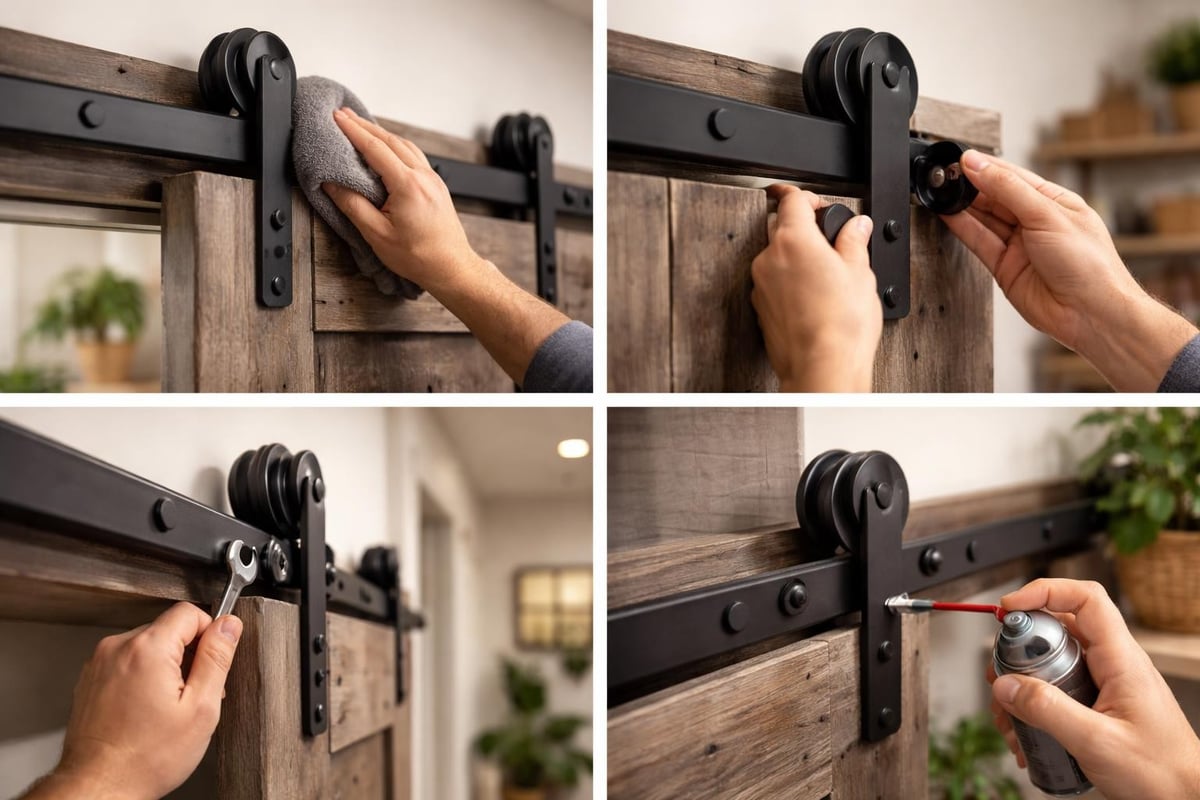
Every six months, I tell clients to:
- Vacuum or wipe down the track to remove dust and debris
- Check roller wheels for smooth operation
- Verify mounting brackets are tight
- Apply a drop of light machine oil to roller bearings if needed
- Inspect floor guides for wear or damage
That's it. Five minutes twice a year prevents 90% of issues. The sliding door hardware systems we use now are so well-engineered that they're essentially maintenance-free if kept clean.
Common Problems and Fixes
When issues do occur, they're usually simple fixes:
| Problem | Likely Cause | Solution |
|---|---|---|
| Door drags or binds | Debris in track or floor guide | Clean track and guide channel |
| Uneven hanging | Loose mounting or roller adjustment needed | Tighten hardware, adjust rollers |
| Excessive noise | Dry bearings or worn rollers | Lubricate or replace rollers |
| Door swings away from wall | Missing or worn floor guide | Install or replace guide |
I've never had to replace an entire hardware system due to failure. Individual components like rollers or guides might wear out after heavy use, but quality systems make these parts replaceable.
Design Integration Across Different Rooms
The beauty of barn door style doors is their adaptability to virtually any room in your home. I've installed them everywhere from pantries to master suites, and each application has specific considerations worth discussing.
Master Bedrooms and Bathrooms
For bedroom closets, barn doors offer easy access and design impact. You can go oversized (larger than the actual opening) for dramatic effect, or use double doors for wide walk-in closets. Many of my clients love the mirror panel option here-it serves double duty as a full-length mirror and closet door.
Bathroom applications need moisture-resistant materials and hardware. I mentioned earlier the importance of stainless steel or powder-coated finishes. The door material matters too-avoid MDF and opt for solid wood with proper sealing, PVC materials, or glass panels.
Privacy is the main concern people raise about bathroom barn doors. My response: if you're installing it for a private master bathroom, the small gaps typically aren't an issue. For shared bathrooms, I'd recommend a traditional door or address privacy with the solutions mentioned earlier.
Kitchen and Pantry Applications
Pantry barn doors have exploded in popularity because they're so practical. The doors can slide away completely, giving you full access when you're bringing in groceries or doing meal prep. When closed, they hide the pantry shelving while making a design statement.
I prefer lighter-weight materials for pantries since they get opened and closed frequently. A smooth-operating system with good bearings is essential. Glass panel doors work beautifully here-you can see what's inside without opening the door.
Home Offices and Living Spaces
Using barn door style doors as room dividers in open floor plans lets you create flexible spaces. Slide the door closed for a private office during work hours, open it up for social gatherings. I've done several installations with double doors that meet in the middle, creating a 10-12 foot wide opening that completely transforms the space functionality.
For these high-visibility applications, the hardware becomes a design feature. Many clients choose decorative handles, unique track styles, or custom finishes that complement other metal elements in the space (light fixtures, cabinet pulls, etc.).
Cost Considerations and Budget Planning
Let's talk real numbers. A complete barn door style door installation typically runs between $400 and $2,000+ depending on door size, material choices, hardware quality, and whether you're DIY or hiring a professional.
Breaking Down the Investment
Here's what you're looking at for a standard 36" x 84" single door setup:
- Hardware kit: $150-600 (quality varies significantly in this range)
- Door itself: $100-800 (depends on material, construction, finish)
- Installation labor: $200-400 if hiring a professional
- Optional add-ons: Soft-close mechanisms ($50-100), decorative handles ($20-150), specialized finishes ($50-200)
I always recommend investing more in hardware than the door. You can upgrade your door later if you want, but changing out hardware after installation is a pain. The difference between budget hardware and quality systems like those available through established suppliers is immediately noticeable in daily operation.
Where to Invest and Where to Save
Invest heavily in:
- Track and roller quality (affects daily function and longevity)
- Proper mounting (hire a pro if you're uncertain about wall structure)
- Moisture-resistant finishes for bathroom/kitchen applications
Safe savings opportunities:
- Paint-grade doors instead of exotic wood species
- Standard finishes instead of custom colors
- DIY installation if you're handy and have the right tools
The variety of hardware options at different price points means you can find a system that fits your budget while still getting quality components. I'd rather see someone choose a simpler door style with excellent hardware than an expensive door on mediocre hardware.
Installation Timeline and Project Planning
If you're doing this yourself, set aside a full day for your first installation. Experienced installers can knock out a standard single door in 2-3 hours, but your first one will take longer as you learn the process and double-check measurements.
Step-by-Step Project Phases
- Planning and measurement (30-60 minutes): Verify clearances, locate studs, plan header board if needed
- Header installation (45-60 minutes): Mount backing board securely into studs
- Track mounting (30 minutes): Level and secure track to header board
- Door preparation (30-60 minutes): Attach rollers, add handles, install floor guide
- Hanging and adjustment (45-60 minutes): Hang door, level it, fine-tune roller positions
- Testing and refinement (15-30 minutes): Verify smooth operation, adjust as needed
The most critical phase is getting that track perfectly level. I use a 6-foot level and take my time. An unlevel track means the door will slide on its own or bind when rolling.
Tools and Skills Required
You'll need:
- Drill with bits for wood and potentially metal
- Level (4-foot minimum, 6-foot preferred)
- Stud finder
- Measuring tape
- Pencil and painter's tape for marking
- Socket wrench or adjustable wrench for hardware
- Helper for lifting and positioning the door
The skill level is intermediate. If you can hang kitchen cabinets or install crown molding, you can handle a barn door. If you've never drilled into studs or worked with levels, consider hiring someone or at least watching several installation videos before starting.
Many manufacturers now provide detailed instruction manuals that walk you through each step with photos and diagrams. Following these carefully prevents most rookie mistakes.
Current Trends and Future Outlook for 2026
Walking job sites this year, I'm seeing barn door style doors continue to evolve rather than fade. The rustic farmhouse craze has settled into a more mature phase, but sliding doors have proven their practical value beyond any single design trend.
What's Popular Right Now
The biggest trend I'm seeing in 2026 is minimalist hardware and cleaner door designs. People want the function of sliding doors without the visual weight of heavy timber and massive black hardware. This means:
- Hidden track systems that recess into the wall
- Flush-mount doors with minimal visible hardware
- Lighter color palettes (whites, grays, natural light woods)
- Mixed materials (wood frames with glass or metal panels)
- Integrated soft-close mechanisms as standard rather than add-ons
Modern homeowners are also more educated about quality. They research beforehand, understand bearing types and weight capacities, and ask informed questions. The cheap hardware that flooded the market five years ago is getting rejected in favor of proven systems with warranties and track records.
Applications Beyond Residential
I'm doing more commercial work with barn door style doors-restaurants, offices, retail spaces, even medical facilities. The commercial applications demand heavy-duty hardware and frequent operation cycles. These installations use industrial-grade systems that cost more but handle the abuse.
Healthcare facilities particularly like sliding doors for accessibility. They're easier to operate than traditional doors for people using wheelchairs or walkers, and they don't require the clearance space that swinging doors demand in narrow hallways.
The guidance in comprehensive buying resources helps consumers understand these different application requirements and choose appropriately.
Real-World Problem Solving Examples
Let me share a few recent projects that illustrate common challenges and how we solved them.
The Tiny Bathroom Dilemma
Client had a 5x8 foot bathroom where a swinging door ate up precious floor space. We installed a 30-inch barn door with a stainless steel hardware system. The challenge was the limited wall space-only 32 inches of wall clearance. We used a compact mounting system and carefully positioned the track to maximize the opening when slid fully to one side. Added a privacy latch and brush seals for sound reduction. Total opening time: about three hours. The space gained made the bathroom feel 30% larger.
The Heavy Glass Office Door
Home office installation with a 42-inch steel-framed glass door weighing 185 pounds. Standard hardware wouldn't cut it. We went with a heavy-duty commercial system rated for 350 pounds, installed into a 2x6 header board across four studs. The smooth operation of quality bearings makes that 185-pound door glide effortlessly. Three years later, still working perfectly.
The Bypass Closet Conversion
Master closet with 10-foot opening previously had bifold doors that always jumped the track. Client was frustrated. We removed the bifolds and installed a double-bypass barn door system with two 66-inch doors meeting in the center. Each door covers 60 inches when closed, creating 6 inches of overlap that eliminated the center gap. The visual transformation was stunning, and the functionality is light-years beyond the old system.
Barn door style doors remain one of the most practical and visually impactful home improvements you can make in 2026, combining space efficiency with design flexibility across virtually any aesthetic. Whether you're working with a cramped bathroom, a wide closet opening, or an open floor plan that needs flexible room division, sliding door systems offer solutions that traditional hinged doors can't match. When you're ready to transform your space with quality hardware backed by expert support and a limited lifetime warranty, explore the complete selection at The Barn Door Hardware Store and start your project with confidence.
