
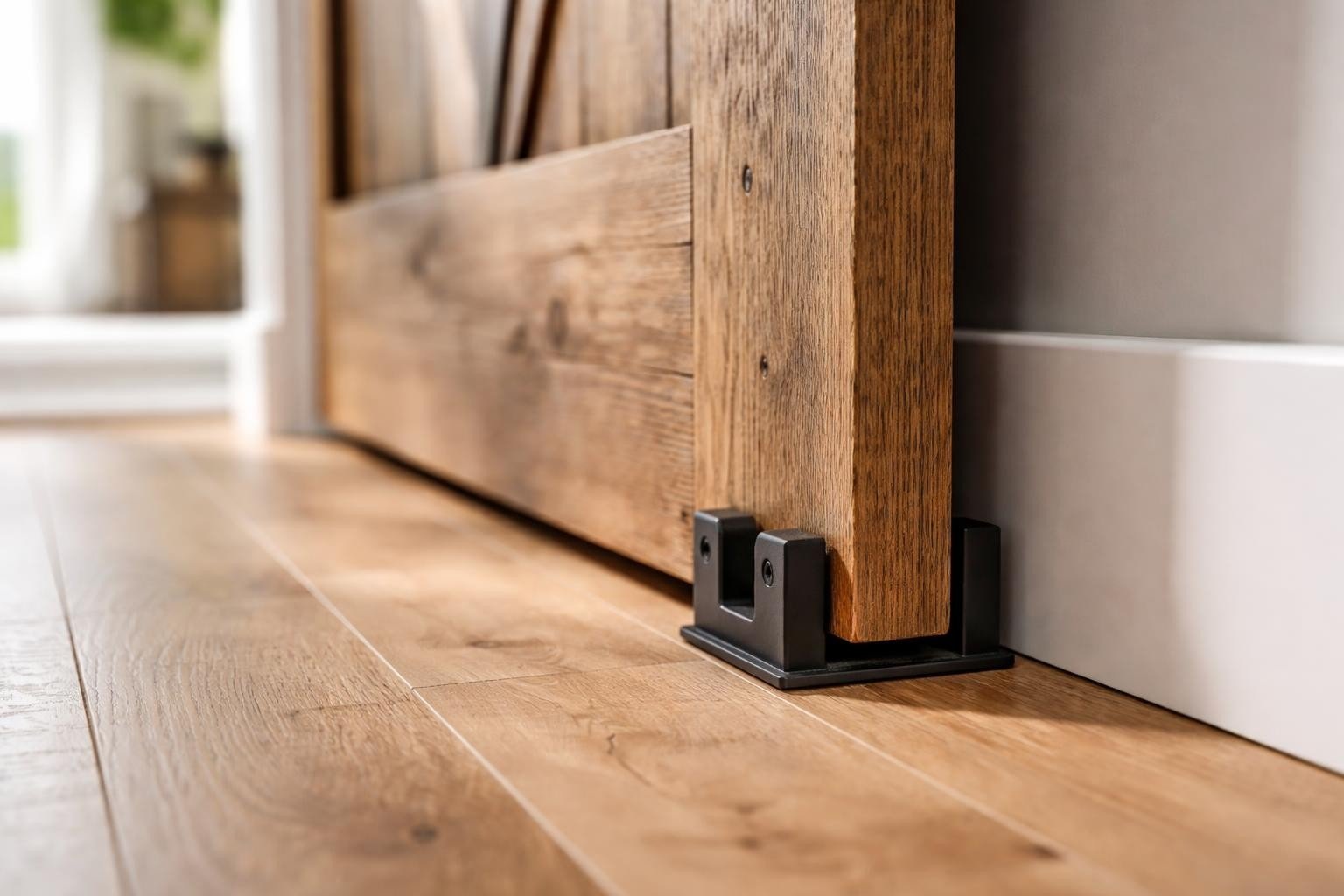
Sliding Barn Door Bottom Guide: Complete Installation Guide

You've finally installed that gorgeous barn door you've been dreaming about, and it looks absolutely stunning gliding along its track. But wait-is it swaying when you push it? Does it seem to swing away from the wall just a bit too much? If you're nodding your head right now, you're probably missing one crucial component that many DIY installers overlook: a sliding barn door bottom guide. This small but mighty piece of hardware might not be the star of the show, but it's definitely the unsung hero that keeps your door performing flawlessly for years to come.

Why Your Barn Door Needs a Bottom Guide

Let me tell you about my friend Sarah. She installed a beautiful reclaimed wood barn door in her master bathroom last year, and for the first three months, everything seemed perfect. Then she started noticing the door dragging across the floor unevenly, and eventually, it began scraping the doorframe when she closed it. The culprit? No sliding barn door bottom guide.

Here's the thing: your top-mounted track does most of the heavy lifting, literally supporting the entire weight of your door. But physics has other plans for that door panel. Without something stabilizing the bottom, even a perfectly hung door will eventually start to sway, twist, or drift away from the wall.

The Real Problems Bottom Guides Solve

When you're sliding a door open or closed, you're creating momentum. That momentum doesn't just move the door horizontally-it also creates forces that push the door away from the wall. Over time, this constant movement leads to several issues:

  • Door sway during operation that makes the whole installation feel unstable
  • Uneven gaps between the door and the wall that ruin the aesthetic
  • Excessive wear on the top rollers and track from compensating for bottom movement
  • Noise and vibration as the door bounces against the wall or floor
  • Potential damage to your door, wall, or flooring from repeated contact

According to Viba Barn Doors & Hardware, bottom guides are essential for maintaining proper door alignment and preventing long-term damage to your installation.

Wall Mounted Felt-Lined Floor Guide

Types of Sliding Barn Door Bottom Guides

Not all bottom guides are created equal, and choosing the right type depends on your specific installation, door weight, and floor conditions. Let's break down your options so you can make an informed decision.

Floor-Mounted Bottom Guides

These are the most common type you'll encounter, and they're installed directly into your flooring. A floor-mounted sliding barn door bottom guide typically consists of a metal bracket that mounts to the floor with a grooved channel or roller that catches the bottom edge of your door.

Guide Type Best For Installation Difficulty Adjustability
Floor-Mounted Guide Hardwood, tile, concrete floors Moderate Limited
Wall-Mounted Stay Roller Any floor type, renters Easy High
L-Shaped Floor Guide Heavy doors, high traffic Moderate Medium
Recessed Floor Guide Clean aesthetic, flush installation Difficult Low

The floor-mounted variety works exceptionally well when you have a solid, stable floor surface. I remember installing one in my own farmhouse kitchen on original hardwood floors, and the guide has been rock-solid for three years now.

Wall-Mounted Stay Rollers

If you can't or don't want to drill into your floor, a wall-mounted stay roller is your best friend. These guides attach to the wall or doorframe and use a small roller or pin that extends toward the door. As your door slides past, this roller maintains constant, gentle contact with the door edge, keeping it aligned without requiring any floor attachment.

The roller guide is particularly popular among renters or anyone installing doors over delicate flooring materials. One of our customers installed these in her rental apartment and was able to remove them completely when she moved out, leaving no trace behind.

Recessed Floor Guides

For those who want the cleanest possible look, recessed guides install flush with your flooring. These require cutting into your floor to create a small channel, but the result is nearly invisible while still providing excellent door control.

The challenge with recessed guides? They're permanent. You'll need to commit to your door placement because filling in that channel later is no small task. But if you're building new or doing a major renovation, they're worth considering for their sleek appearance.

Choosing the Right Bottom Guide for Your Installation

Now that you know what's out there, how do you pick the right sliding barn door bottom guide for your project? The answer depends on several factors that you'll want to consider before making a purchase.

Consider Your Floor Type

Your flooring material dramatically impacts which guide will work best. Hardwood, tile, and concrete floors handle floor-mounted guides beautifully. But what if you have carpet? This is where wall-mounted stay rollers shine. Trying to mount a floor guide on carpet is like building a house on sand-technically possible, but not recommended.

Luxury vinyl plank (LVP) and laminate flooring present special challenges. These floating floors can flex under pressure, potentially loosening floor-mounted guides over time. For these installations, I typically recommend wall-mounted options or ensuring your guide screws penetrate through to the subfloor.

Match the Guide to Your Door Weight

A lightweight hollow-core door has different needs than a solid wood barn door weighing 150 pounds. The Classic J-Strap Barn Door Hardware Kit is built to support doors up to 200 pounds, and your bottom guide should be equally robust. Heavy doors need guides with wider channels or more substantial rollers to handle the forces involved.

Classic J-Strap Barn Door Hardware Kit - The Barn Door Hardware Store

Here's a practical breakdown:

  • Doors under 75 pounds: Basic floor guide or simple stay roller works fine
  • Doors 75-150 pounds: Upgraded floor guide with reinforced mounting or heavy-duty stay roller
  • Doors over 150 pounds: Industrial-grade floor guide or dual-point guidance system

Think About Foot Traffic

Is this door in a quiet home office or your main entryway that sees action twenty times a day? High-traffic areas demand more durable solutions. I've seen cheap plastic guides literally wear grooves into themselves within six months in busy households.

For frequently used doors, invest in metal guides with replaceable rollers or wheels. They cost more upfront but save you the headache of replacement down the line. One customer told me his original floor guide in his kids' playroom lasted eight years before needing replacement-that's the kind of longevity quality hardware provides.

Installing Your Sliding Barn Door Bottom Guide Step by Step

Ready to install? Great! Let me walk you through the process like I'm right there with you. Whether you're using a floor-mounted or wall-mounted guide, the principles remain similar, though the specific steps vary.

Preparation and Planning

Before you touch a drill, close your door completely and observe how it hangs. Does it naturally sit plumb, or does it lean? Mark where the bottom of your door sits when closed-this is where your guide needs to engage.

You'll need these tools:

  1. Drill with appropriate bits for your floor/wall material
  2. Tape measure and pencil
  3. Level (a small torpedo level works great)
  4. Screwdriver or driver bit
  5. Masking tape to protect your floor during marking

The installation process for barn door hardware emphasizes the importance of proper measurement before drilling anything permanent.

Floor-Mounted Guide Installation

Start by sliding your door to the closed position. Measure from the edge of the door to determine where the center of your guide should sit-typically, you want the guide centered under the door's thickness. For a standard 1-3/8" door, the guide usually sits about 3/4" from the wall.

Mark your mounting holes carefully. Here's where many people make mistakes: they forget to account for the door's swing path. Your door might settle into a slightly different position when moving versus when stationary. Open and close the door several times, marking the range of motion, then position your guide to accommodate this variance.

Drill pilot holes if you're working with hardwood or tile. This prevents cracking and ensures your screws bite properly. Secure the guide firmly-loose guides are worse than no guides because they create false confidence while allowing the door to misbehave.

Wall-Mounted Stay Roller Installation

These are more forgiving than floor guides because they're adjustable after installation. Mount the base plate at a height where the roller will contact your door about 6-8 inches from the floor. This positioning provides optimal control without being so low that it collects dust and debris.

The beauty of stay rollers is their adjustability. Most models let you move the roller in and out to apply the right amount of pressure against your door. You want gentle, consistent contact-not so much that it creates drag, but enough to prevent sway.

According to guidance on keeping barn doors properly aligned, proper adjustment of your bottom guide is just as important as the installation itself.

Floor guide installation steps

Troubleshooting Common Bottom Guide Issues

Even with perfect installation, you might encounter issues with your sliding barn door bottom guide over time. Let's address the most common problems I see and how to fix them quickly.

The Door Drags or Scrapes

If your door suddenly starts dragging when it was previously smooth, check your guide first. Floor-mounted guides can collect debris in their channels-pet hair, dust, and small particles create friction. Clean the channel thoroughly with a vacuum and wipe it down.

Sometimes the guide itself works loose from repeated door movement. Tighten all mounting screws and verify the guide hasn't shifted position. If screws won't tighten properly, your holes may have enlarged. In that case, move the guide slightly or use larger screws with wall anchors.

Excessive Noise During Operation

A noisy sliding barn door bottom guide usually signals one of two problems: lack of lubrication or misalignment. Most guides benefit from occasional lubrication with silicone spray (avoid petroleum-based products that attract dust). Spray the roller mechanisms or sliding surfaces, then wipe away excess.

Misalignment creates noise because the door fights against the guide instead of moving smoothly within it. Loosen the guide's mounting screws slightly, slide the door back and forth to find its natural path, then retighten while the door is in motion.

The Guide Keeps Coming Loose

This frustrating problem often stems from installation in unsuitable materials or inadequate fasteners. If you mounted your guide in thin vinyl or laminate without reaching the subfloor, you're essentially screwing into air. Remove the guide and reinstall using longer screws that penetrate solid material.

For tile floors, you might need to use specialized masonry anchors. One customer discovered their installer had used standard wood screws in porcelain tile-no wonder it pulled free after a month! Proper masonry anchors solved the issue permanently.

Maintaining Your Bottom Guide for Long-Term Performance

A sliding barn door bottom guide isn't a "set it and forget it" component. Regular maintenance keeps your door operating smoothly and extends the life of all your hardware. The good news? Maintenance takes about five minutes every few months.

Regular Cleaning Schedule

Every 2-3 months, vacuum around and within your floor guide to remove accumulated debris. Pet owners or homes in dusty climates might need monthly cleaning. For wall-mounted rollers, wipe them down with a slightly damp cloth to remove dust buildup that can cause squeaking.

I learned this lesson the hard way when my own barn door started making a horrible grinding noise. Turns out, months of dog hair had compacted into the floor guide channel, creating resistance. Ten minutes of cleaning restored it to perfect silence.

Periodic Adjustments

As your home settles or door materials expand and contract with seasonal humidity changes, your guide might need readjustment. If you notice your door starting to drift or gaps becoming inconsistent, spend a few minutes fine-tuning the guide position or stay roller pressure.

The process is simple:

  1. Close the door and check the gap between door and wall
  2. Loosen guide mounting screws slightly (don't remove them)
  3. Slide the door several times to find its natural tracking
  4. Adjust guide position to match this path
  5. Retighten screws firmly

When to Replace Your Bottom Guide

Quality guides last years, but nothing lasts forever. Replace your sliding barn door bottom guide when you notice:

  • Visible wear grooves in the channel or roller
  • Cracks in plastic components or bent metal
  • Loose mounting that can't be tightened
  • Excessive play that adjustment can't eliminate
  • Rust or corrosion affecting smooth operation

Most homeowners replace guides every 5-10 years depending on door usage. In commercial or high-traffic residential settings, expect 3-5 years. The relatively low cost of replacement guides makes this an easy maintenance item.

Specialized Applications and Considerations

Not every barn door installation is straightforward, and some situations require special consideration when selecting and installing a sliding barn door bottom guide. Let's explore these unique scenarios so you're prepared for anything.

Guides for Bypass and Double Door Systems

When you're running two doors on the same track or using a bypass system where doors overlap, your bottom guide strategy changes. Each door needs its own guidance, but the guides must not interfere with each other. The solution? Offset guides positioned so each door's guide sits in a different location along the floor.

For bypass door kits, I typically recommend wall-mounted stay rollers because they're easier to position independently without floor interference. The flexibility of wall mounting lets you avoid the complex floor placement that overlapping door paths create.

Outdoor and Exterior Applications

Installing a barn door on your exterior shed or as an outdoor room divider? Your sliding barn door bottom guide needs weather-resistant materials. Standard indoor guides will rust and fail quickly when exposed to rain, humidity, and temperature extremes.

Look for stainless steel or heavy-duty coated guides specifically rated for exterior use. According to Do it Best's exterior barn door installation guide, proper bottom guide selection is critical for outdoor longevity. Expect to perform more frequent maintenance on exterior guides-monthly cleaning isn't excessive for these applications.

Carpeted or Uneven Floors

Carpet presents unique challenges for floor-mounted guides since the pile depth varies and the surface moves. Wall-mounted stay rollers are almost always the better choice here. However, if you must use a floor guide on carpet, choose one with adjustable height to compensate for the carpet pile.

For uneven floors (common in older homes), you might need multiple guides or adjustable options that accommodate the floor's variations. I've seen installations where the floor slopes gradually, requiring a guide with significant vertical adjustment range.

Integrating Bottom Guides with Your Overall Hardware System

Your sliding barn door bottom guide doesn't exist in isolation-it's part of a complete hardware system. Understanding how all the components work together helps you make better decisions and troubleshoot more effectively.

Coordinating with Top Track Systems

The relationship between your top track and bottom guide is like a partnership. The track carries the weight; the guide controls the position. When these components aren't coordinated, you get problems. For example, if your track is slightly bowed or improperly mounted, even the best bottom guide can't compensate completely.

When selecting hardware components from quality hardware kits, ensure all pieces are designed to work together. Mixing brands sometimes works, but you risk compatibility issues with mounting points, door thickness accommodation, or load ratings.

Working with Soft-Close Mechanisms

Adding a soft-close mechanism to your barn door? Your bottom guide selection becomes more critical. Soft-close systems work by creating gentle resistance at the end of travel. If your bottom guide creates too much friction or binds, it interferes with the soft-close action.

Choose low-friction guides with smooth roller systems when incorporating soft-close features. Test the complete system before final installation-you want the soft-close to activate smoothly without fighting against bottom resistance.

Considerations for Floor Guides in Modern Designs

Today's barn door hardware includes sleek, minimal designs that emphasize clean lines. Your bottom guide should match this aesthetic. Many manufacturers now offer slim-profile guides that provide full functionality while remaining nearly invisible.

For modern installations, consider recessed guides or ultra-low-profile floor guides that blend into contemporary flooring. These pair beautifully with hidden roller systems and minimalist track designs, maintaining the sophisticated look you're trying to achieve.

Real-World Installation Stories and Lessons Learned

Sometimes the best education comes from hearing about real installations-both successful ones and those that taught valuable lessons the hard way. These stories from actual customers illustrate important principles about sliding barn door bottom guides.

The Historic Home Challenge

A customer reached out after attempting to install barn doors in her 1890s Victorian home. The beautiful original hardwood floors were precious, and she was terrified of damaging them. Her solution? She hired a professional carpenter who installed a recessed guide by carefully routing a shallow channel that matched the wood species, then staining it to blend perfectly.

The installation took three times longer than a standard floor guide, but the result was spectacular. You literally can't see the guide unless you're on your hands and knees looking for it. More importantly, when she eventually sells the home, the recessed guide adds value rather than detracting from the historic flooring.

The Rental Property Quick Fix

On the opposite end, a property manager needed barn doors for twelve rental units. Floor guides were out of the question-too permanent and too likely to be damaged by tenants. He opted for heavy-duty wall-mounted stay rollers on every installation.

The genius of this approach? When tenants move out, any stay roller damaged or broken costs about $15 to replace and takes five minutes to swap. In three years managing these properties, he's replaced only four guides total-far less maintenance than he anticipated.

The DIY Learning Curve

My favorite story is from a reader who emailed me after her first barn door installation went sideways-literally. She installed the top track perfectly, hung a gorgeous custom door, and stepped back to admire her work. The door swung 6 inches away from the wall when she tried closing it.

She'd completely forgotten about the bottom guide. After researching options, she installed a floor-mounted guide, but positioned it where the door was hanging rather than where it should hang. The door fought against the guide constantly, creating awful scraping sounds.

When she finally understood the problem and repositioned the guide to work with the door's natural hang, everything clicked into place. Her key insight? "The guide guides the door to where it wants to be, not where you force it to be." That wisdom applies to nearly every sliding barn door bottom guide installation.


Understanding and properly implementing a sliding barn door bottom guide transforms an adequate installation into an exceptional one that performs flawlessly for years. Whether you choose floor-mounted, wall-mounted, or recessed options, selecting the right guide for your specific application and installing it correctly prevents the frustration of door sway, noise, and premature wear. Since 2016, The Barn Door Hardware Store has helped thousands of homeowners navigate these decisions with expert guidance and quality hardware backed by a limited lifetime warranty. Ready to ensure your barn door installation is perfectly stable? Explore our complete selection of guides, hardware kits, and accessories with free shipping across the continental US.

Leave a comment

All comments are moderated before being published