

There's something magical about walking into a room and seeing a beautifully weathered barn door, isn't there? These pieces of architectural history carry stories in every crack, every nail hole, and every layer of faded paint. Vintage barn doors have transcended their agricultural origins to become coveted design elements that bring warmth, character, and a touch of nostalgia into modern homes. Whether you're renovating a farmhouse, adding rustic charm to a contemporary space, or simply appreciating the craftsmanship of bygone eras, understanding the world of vintage barn doors opens up a realm of design possibilities.
The Rich History Behind Vintage Barn Doors
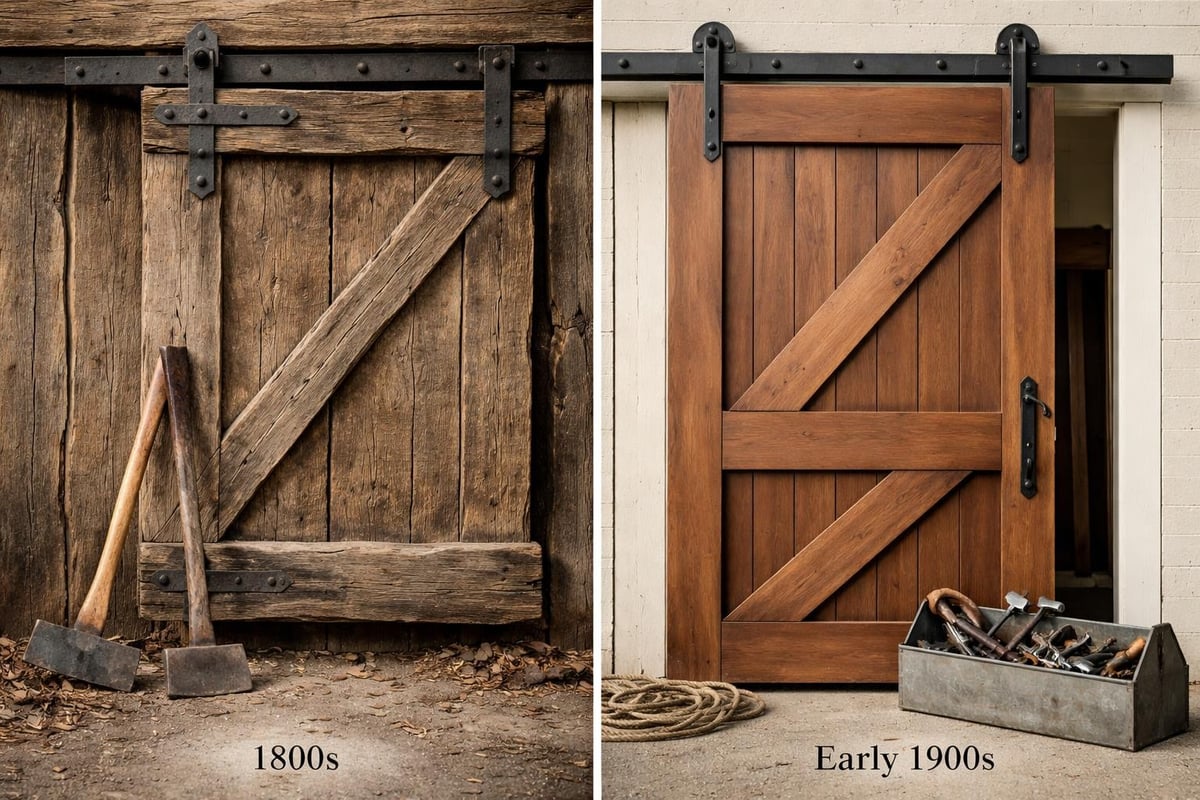
Let me take you back to the early 1800s when American farmers needed practical solutions for their livestock shelters and grain storage. These weren't the decorative pieces we admire today. They were workhorse doors built from whatever timber was available locally, often massive slabs of oak, pine, or hemlock. The sliding mechanism wasn't just a design choice; it was born from necessity. When you're dealing with snow drifts three feet high or mud that could swallow your boots, the last thing you need is a door that swings outward.
I recently spoke with a contractor who salvaged doors from a Pennsylvania dairy farm built in 1847. Each door told a different story through its construction. The earliest ones featured hand-forged iron hardware with strap hinges that weighed nearly fifteen pounds each. By the 1890s, the craftsmanship had evolved. Doors incorporated tongue-and-groove construction, and the hardware showed the influence of industrial manufacturing while still maintaining that hefty, utilitarian character.
Regional Variations in Design
What's fascinating about vintage barn doors is how dramatically they vary based on geography. New England doors often feature vertical board-and-batten construction with narrow boards and distinctive X-bracing. Head down to the Carolinas, and you'll find wider planks with Z-bracing patterns. Midwest barns frequently incorporated horizontal slat designs that allowed for ventilation while maintaining structural integrity.
These weren't just aesthetic choices. Each design reflected local climate needs, available materials, and building traditions passed down through generations. A Vermont barn door built to withstand harsh winters looks nothing like one from Tennessee designed to promote airflow during humid summers.
Identifying Authentic Vintage Barn Doors
So you're at an architectural salvage yard, and you're staring at what's labeled as a "vintage barn door." How do you know what you're really looking at? The devil's in the details, and authentic vintage pieces have telltale signs that reproductions just can't fake.
Key Authentication Features
Hardware characteristics:
- Hand-forged or early industrial iron shows irregular patterns and hammer marks
- Patina develops naturally over decades, showing wear in logical places
- Mounting holes often show multiple generations of use where hardware was replaced
- Authentic antique rollers use wheel designs that changed by decade
Wood construction indicators:
- Saw marks from circular saws (post-1840s) or straight saws (earlier)
- Hand-cut mortise and tenon joints show chisel marks
- Wood shrinkage creates gaps between planks that are consistent with age
- Original nails are square-cut (pre-1900) or early wire nails
Age-related wear patterns:
- Bottom edges show damage from decades of floor contact
- Weather exposure creates specific grain raising and checking patterns
- Paint layers reveal historical color choices when scraped
- Insect damage appears in patterns consistent with old growth timber
I learned this the hard way when I purchased what I thought was a 1920s door for my own home renovation. After getting it home and examining it closely, the "aged" finish rubbed off with mineral spirits. A real vintage piece has earned its character through time, not through a distressing technique applied last month.
The Restoration Process for Vintage Barn Doors
Walking into my friend Sarah's workshop last summer, I found her knee-deep in sawdust, carefully working on a massive door she'd pulled from a demolished barn in upstate New York. The restoration process isn't for the faint of heart, but watching vintage barn doors come back to life is incredibly rewarding.
Assessment and Planning
Before you touch anything, document what you have. Take dozens of photos from every angle. Measure everything twice. Test the wood's structural integrity by gently pressing in multiple locations. Some doors have rotted sections that need replacement, while others might surprise you with their solid condition despite looking rough.
Structural evaluation checklist:
| Issue | Assessment Method | Common Solution |
|---|---|---|
| Wood rot | Probe with screwdriver | Replace affected boards |
| Loose joints | Apply lateral pressure | Re-glue with epoxy |
| Warping | Check with straight edge | May require planing or shimming |
| Missing hardware | Examine mount points | Source period-appropriate replacements |
Cleaning and Treatment
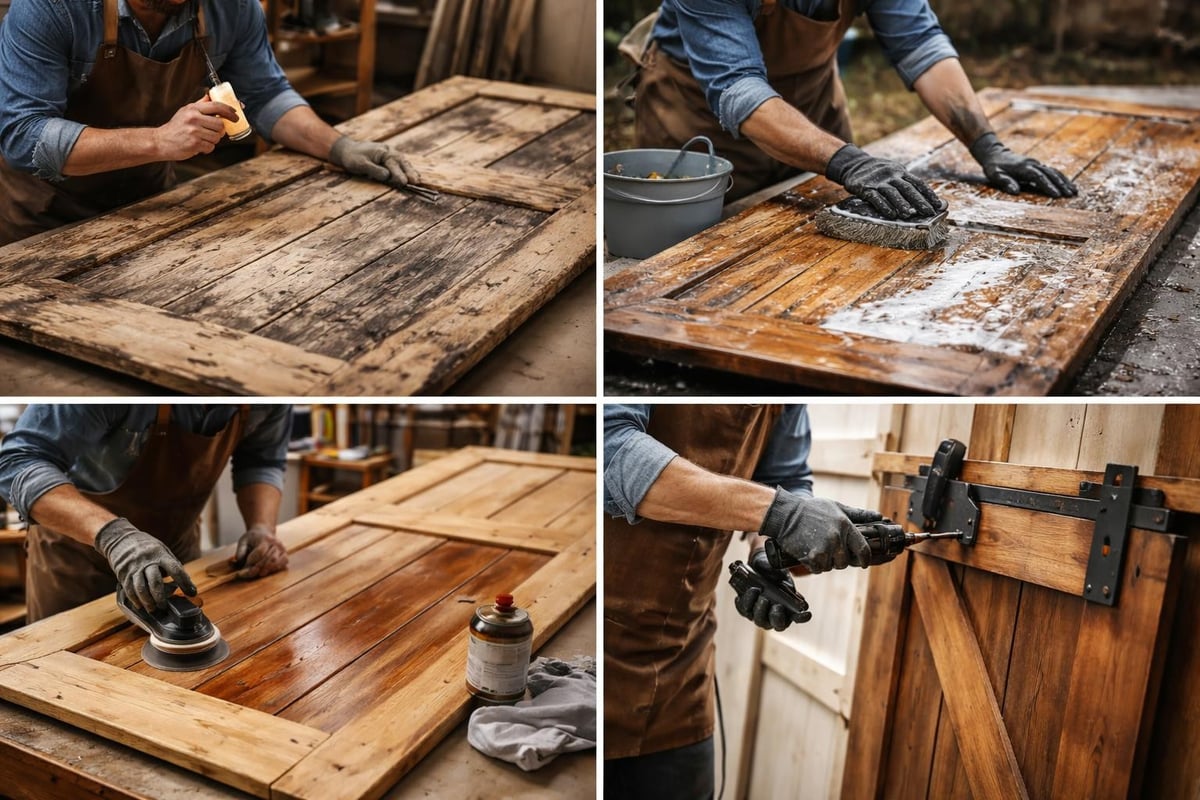
Here's where patience becomes your best friend. Start with the gentlest methods and only escalate if necessary. Sarah spent three weeks just on the cleaning phase of her door, and it showed in the results.
- Dry cleaning: Remove loose dirt, cobwebs, and debris with soft brushes
- Gentle washing: Use mild soap and water with soft cloths, working with the grain
- Stain removal: Address specific issues like rust bleeding or paint drips carefully
- Drying: Allow complete air drying for several days before proceeding
- Pest treatment: Apply appropriate treatments if insect damage is active
- Stabilization: Apply wood consolidant to weakened areas if needed
Reviving vintage wooden doors requires understanding the wood's condition and choosing treatments that preserve rather than alter the original character.
Hardware: The Unsung Hero of Vintage Doors
You can have the most beautiful weathered wood in the world, but if the hardware doesn't work properly, your vintage barn door becomes an expensive wall decoration. The original hardware on truly vintage barn doors is often compromised after decades of use, and here's where you face an interesting decision.
Do you restore the original hardware, or do you pair your vintage door with modern, reproduction hardware that honors the aesthetic while providing reliable function? I've seen both approaches work beautifully, depending on the situation and the door's intended use.
Modern Hardware for Vintage Doors
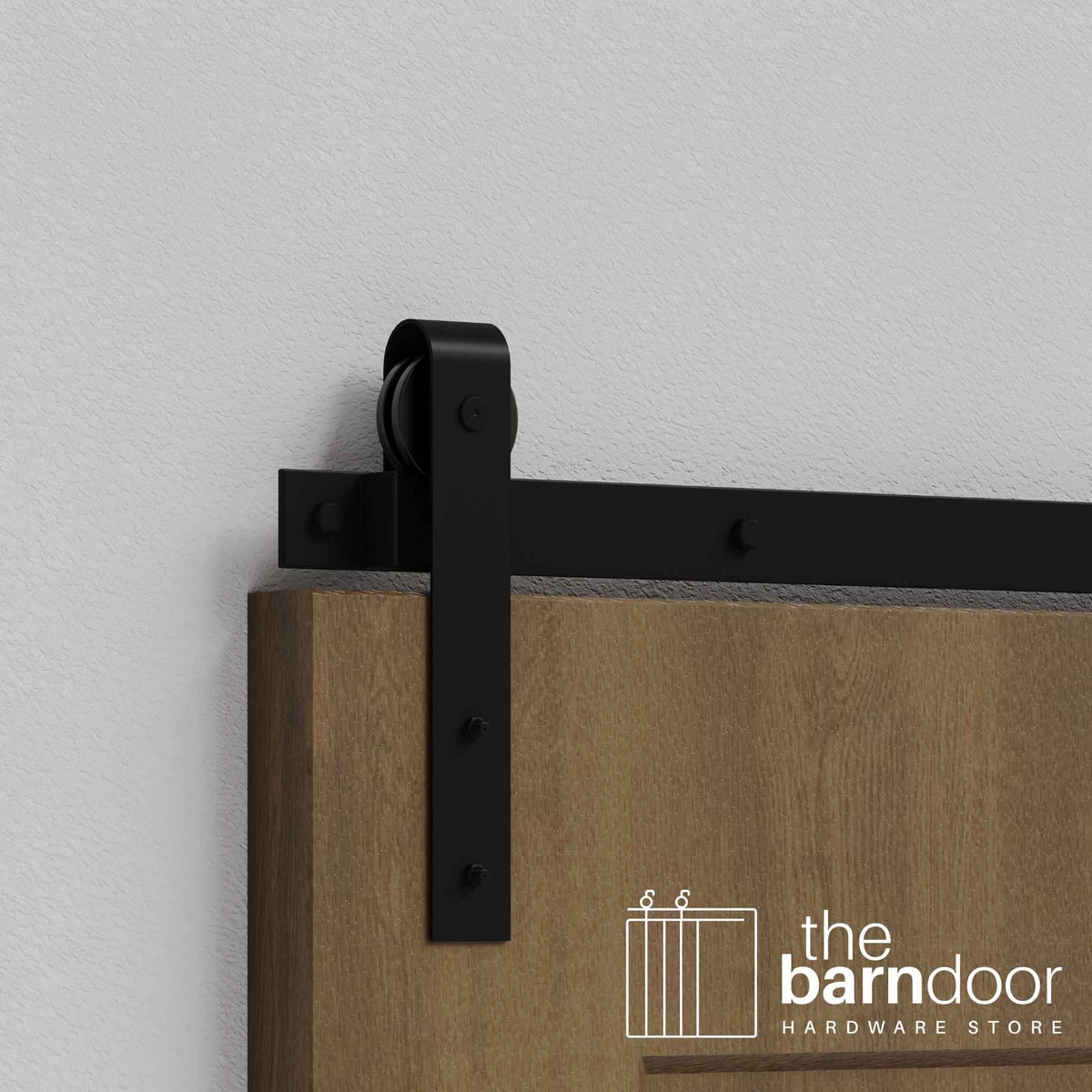
When you're installing a vintage door in an active household, reliability matters. The Classic J-Strap Barn Door Hardware Kit offers that perfect marriage of traditional design and contemporary engineering, supporting doors up to 200 pounds while maintaining the curved, farmhouse aesthetic that complements vintage doors perfectly. This kind of hardware respects the door's heritage while ensuring it functions smoothly for daily use.
Consider these factors when selecting hardware:
- Weight capacity: Vintage doors are often heavier than modern alternatives
- Mounting requirements: Old-growth timber behaves differently than new wood
- Visual compatibility: Hardware style should match the door's era and origin
- Functional needs: High-traffic areas need industrial-grade components
Incorporating Vintage Barn Doors into Modern Spaces
This is where the magic really happens. Taking a door that once separated cows from the elements and transforming it into the centerpiece of a contemporary kitchen or bedroom requires vision and careful planning.
Placement Strategies That Work
Successful applications:
- Master bedroom entries where the door becomes a focal point
- Kitchen pantries that benefit from sliding functionality
- Home office spaces seeking character and sound dampening
- Bathroom entrances in loft-style homes with high ceilings
- Closet doors in rooms with limited swing space
Last year, I visited a renovated 1950s ranch house where the designer had used vintage barn doors from three different eras throughout the home. Instead of feeling disjointed, each door marked a transition between spaces while telling its own story. The living room featured a massive door from a Wisconsin dairy barn, still bearing the original red paint. Down the hall, a smaller door with white chippy paint closed off a reading nook. The master suite entrance showcased unpainted hemlock with beautiful natural patina.
Preparation and Installation Considerations
Installing vintage barn doors requires more planning than hanging modern alternatives. These doors weren't built to standardized dimensions, so you'll need to work with what you have.
Pre-installation steps:
- Verify wall structure can support the combined weight of door and hardware
- Install proper header boards using techniques appropriate for barn door mounting
- Account for the door's actual thickness, which may exceed standard measurements
- Plan for uneven edges that add character but require gap management
- Consider the door's weight when selecting hardware components
- Test the wall's ability to anchor heavy-duty mounting brackets
Sourcing Authentic Vintage Barn Doors
Where do you even find these treasures? Unlike shopping for new doors where you browse catalogs and select from standardized options, hunting for vintage barn doors becomes an adventure in itself.
Where to Look
Productive sources:
- Architectural salvage yards in rural areas
- Farm estate sales and auctions
- Barn demolition sites (with permission)
- Online marketplaces specializing in reclaimed materials
- Specialty dealers who source from agricultural regions
I found my favorite door at a farm auction in Iowa. An elderly farmer was selling off a century's worth of accumulated farm equipment and buildings. Buried behind rusty cultivators and antique tractors stood five barn doors in varying conditions. While everyone else bid on the tractors, I walked away with a 1920s door for less than the cost of dinner.
What to Avoid
Not every old door deserves rescue. Some are too far gone, while others might not be what they appear. Watch out for:
- Severe structural rot that compromises more than 30% of the door
- Active insect infestations that could spread to your home
- Doors with lead paint if you have young children
- Recently made "distressed" doors being sold as authentic vintage
- Doors from commercial agricultural operations with chemical contamination
Pricing and Value Considerations
Let's talk money, because vintage barn doors occupy a wide price spectrum. I've seen similar doors sell for $75 at one venue and $850 at another. Understanding value helps you negotiate fairly and avoid overpaying for artificially distressed replicas.
Price Influencing Factors
| Factor | Lower Price Range | Higher Price Range |
|---|---|---|
| Condition | Needs significant repair | Structurally sound, minimal work needed |
| Size | Under 30" wide | Over 40" wide, full height |
| Hardware | Missing or damaged | Original, functional hardware included |
| Provenance | Unknown origin | Documented historical source |
| Wood type | Common pine | Old growth oak, chestnut, or rare species |
| Age markers | 1950s-1970s | Pre-1900 with hand-forged elements |
Expect to pay anywhere from $100 to $1,200 for authentic vintage barn doors, depending on these factors. Doors with documented history and rare features command premium prices, particularly in urban markets where architectural salvage has become trendy.

Maintenance and Long-Term Care
You've invested time, money, and effort into acquiring and installing your vintage barn door. Now what? These pieces require different maintenance approaches than modern doors because the wood has already weathered decades of exposure.
Ongoing Maintenance Schedule
Monthly tasks:
- Wipe down with dry cloth to remove dust accumulation
- Check hardware tightness and lubricate rollers
- Inspect for new signs of insect activity
Quarterly tasks:
- Apply appropriate wood treatment based on finish type
- Examine joints for movement or separation
- Clean track and remove debris that affects rolling
Annual tasks:
- Deep clean using methods appropriate to the finish
- Touch up protective coatings if applied
- Assess overall structural condition
The key difference with vintage doors versus new construction? You're preserving, not protecting. These doors have survived decades without your help. Your job is to maintain their stability while respecting the character that age has created.
Design Styles That Complement Vintage Doors
Your vintage barn door doesn't exist in isolation. The surrounding design choices either enhance its character or fight against it. I've seen gorgeous vintage doors completely undermined by incompatible design decisions, and I've witnessed modest doors elevated by thoughtful styling.
Compatible Design Approaches
Farmhouse aesthetic:
- Shiplap walls or beadboard wainscoting
- Exposed wood beams and rustic light fixtures
- Vintage or vintage-inspired furniture pieces
- Natural fiber textiles and muted color palettes
Industrial style:
- Exposed brick or concrete walls
- Metal accents and Edison bulb lighting
- Minimal decoration focusing on functional elements
- Neutral colors with weathered metal hardware
Transitional spaces:
- Mix of modern and traditional furniture
- Clean lines with rustic accent pieces
- Contemporary lighting paired with natural materials
- Balanced color schemes that bridge old and new
The beauty of incorporating barn doors into various design styles lies in their versatility. A properly selected vintage door can anchor a room's entire aesthetic or serve as an unexpected contrast element that creates visual interest.
Common Challenges and Solutions
Let's be honest about the realities of working with vintage barn doors. These aren't perfect, factory-fresh products. They come with quirks, and part of embracing vintage means accepting some imperfection while solving genuine functional issues.
Typical Problems You'll Encounter
Warping and unevenness: This happens when old wood has dried unevenly over decades. Minor warping adds character, but severe bowing creates gaps and rolling problems. Solutions include strategic planing, shimming the mounting points, or in extreme cases, adding bracing on the back side.
Size mismatches: Your vintage door won't magically fit your modern doorway. It might be too tall, too short, too wide, or too narrow. Before purchasing, understand that you may need to either modify the door or adjust your opening. Sometimes measuring properly for barn doors means working backward from what you have rather than forward from what you want.
Weight considerations: Old-growth timber is dense and heavy. That gorgeous 1880s oak door might weigh 150 pounds or more. Your mounting system needs to account for this substantial weight, often requiring additional blocking in the wall and heavy-duty hardware rated for the load.
Hardware compatibility: Original mounting points on vintage doors rarely align with modern hardware spacing. Drilling new holes feels wrong when you're trying to preserve history, but it's often necessary for proper function. The key is planning carefully so new holes don't compromise the door's structural integrity.
The Environmental and Sustainability Angle
Here's something I really appreciate about choosing vintage barn doors: you're practicing radical sustainability without even trying. Every reclaimed door represents timber that doesn't need to be cut, manufacturing that doesn't need to happen, and landfill space that doesn't get filled.
The Real Environmental Impact
Consider this: that vintage barn door you're installing probably came from old-growth timber. Trees that took 200-300 years to reach maturity before being cut. That timber quality simply doesn't exist in today's commercially available wood. By reclaiming and repurposing it, you're:
- Preventing demolition waste from reaching landfills
- Avoiding the carbon footprint of manufacturing new materials
- Preserving irreplaceable old-growth timber characteristics
- Supporting the reclamation and salvage industry
- Creating demand for architectural preservation
A contractor friend recently calculated that using reclaimed barn doors instead of new construction for a five-door residential project saved approximately 1,200 pounds of CO2 emissions. That's equivalent to driving 1,500 fewer miles.
Living With Your Vintage Barn Door
Six months after installation, how will you feel about your vintage barn door? Based on conversations with dozens of homeowners who've made this choice, the answer is overwhelmingly positive, but with some realistic expectations.
What Owners Love
- The door becomes a conversation piece that guests immediately notice
- Every imperfection tells a story and adds depth to your space
- The substantial weight and solid construction feel premium
- Knowing the door's history creates emotional connection to your home
- The door's character evolves as you live with it
What Catches People Off Guard
- Wood continues to move slightly with seasonal humidity changes
- Touch-up maintenance requires specific approaches that differ from new wood
- Finding replacement parts if original hardware fails can be challenging
- The door's weight makes adjustments more labor-intensive than expected
- Keeping the vintage aesthetic requires restraint with surrounding décor choices
But here's what nearly everyone agrees on: vintage barn doors bring something irreplaceable into your home. That authentic patina, those genuine age markers, the knowledge that your door witnessed decades of agricultural life before finding new purpose-these elements create meaning that reproduction doors simply cannot match.
Understanding the full scope of barn door functionality helps you appreciate how vintage examples pioneered the sliding door systems we use today throughout modern homes.
Vintage barn doors offer a unique opportunity to bring authentic history and unmatched character into your home while embracing sustainable design principles. Whether you're restoring a farmhouse or adding rustic contrast to a contemporary space, these remarkable pieces connect us to craftsmanship and agricultural heritage that deserves preservation. Ready to find the perfect hardware to complement your vintage door? The Barn Door Hardware Store offers quality sliding systems backed by expert support and a limited lifetime warranty, ensuring your historical piece functions beautifully for decades to come.
