There's something undeniably charming about a sliding barn door and kit that transforms an ordinary doorway into a statement piece. Whether you're renovating a vintage farmhouse or adding character to a modern condo, these systems offer the perfect blend of practicality and visual appeal. But what exactly makes a sliding barn door and kit the right choice for your project, and how do you navigate the installation process?
Understanding What Makes a Complete Kit
When you're shopping for a sliding barn door and kit, you're really looking at two main components working together. The door itself and the hardware system need to function as a cohesive unit.
A complete kit typically includes the track, rollers, mounting brackets, floor guides, and all necessary fasteners. Some manufacturers bundle everything together, while others sell components separately. The advantage of a comprehensive kit is compatibility-you won't discover midway through installation that your rollers don't fit your track.
Door Weight Capacity Matters
Before you fall in love with a particular design, check the weight specifications. Standard residential kits typically support doors between 100-200 pounds, but heavier doors require upgraded systems.
Here's what different weight capacities mean for your project:
- 100-150 lbs: Perfect for lightweight hollow-core or thin solid wood doors
- 150-200 lbs: Handles most standard solid wood doors up to 1-3/4" thick
- 200-300 lbs: Heavy-duty systems for thick hardwood or glass doors
- 300+ lbs: Commercial-grade hardware for oversized installations
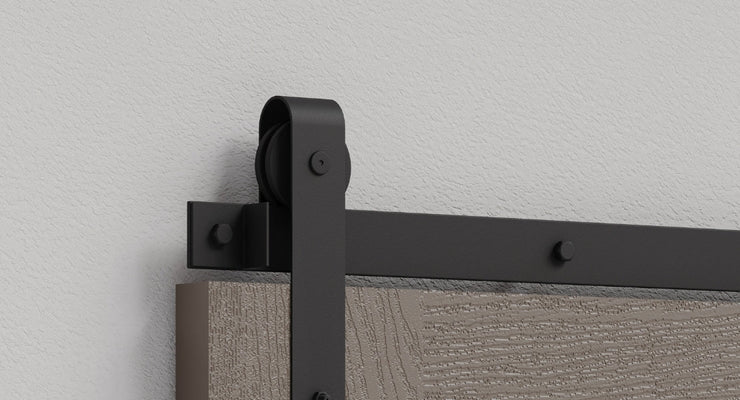
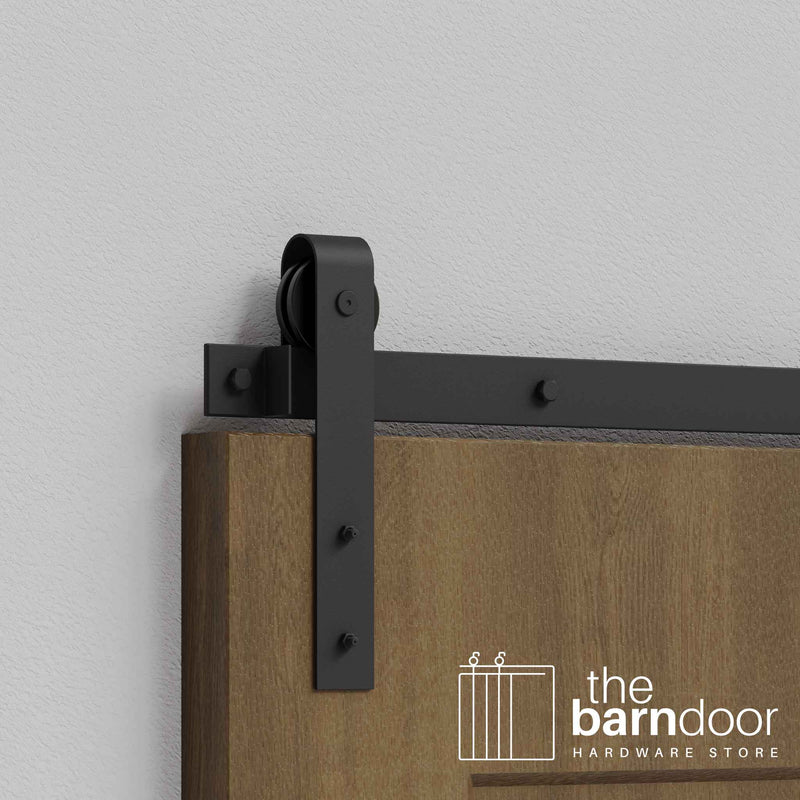
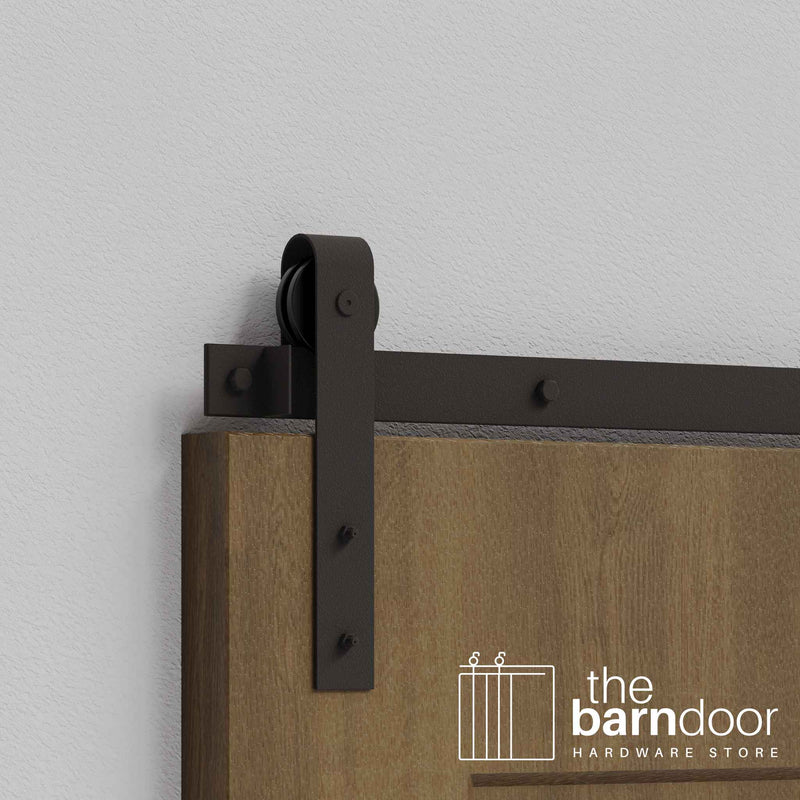
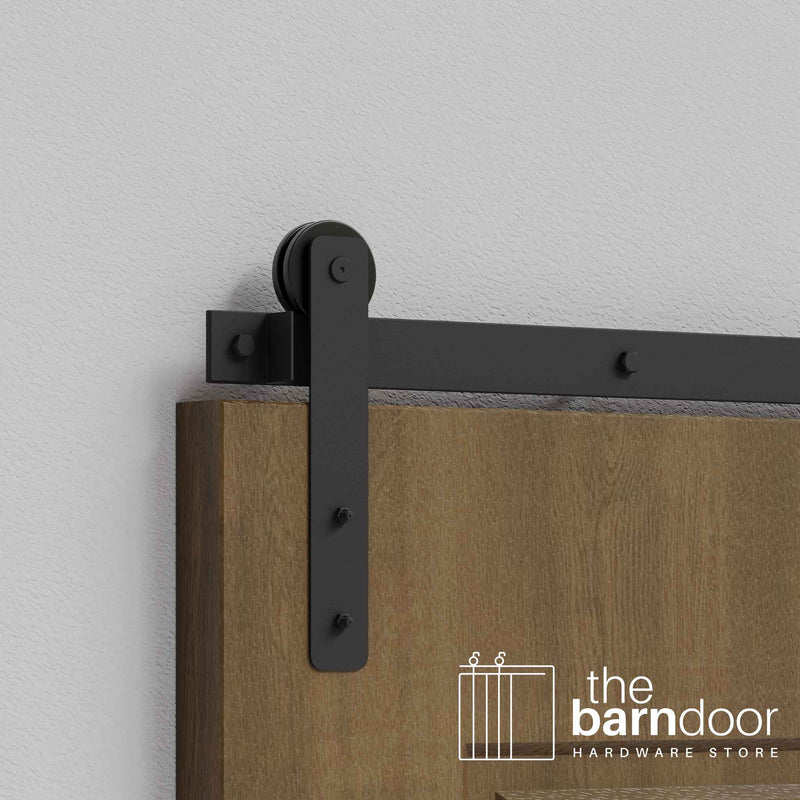
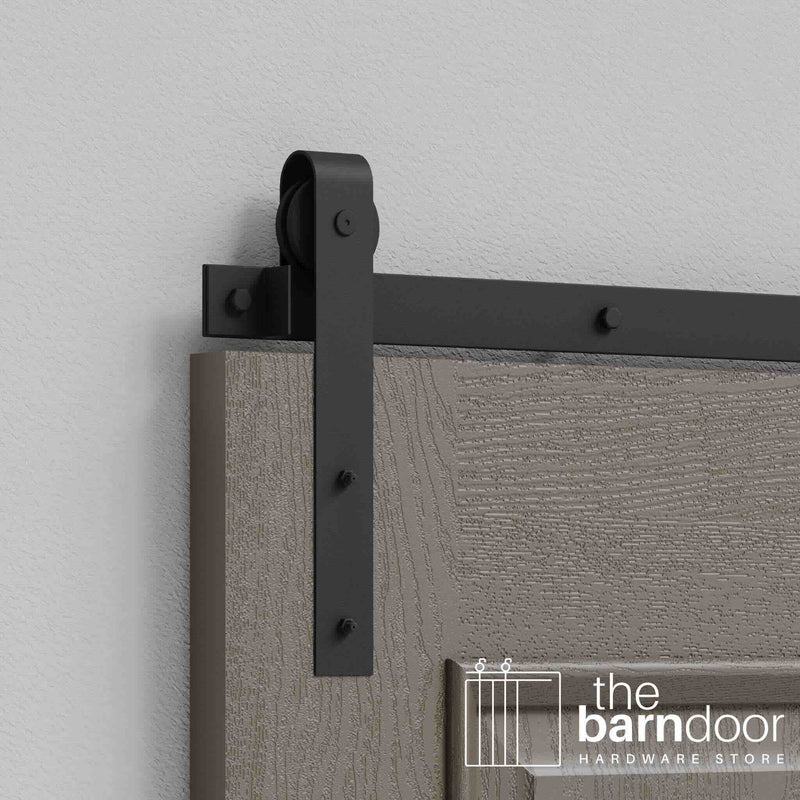
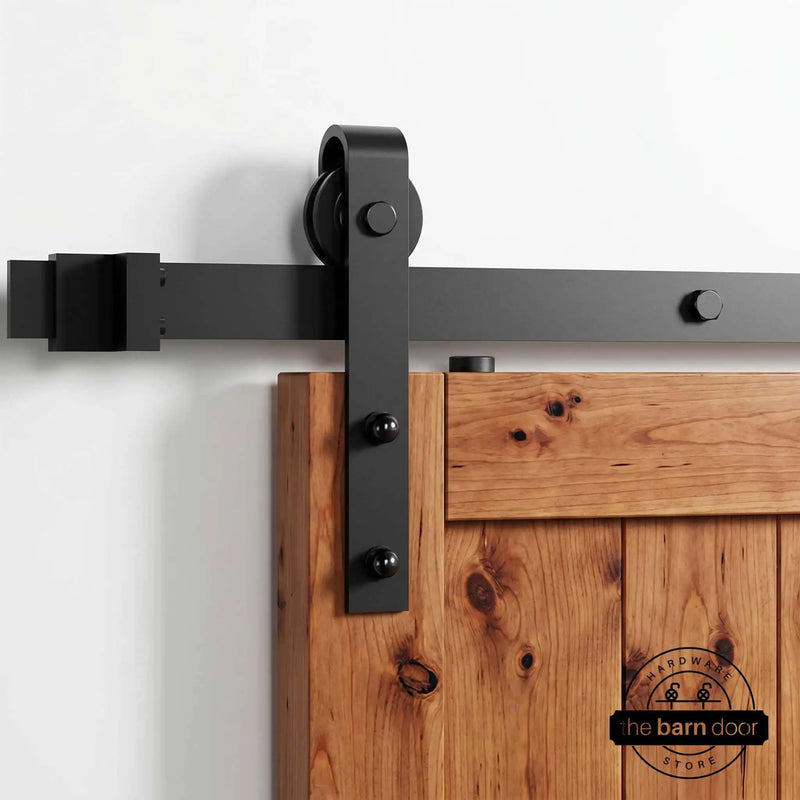
The Classic J-Strap Barn Door Hardware Kit offers a 200-pound capacity, making it ideal for most residential applications while maintaining the traditional farmhouse aesthetic.
Track Length Requirements
One of the most common mistakes? Ordering a track that's too short. Your track should be at least twice the width of your door opening, plus a few extra inches. This ensures the door can slide completely clear of the doorway.
For a 36-inch doorway, you'll want a minimum 72-inch track, though many installers prefer 84 inches for smoother operation and visual balance.
Choosing the Right Style for Your Space
The beauty of a sliding barn door and kit lies in customization. Your hardware style sets the tone for the entire installation.
Traditional designs feature exposed rollers with visible wheels and classic strap patterns. These work beautifully in farmhouse, rustic, and transitional spaces where you want the hardware to be part of the design statement. The curved J-strap remains the most popular choice because it balances heritage styling with contemporary clean lines.
Modern minimalist systems take a different approach. Trending barn door designs for 2025 emphasize sleek profiles and concealed mechanisms that let the door itself shine.
| Style Type | Best For | Visual Impact | Price Range |
|---|---|---|---|
| Traditional J-Strap | Farmhouse, rustic, country | High visibility hardware | $$ |
| Modern Flat Track | Contemporary, minimalist | Subtle, clean lines | $$$ |
| Hidden Roller | Transitional, modern | Concealed mechanism | $$$$ |
| Industrial | Loft, commercial, eclectic | Bold, statement-making | $$$ |

Finish Selection Strategy
Your hardware finish should complement existing fixtures in the room. Black matte finishes dominate modern farmhouse aesthetics, while brushed nickel or stainless steel works in contemporary settings.
Don't feel locked into matching every metal finish perfectly. Mixing metals intentionally creates depth and interest, as long as you maintain a consistent undertone (warm or cool).
Pre-Installation Planning Steps
Success starts before you ever pick up a drill. A sliding barn door and kit requires proper wall preparation and accurate measurements.
First, verify your wall can support the installation. Barn door hardware must mount into solid blocking or wall studs-drywall anchors alone won't cut it. The track and door create significant lateral forces during operation that standard hollow wall anchors can't handle safely.
Wall Structure Assessment
- Locate your studs using a quality stud finder
- Measure stud spacing (typically 16 or 24 inches on center)
- Check for existing blocking above the doorway
- Plan blocking installation if studs don't align with track mounting points
- Consider header height to ensure adequate clearance
If you're mounting to steel studs or masonry, you'll need specialized fasteners. The Home Depot's installation guide covers various wall types and mounting scenarios in detail.
Measuring Your Opening Correctly
Get these measurements right, and everything else falls into place:
The door should overlap your opening by 2 inches on each side (4 inches total width). For a 32-inch opening, your door should measure 36 inches wide. Height depends on your floor guide system, but most installations leave a 1/2-inch gap at the bottom.

Installation Process Breakdown
Installing a sliding barn door and kit isn't rocket science, but it does require attention to detail. Let's walk through the process step by step.
Mounting the Track
The track serves as the foundation for your entire system. Position it at least 1 inch above your door height to allow for roller clearance.
Level is critical here. Even a slight tilt will cause your door to drift open or closed on its own. Use a quality 6-foot level and take your time getting this right. Many installers use shims behind mounting brackets to achieve perfect level, especially on older walls that may have settled.
Mark your mounting points carefully, pre-drill pilot holes, and use lag bolts that penetrate at least 1-1/2 inches into solid wood. The track must be rock-solid before you hang the door.
Attaching Hardware to the Door
This step varies based on your kit type, but the principle remains constant: precision matters. Your roller mounting brackets need to be perfectly aligned, or the door won't hang straight.
Most systems position rollers 2-3 inches from the door's edge. Use a combination square to ensure your mounting marks are identical on both sides. Even a 1/8-inch difference creates noticeable tilt.
For anyone looking to understand different track configurations, single-track systems are the most straightforward for beginners.
Hanging and Adjusting the Door
With help from another person (barn doors are heavy!), lift the door and engage the rollers onto the track. Most systems feature adjustable roller heights, allowing you to level the door after hanging.
Here's your adjustment checklist:
- Check vertical alignment with a level along the door edge
- Adjust roller heights until the door hangs perfectly plumb
- Test slide operation across the full track length
- Install floor guide to prevent door swing
- Add door stops at track ends to prevent roller damage
- Fine-tune all adjustments and tighten set screws
The door should glide smoothly with minimal effort. If it binds or jumps, your track isn't level or your rollers need adjustment.
Common Installation Challenges
Even experienced DIYers encounter obstacles when installing a sliding barn door and kit. Here are the issues that crop up most frequently.
Insufficient Wall Backing
You start installation only to discover your studs don't line up with ideal track placement. This is fixable. Install a solid wood backer board across the wall where your track will mount. A 1x6 or 1x8 board spanning multiple studs creates a secure mounting surface anywhere along its length.
Paint or stain the backer to match your wall, or embrace it as a design element. Many farmhouse installations feature a contrasting wood backer that adds visual interest.
Door Clearance Issues
Baseboards, door trim, and floor irregularities can interfere with smooth operation. Your door needs to clear all obstacles by at least 1/4 inch.
Solutions include:
- Notching the door bottom to clear baseboards
- Using spacer blocks behind track mounting brackets
- Installing a plinth block at the baseboard/trim junction
- Selecting a hardware style with greater standoff distance
Sound and Privacy Concerns
Sliding doors don't seal like traditional hinged doors. Gaps around the perimeter allow sound and light to pass through, which may be problematic for bathrooms or bedrooms.
Privacy and soundproofing solutions range from simple foam tape to sophisticated brush seals and offset installations that create overlapping panels.
Maintenance and Long-Term Performance
A quality sliding barn door and kit should provide years of trouble-free operation with minimal maintenance. Here's how to keep everything running smoothly.
Every six months, wipe down the track to remove dust and debris. Even small particles can create friction and wear. A vacuum with a brush attachment works perfectly for this task.
Check all mounting hardware annually. Vibration from daily use can gradually loosen fasteners. Tighten any that feel less than snug, but don't overtighten-you can strip threads or crack mounting brackets.
Roller Bearing Inspection
Quality rollers feature sealed bearings that resist dust and moisture. These typically last for years, but cheaper systems may require bearing replacement or lubrication.
If your door develops a squeak or rough spots during operation, inspect the rollers carefully. Look for:
- Flat spots on bearing surfaces
- Rust or corrosion on roller wheels
- Play or wobble in the roller assembly
- Cracks in plastic roller housings
Most quality manufacturers offer replacement rollers as individual components, so you don't need to replace the entire system.
Customization and Upgrade Options
Once you understand basic sliding barn door and kit installation, the possibilities for customization open up considerably.
Soft-close mechanisms add a premium feel to any installation. These hydraulic dampers catch the door in the last few inches of travel, preventing slams and reducing hardware wear. They're especially valuable in homes with children or for heavy doors where momentum builds during closing.
Decorative strap options transform standard hardware into custom designs. Many manufacturers offer interchangeable straps, allowing you to update your look without replacing the entire track system.
| Upgrade Type | Function | Cost Impact | Installation Difficulty |
|---|---|---|---|
| Soft-close damper | Prevents door slam | +$50-100 | Easy (clamp-on) |
| Decorative straps | Visual customization | +$30-80 | Easy (swap existing) |
| Floor guides | Improved stability | +$15-40 | Easy (screw-mount) |
| Security locks | Privacy enhancement | +$25-75 | Moderate (drilling required) |
| Upgraded rollers | Smoother operation | +$40-120 | Moderate (replacement) |
Multi-Door Configurations
Single doors are just the beginning. Bypass systems use two doors on a shared track, perfect for wide closet openings. The doors overlap as they pass, allowing access to approximately half the opening at once.
Bifold barn doors combine the space-saving benefits of folding doors with barn door aesthetics. These work brilliantly for closets and pantries where you want full opening access without the door projecting far into the room.
Design Integration Strategies
The most successful sliding barn door and kit installations feel intentional, like the door was always meant to be there. This requires thoughtful design integration.
Consider your door material carefully. Reclaimed wood brings authentic rustic character but may require additional prep work to achieve a flat, stable panel. New wood offers predictability and consistency. Glass panels create visual flow between spaces while maintaining sound separation.
Current barn door trends showcase creative material combinations-metal frames with wood infill, mixed wood tones, and even upholstered panels for unique applications.
Color Coordination
Your door finish should relate to the room's overall palette. High-contrast installations (dark door on light walls) create dramatic focal points. Monochromatic approaches (door matching wall color) emphasize the door's texture and hardware rather than color contrast.
Don't forget about the space behind the door. When the door is open, what shows? Many designers treat this as a feature wall opportunity, adding wallpaper, shiplap, or a contrasting paint color.

Cost Considerations and Budgeting
Understanding the true cost of a sliding barn door and kit helps you budget appropriately and avoid surprises.
Basic hardware kits start around $150-250 for standard-weight systems with simple styling. Mid-range options ($250-450) typically offer better build quality, smoother operation, and more finish choices. Premium systems ($450-800+) feature advanced materials, specialized finishes, and enhanced performance characteristics.
But hardware represents only part of your total investment:
- Door material: $100-800 depending on size and construction
- Hardware kit: $150-800 based on quality and features
- Installation supplies: $30-100 for fasteners, blocking, and tools
- Finishing materials: $50-200 for paint, stain, or sealers
- Professional installation: $200-500 if you hire out
A complete DIY installation typically runs $400-1,200 total. Professional installation adds another $200-500 depending on complexity and local labor rates.
When to Invest More
Certain applications justify premium hardware. High-traffic areas benefit from commercial-grade systems designed for thousands of open/close cycles. Extremely heavy doors (200+ pounds) require specialized heavy-duty hardware that costs more but prevents failures.
Installation resources can help you determine whether your project needs standard or upgraded components.
Safety and Building Code Requirements
While most residential sliding barn door and kit installations don't require permits, certain situations demand attention to codes and safety standards.
Fire-rated walls present special challenges. Installing a sliding door through a fire-rated assembly compromises its rating. Consult local building officials before proceeding with installations that affect fire barriers between garage and living space, or between units in multi-family buildings.
Child Safety Considerations
Heavy sliding doors pose finger-pinch hazards where the door meets the wall or frame. Slow-close mechanisms significantly reduce this risk by controlling the door's final movement. Floor guides also help by preventing the door from swinging freely.
For homes with young children, consider:
- Soft-close dampers to prevent slam injuries
- Finger-safe edge profiles that reduce pinch points
- Door stops that prevent the door from sliding off track ends
- Floor guides that eliminate door swing
Alternative Applications Beyond Doorways
A sliding barn door and kit adapts to numerous applications beyond traditional doorways. Creative homeowners use these systems for pantry access, entertainment centers, and even outdoor spaces.
Closet installations rank among the most popular alternative uses. Sliding doors eliminate the floor space wasted by hinged closet doors while providing easy access to your entire closet width. Single doors work for smaller closets, while bypass systems suit walk-in applications.
Room dividers represent another growing application. Large barn doors can partition open-concept spaces, creating privacy when needed while maintaining architectural flow when open. These installations often use ceiling-mounted track systems for cleaner aesthetics.
Outdoor and Semi-Outdoor Use
Covered porches, pool houses, and sheds benefit from barn door functionality. These applications require weather-resistant hardware, typically stainless steel or specially coated finishes that resist corrosion.
Outdoor installations face additional challenges:
- Temperature fluctuations causing material expansion/contraction
- Moisture exposure requiring sealed bearings and rust-proof hardware
- UV exposure potentially degrading plastic components
- Wind loading requiring secure floor guides and latches
For detailed guidance on specialized installations, resources like Urban Woodcraft's installation guide offer valuable insights.
Tools and Materials You'll Need
Gathering everything before you start prevents frustrating mid-project trips to the hardware store. Here's your complete shopping list for a typical sliding barn door and kit installation.
Essential tools:
- Drill/driver with assorted bits
- Level (6-foot recommended)
- Tape measure
- Stud finder
- Socket set or wrench for lag bolts
- Pencil for marking
- Safety glasses
Optional but helpful:
- Impact driver for easier fastener installation
- Oscillating multi-tool for trim modifications
- Sawhorses for door finishing
- Clamps for holding components during assembly
Most hardware kits include specialized wrenches or tools needed for their specific system. Check your kit contents before purchasing duplicates.
Fastener Requirements
Never skimp on fasteners. The lag bolts or screws provided with your kit are engineered for the specific loads your installation will face. If you need additional fasteners, match the specifications exactly.
For installations into solid wood studs, 5/16" lag bolts work well. Steel stud installations require specialized fasteners, while masonry demands concrete anchors rated for the appropriate load.
Troubleshooting Common Operating Issues
Even properly installed systems occasionally develop problems. Most issues have straightforward solutions you can handle without professional help.
Door drifts open or closed: Your track isn't level. Loosen the track mounting fasteners, re-level carefully, and retighten. Even 1/16-inch of tilt per foot will cause noticeable drift.
Squeaking or grinding sounds: Clean the track thoroughly and inspect rollers for debris. If cleaning doesn't help, the bearings may need lubrication or replacement. Check the FAQ section for specific maintenance recommendations for your hardware style.
Door won't slide smoothly: Several potential causes exist. Check for track obstructions, verify rollers aren't damaged, and ensure mounting brackets haven't loosened. Sometimes the door itself has warped, creating binding at certain positions.
Adjustment Tips
Most systems include adjustment mechanisms that let you fine-tune performance:
- Roller height adjustment: Raises or lowers door position
- Track alignment: Ensures track stays perfectly straight
- Floor guide position: Controls how much the door can swing
- Stop position: Determines door travel limits
Making small adjustments systematically usually resolves performance issues. Change one thing at a time and test thoroughly before making additional modifications.
Choosing and installing a sliding barn door and kit transforms ordinary doorways into functional design features that enhance your home's character and value. From understanding weight capacities and track lengths to selecting the perfect finish and mastering installation techniques, the process becomes manageable when you approach it systematically. Whether you're drawn to traditional farmhouse aesthetics or contemporary minimalism, the right hardware makes all the difference. The Barn Door Hardware Store offers high-quality American-made systems backed by expert support and a limited lifetime warranty, ensuring your installation delivers both beauty and reliability for years to come.