

When you're planning a home renovation that includes barn doors, you've probably noticed that shopping for barn door hardware with door packages can feel overwhelming. Should you buy the hardware and door separately, or go with a complete kit? What about compatibility? I remember helping a friend install her first barn door back in 2021, and she spent three weeks researching before making a decision. That experience taught me something valuable: understanding how hardware and doors work together is absolutely essential before you invest your money and time.
Why Barn Door Hardware with Door Packages Make Sense
Let's talk about why bundled packages have become so popular among homeowners and contractors alike. When you purchase barn door hardware with door systems together, you're eliminating the guesswork that comes with mixing and matching components.
Think about it this way: you wouldn't buy a car engine from one manufacturer and expect it to fit perfectly into another brand's vehicle without some serious customization. The same principle applies here.
Key advantages of complete packages include:
- Guaranteed compatibility between door weight and hardware capacity
- Pre-calculated measurements for track length and door width
- Included mounting hardware specifically sized for your setup
- Streamlined installation without unexpected trips to the hardware store
The Hidden Costs of Buying Separately
Here's something most DIY guides won't tell you upfront. When you buy barn door hardware with door components separately, you're opening yourself up to potential compatibility issues that can derail your entire project.
My neighbor Jack learned this the hard way last summer. He found a beautiful reclaimed wood door at an antique shop and bought standard hardware online. Turns out, his door was 2 inches thick and weighed 180 pounds, but his hardware was only rated for 150 pounds and doors up to 1-3/4 inches thick.
| Purchase Method | Average Cost | Installation Time | Compatibility Risk |
|---|---|---|---|
| Separate Components | $450-800 | 6-8 hours | High |
| Complete Package | $500-900 | 3-5 hours | Minimal |
| Professional Installation | $800-1,500 | 2-3 hours | None |
The extra $50-100 you might spend on a complete package often saves you double that in time, frustration, and potential returns.
Understanding Door and Hardware Specifications
Before you commit to any barn door hardware with door system, you need to speak the language of specifications. This isn't just technical jargon-it's the difference between a door that glides smoothly for years and one that binds, scrapes, or falls off the track.
Door Thickness and Weight Requirements
Most residential barn doors range from 1-3/8 inches to 1-3/4 inches thick. Standard hardware kits handle this range beautifully, but venture outside these measurements and you'll need specialized components.
Weight is even more critical. A solid wood door can weigh anywhere from 80 to 200+ pounds depending on size and material. The Classic J-Strap Barn Door Hardware Kit supports doors up to 200 pounds and fits the standard thickness range, making it a reliable choice for most interior applications.
Weight capacity considerations:
- Measure your door's actual weight, don't estimate
- Choose hardware rated for at least 25% more than your door weighs
- Consider future door replacements when selecting capacity
- Account for seasonal wood expansion in humid climates
Track Length and Door Width Calculations
Here's a formula that'll save you headaches: your track should be twice your door width plus 4 inches. So for a 36-inch wide door, you need an 8-foot track (72 + 4 = 76 inches, rounded up to 96 inches or 8 feet).
Why the extra length? You need clearance for the door to slide completely past the opening. I've seen too many installations where someone bought a 6-foot track for a 36-inch door, only to discover the door couldn't fully open without blocking part of the doorway.
Material Choices That Impact Performance
When selecting barn door hardware with door combinations, the materials you choose affect everything from durability to aesthetics. Let's break down what actually matters in real-world use.
Hardware Material Options
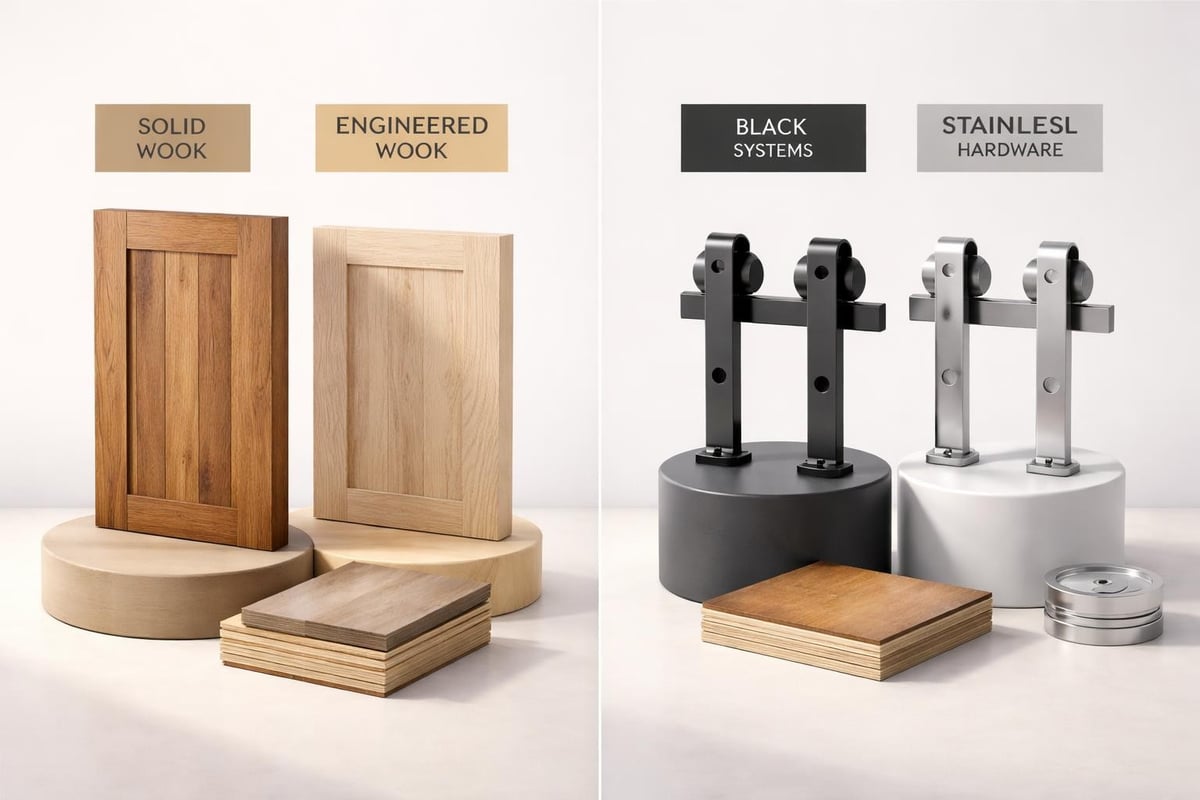
Steel remains the most popular choice for barn door hardware, and for good reason. It offers excellent strength-to-cost ratio and handles daily use without complaint. But not all steel is created equal.
Carbon steel provides the robust industrial look many people love, especially in farmhouse or modern industrial designs. Stainless steel costs more but delivers superior corrosion resistance-essential in bathrooms or humid environments. If you're curious about the trade-offs, this comparison of hardware materials explains the nuances between different metal options.
| Material | Durability | Cost | Best For |
|---|---|---|---|
| Carbon Steel | High | $$ | Interior spaces |
| Stainless Steel | Very High | $$$ | Bathrooms, kitchens |
| Powder-Coated Steel | High | $$ | Color customization |
| Aluminum | Medium | $ | Lightweight doors |
Door Material Considerations
The door itself matters just as much as the hardware. Solid wood doors offer unmatched character and customization options. You can stain them, paint them, or leave them natural. They're also the heaviest option, which brings us back to that weight capacity discussion.
Engineered wood or MDF doors cost less and resist warping better than solid wood, but they lack that authentic feel. For those interested in building their own, this guide on building a sliding door walks through material selection and construction techniques.
Glass doors create stunning visual effects and work beautifully in spaces where you want to maintain light flow. They require specialized hardware with different mounting configurations, so make sure your barn door hardware with door package specifically supports glass if that's your choice.
Installation Considerations for Complete Systems
You've selected your barn door hardware with door package, and now it's sitting in boxes in your garage. Let's talk about what happens next, because proper installation makes the difference between a functional upgrade and an expensive mistake.
Pre-Installation Planning
Before you touch a drill, you need to verify your wall can support the load. Barn doors require solid backing-typically a header board mounted across multiple wall studs. Standard drywall absolutely will not support the weight, regardless of what anchors you use.
I watched a YouTube video last month where someone installed their entire system using drywall anchors alone. Three weeks later, the whole thing crashed down at 2 AM. Don't be that person.
Essential pre-installation checklist:
- Locate wall studs with a reliable stud finder
- Install a header board (usually 1x6 or 2x6) across the full track length
- Verify floor clearance (you need 1/2 to 1 inch gap)
- Check for electrical wiring or plumbing in the wall
- Measure three times before drilling anything
Following Professional Guidelines
Even if you're tackling this as a DIY project, professional installation guides provide invaluable insights. The detailed installation guide from Barn Door Hardware breaks down every step with clear diagrams and troubleshooting tips.
Here's something most guides don't emphasize enough: level matters more than you think. If your track is off by even half a degree, your door will swing open or closed on its own. Take the extra ten minutes to get it perfectly level. Use a quality 6-foot level, not the bubble level app on your phone.
Common Installation Mistakes to Avoid
Let me share the mistakes I see most often when people install barn door hardware with door systems. First on the list? Mounting the track too close to the wall. You need enough clearance for the door to slide without scraping against trim or the door frame.
Spacing becomes especially critical if you're incorporating accessories. For example, soft close mechanisms require specific positioning to function correctly. Install them too close to the wall stops, and they won't engage properly.
- Inadequate wall support - Always use a header board
- Incorrect track positioning - Follow manufacturer spacing requirements
- Skipping the floor guide - This prevents door swing and bottom scraping
- Over-tightening hardware - Can cause binding and premature wear
- Ignoring weight distribution - Uneven loading stresses one side of the track
Selecting the Right Style for Your Space
Now let's get into the fun part-choosing barn door hardware with door combinations that match your design vision. Style isn't just about aesthetics; it's about how the door functions within your specific space.
Traditional Versus Contemporary Designs
Traditional barn door hardware features those classic curved straps and visible hardware elements that celebrate the farmhouse heritage. Think black powder-coated steel with decorative elements that become focal points in your room design.
Contemporary or modern styles lean toward minimalist profiles, sometimes with hidden hardware that emphasizes the door itself rather than the mounting system. Both approaches work beautifully, but they create entirely different visual impacts.

Finish Options and Longevity
Finish selection goes beyond matching your decor. Different finishes offer varying levels of durability and maintenance requirements. Matte black remains the most popular choice for a reason-it hides fingerprints, works with nearly any color scheme, and maintains its appearance for years.
Brushed nickel and oil-rubbed bronze finishes add warmth and work beautifully in transitional spaces. Stainless steel delivers that modern, commercial look while offering maximum corrosion resistance. For comprehensive guidance on avoiding common pitfalls, this article on shopping for barn doors covers ten critical mistakes buyers often make.
Popular finish options in 2026:
- Matte black (most popular, lowest maintenance)
- Brushed stainless steel (modern, corrosion-resistant)
- Oil-rubbed bronze (warm, traditional)
- Brushed nickel (versatile, contemporary)
- Powder-coated custom colors (personalized, durable)
Functional Hardware Additions
When you're investing in barn door hardware with door systems, consider the small additions that dramatically improve functionality. Floor guides prevent the door from swinging and protect your baseboards from damage. Wall-mounted guides work well when floor installation isn't practical.
Privacy latches become essential for bathroom or bedroom doors. You don't want a barn door that can swing open at the wrong moment. Pull handles deserve careful consideration too-they're the component you'll touch every single day, so choose something that feels good in your hand.
Room-Specific Applications and Considerations
Different rooms present unique challenges when installing barn door hardware with door packages. What works perfectly in a master bedroom might fail miserably in a bathroom because of humidity, or in a laundry room because of vibration.
Bathrooms and Moisture Management
Bathrooms test barn door hardware in ways other rooms don't. Steam from showers, humidity fluctuations, and direct water exposure all take their toll on materials. This is where stainless steel hardware earns its premium price tag.
You'll also want to pay extra attention to ventilation. Even the best barn door hardware with door system can't overcome a poorly ventilated bathroom. Make sure your exhaust fan works properly, or you'll see rust, warping, and finish degradation within months.
Bedrooms and Privacy Needs
Here's a reality check about using barn doors for bedrooms: they don't seal like traditional hinged doors. You'll get some light leakage around the edges, and they don't provide the same sound insulation. If complete darkness and silence are essential for your sleep, consider whether a barn door is the right choice.
That said, proper installation with tight wall clearances minimizes these issues. Adding weatherstripping around the edges helps with both light and sound, though it's not a perfect solution. Many people find the trade-off worthwhile for the space-saving benefits and aesthetic appeal.
High-Traffic Commercial Applications
If you're considering barn door hardware with door systems for commercial spaces, you need to level up your specifications. Commercial applications require heavier-duty hardware, more frequent maintenance, and compliance with building codes that don't apply to residential projects.
The technical specifications from Fenestration outline professional-grade barn door systems designed for high-traffic commercial use, which differ significantly from residential hardware in weight capacity and cycle testing.
Maintenance and Long-Term Performance
Your barn door hardware with door investment doesn't end at installation. Proper maintenance ensures smooth operation for years to come, while neglect leads to squeaks, binding, and premature replacement.
Regular Maintenance Schedule
Every three months, take five minutes to inspect your system. Look for loose mounting screws, check that the track is still level, and wipe down the track to remove dust and debris. These simple steps prevent 90% of common problems.
Quarterly maintenance checklist:
- Tighten all mounting hardware
- Clean track with dry cloth
- Inspect rollers for wear
- Test floor guide positioning
- Check door alignment
Annually, you should deep clean the entire system and lubricate moving parts. Use a silicone-based lubricant on rollers and track-never oil-based products, which attract dust and create sticky buildup. If you notice any worn components, replacement rollers are readily available and easy to swap out.
Troubleshooting Common Issues
When your door starts acting up, the problem usually falls into one of three categories: alignment, hardware wear, or installation issues. A door that's suddenly difficult to slide often means dirt in the track or dried-out rollers. A door that swings open means your floor guide has shifted or your track isn't level.
Squeaking sounds drive people crazy, but they're usually the easiest fix. Clean the track thoroughly, lubricate the rollers, and tighten any loose hardware. If the noise persists, you might have a bent track section or damaged roller that needs replacement.
| Problem | Likely Cause | Quick Fix |
|---|---|---|
| Door drags | Dirty track | Clean and lubricate |
| Door swings | Unlevel track | Adjust mounting |
| Squeaking | Dry rollers | Apply lubricant |
| Loose mounting | Settling | Tighten hardware |
When to Upgrade Components
Sometimes maintenance isn't enough, and you need to upgrade components. Maybe you've replaced your lightweight hollow-core door with a solid wood option that exceeds your original hardware's weight rating. Or perhaps your kids have been using the door a little too enthusiastically for the past few years.
Upgrading individual components is often more cost-effective than replacing the entire system. Heavier-duty rollers, reinforced track, or upgraded mounting hardware can extend your system's life indefinitely. For more interior design ideas incorporating barn doors, check out these interior barn door applications that showcase different implementation strategies.
Cost Analysis and Budget Planning
Let's talk money. Shopping for barn door hardware with door packages requires understanding not just the upfront costs, but the total investment including installation, accessories, and long-term value.
Initial Investment Breakdown
A quality barn door hardware with door package typically ranges from $500 to $1,200 for residential applications. This includes the track, rollers, mounting hardware, and door slab. Premium options with specialty finishes or heavy-duty components push into the $1,500-2,000 range.
Budget packages exist in the $300-400 range, but I'll be honest with you-they're usually worth exactly what you pay. Thin tracks, plastic rollers, and hollow-core doors might work for a closet in a guest room, but they won't hold up to daily use in your main living areas.
Typical cost breakdown:
- Hardware kit (track, rollers, mounting): $200-600
- Door slab: $200-500
- Handles and accessories: $50-150
- Installation materials: $30-75
- Professional installation (optional): $200-400
Comparing DIY Versus Professional Installation
Here's where you need to be honest with yourself about your skill level. Installing barn door hardware with door systems isn't rocket science, but it's not beginner-level carpentry either. You need basic tools, the ability to find studs reliably, and confidence working with levels and drills.
Professional installation costs $200-400 for a standard setup but includes warranty coverage and guaranteed proper function. If you're not comfortable drilling multiple holes into your walls or mounting heavy hardware, that's money well spent. Masonite's installation guide provides a realistic overview of what DIY installation involves.
I've seen people save the installation fee only to end up paying twice that to fix mistakes. On the other hand, I've also watched confident DIYers install beautiful systems in an afternoon. Know your capabilities.
Long-Term Value Considerations
Quality barn door hardware with door systems add genuine value to your home. Real estate agents consistently report that well-executed barn doors attract buyer interest and can contribute to faster sales. They're particularly appealing in urban markets where space optimization matters.
But value goes beyond resale. A barn door that operates smoothly for ten years with minimal maintenance delivers far better value than a cheap system that needs replacement after three years. Calculate cost-per-year rather than just looking at the initial price tag.
Making Your Final Selection
You've absorbed a lot of information, so let's bring it all together. Choosing the right barn door hardware with door package comes down to matching your specific needs with appropriate specifications and quality levels.
Creating Your Requirements List
Start by documenting exactly what you need. Measure your opening, determine your door dimensions, calculate weight capacity requirements, and establish your budget range. Write it all down-trying to keep these details in your head leads to mistakes.
Consider your skill level for installation. Factor in your room's specific conditions like humidity or high traffic. Think about how long you plan to stay in your home and how much use this door will get. All these factors influence which barn door hardware with door package makes sense for your situation.
Questions to Ask Before Buying
Before you click "purchase" or head to checkout, verify a few critical points. Does this hardware support your door's weight? Is the track length appropriate for your opening? Are all necessary components included, or do you need to buy accessories separately?
Check the warranty coverage. Quality manufacturers stand behind their products with substantial warranties. The Barn Door Hardware Store offers a limited lifetime warranty on their products, which reflects the confidence that comes from eight years of family-owned operation and thousands of successful installations.
Pre-purchase verification checklist:
- Weight capacity matches or exceeds door weight
- Track length accommodates full door travel
- Hardware thickness range fits your door
- All mounting hardware included
- Warranty coverage clearly stated
- Return policy understood
Installation Resources and Support
Don't underestimate the value of quality installation support. Comprehensive installation guides with clear diagrams make a significant difference in achieving professional results. Video tutorials help visualize steps that might seem confusing in written instructions.
Expert support when you hit snags matters too. Some manufacturers leave you on your own after purchase, while others provide installation support to ensure success. For complex installations or if you want professional guidance, we offer detailed specifications that help contractors and serious DIYers alike.
Choosing the right barn door hardware with door package transforms your space while adding lasting value and functionality to your home. Whether you're updating a single room or tackling a whole-house renovation, matching quality hardware with the appropriate door creates a system that operates smoothly for years with minimal maintenance. Since 2016, The Barn Door Hardware Store has helped thousands of homeowners and contractors find the perfect barn door solutions, backed by expert support, free shipping across the continental US, and a limited lifetime warranty that ensures your investment is protected.
