
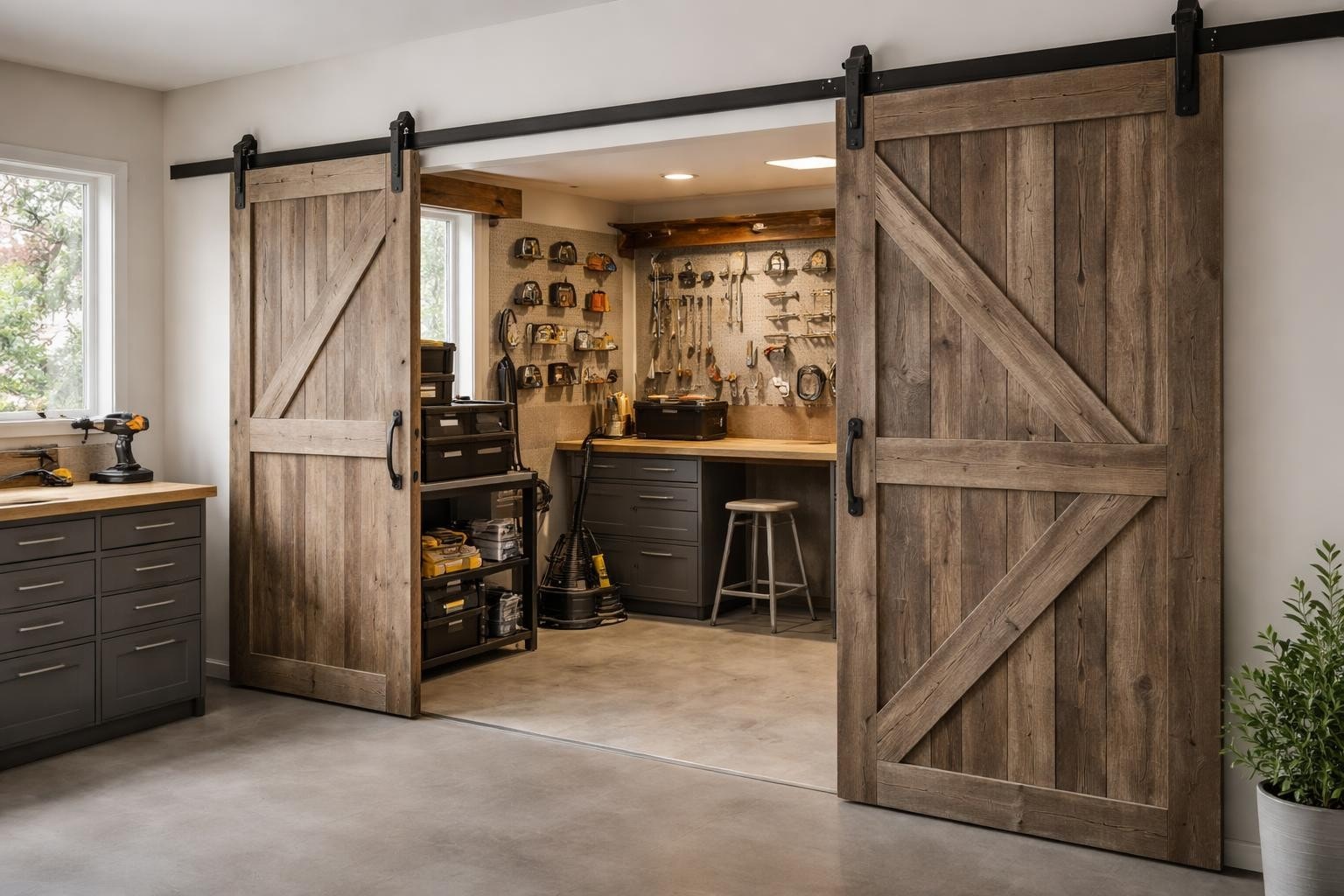
Ever stood in your garage wondering how to better organize that cluttered mess while adding a touch of character? You're not alone. Sliding barn doors for garage spaces have become a game-changer for homeowners looking to maximize functionality without sacrificing style. Whether you're creating a workshop partition, enclosing storage areas, or simply replacing those cumbersome swing-out doors, this sliding solution offers versatility that traditional garage doors can't match. Let me walk you through everything you need to know about transforming your garage with barn door hardware.
Why Sliding Barn Doors Work Perfectly in Garage Spaces
Think about the typical garage layout for a moment. You've got cars, tools, bikes, seasonal decorations, and probably a workbench crammed into a space that never quite feels big enough. Traditional hinged doors eat up valuable floor space with their swing radius, making it nearly impossible to position shelving or equipment nearby.
That's where sliding barn doors for garage applications shine. They glide parallel to the wall, reclaiming every square foot of floor space. I recently helped my neighbor, Tom, install sliding doors to separate his woodworking area from his car parking zone. The transformation was remarkable-he gained back almost 20 square feet just by eliminating the door swing area.
Space Efficiency That Makes Sense
Here's what you gain with a sliding system:
- Zero swing radius needed for door operation
- Wall-mounted tracks keep floors clear for equipment
- Customizable widths to cover openings of any size
- Easy one-handed operation even when carrying tools or materials
- Durability designed for frequent daily use
The specifications outlined by Hager Companies demonstrate how proper sliding barn door hardware can support substantial weight while maintaining smooth operation over years of use.
Choosing the Right Hardware for Garage Applications
Not all barn door hardware is created equal, especially when it comes to garage environments. You're dealing with temperature fluctuations, humidity changes, dust, and potentially heavier doors than you'd use indoors. I learned this the hard way when I first installed lightweight hardware on a heavy plywood door-it sagged within weeks.
Weight Capacity Matters
Your garage doors need to handle serious weight. Most garage applications use doors constructed from:
- 3/4" plywood or solid wood
- Metal panels for industrial looks
- Composite materials for weather resistance
- Reclaimed barn wood for authentic character
| Door Material | Typical Weight | Recommended Hardware Rating |
|---|---|---|
| 3/4" Plywood (3'x7') | 60-80 lbs | 200 lb capacity minimum |
| Solid Wood (3'x7') | 90-120 lbs | 250 lb capacity minimum |
| Metal Panel (3'x7') | 70-100 lbs | 200 lb capacity minimum |
| Reclaimed Wood (3'x7') | 100-150 lbs | 300 lb capacity minimum |
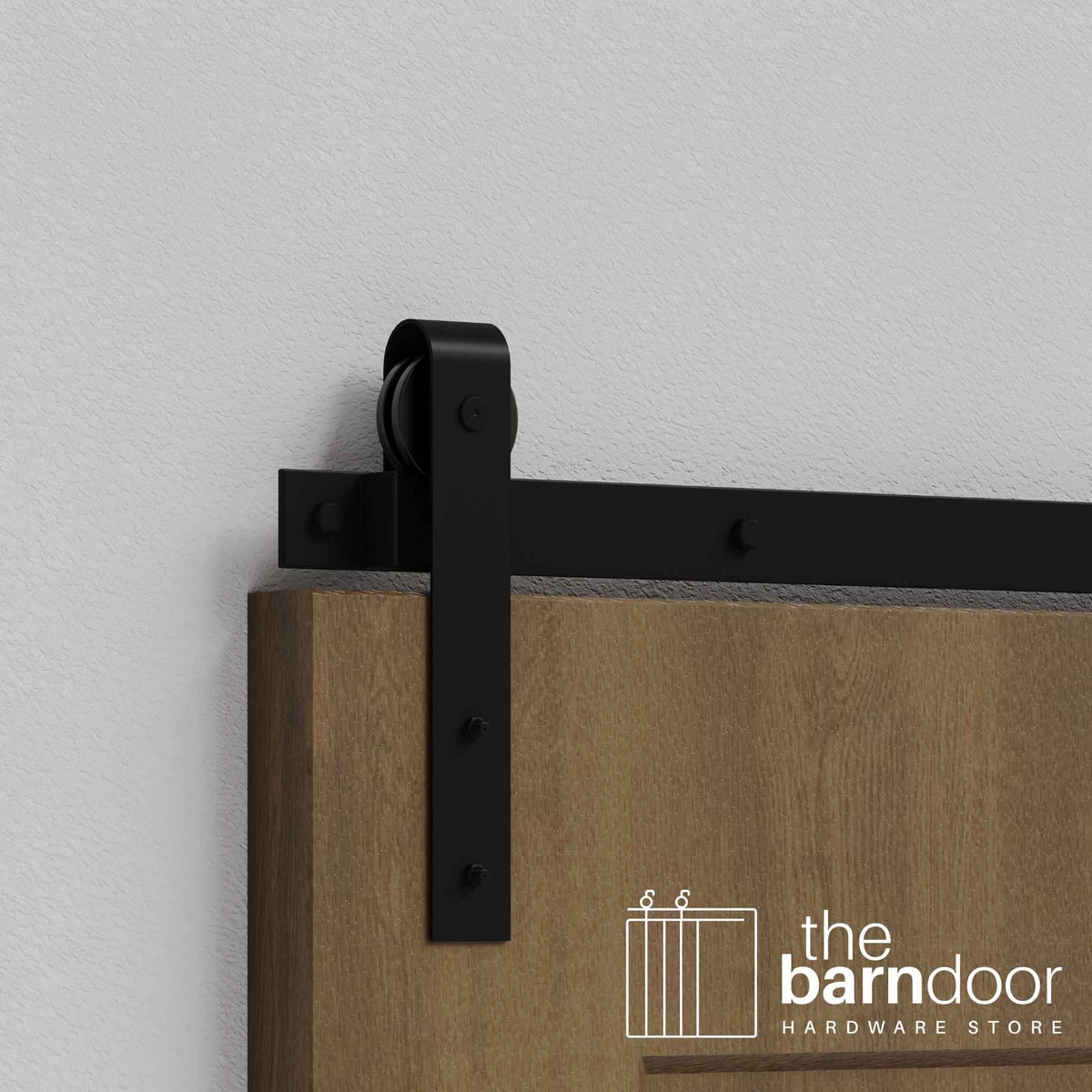
The Classic J-Strap Barn Door Hardware Kit delivers the reliability you need with its 200-pound weight capacity and traditional curved design. Built with American-made quality, this system handles the daily demands of garage use while maintaining that classic farmhouse aesthetic that works equally well in rustic or contemporary garage spaces.
Track Length and Configuration
Measure twice, order once. For sliding barn doors for garage installations, you'll need a track that extends beyond your opening width. The standard rule is to add at least the door width to your opening measurement.
For a 4-foot opening:
- Opening width: 48 inches
- Door width: 48 inches (for full coverage)
- Track length needed: 96 inches minimum
This allows the door to slide completely clear of the opening. Some installers prefer even longer tracks to create a more dramatic slide-back effect.
Installation Considerations for Garage Environments
Your garage presents unique challenges that your living room doesn't face. Temperature swings from winter cold to summer heat cause materials to expand and contract. Concrete dust settles on everything. And let's be honest-garages take more abuse than any other room in your house.
Wall Structure and Mounting
Here's where many DIYers hit their first roadblock. Garage walls vary dramatically:
Finished drywall over studs - Standard installation using lag bolts into studs works perfectly. Locate studs with a quality stud finder and mark every 16 or 24 inches.
Exposed studs - Even easier. You can mount directly to the framing without worrying about surface damage.
Concrete block or brick - Requires concrete anchors and more patience. Pre-drill with a masonry bit and use heavy-duty anchors rated for your door weight.
Metal walls - Common in detached garages or shops. Use self-tapping screws or through-bolts with backing plates.
The comprehensive barn door systems from Architectural Concepts provide detailed guidance for various mounting scenarios, ensuring your installation stays secure regardless of wall type.
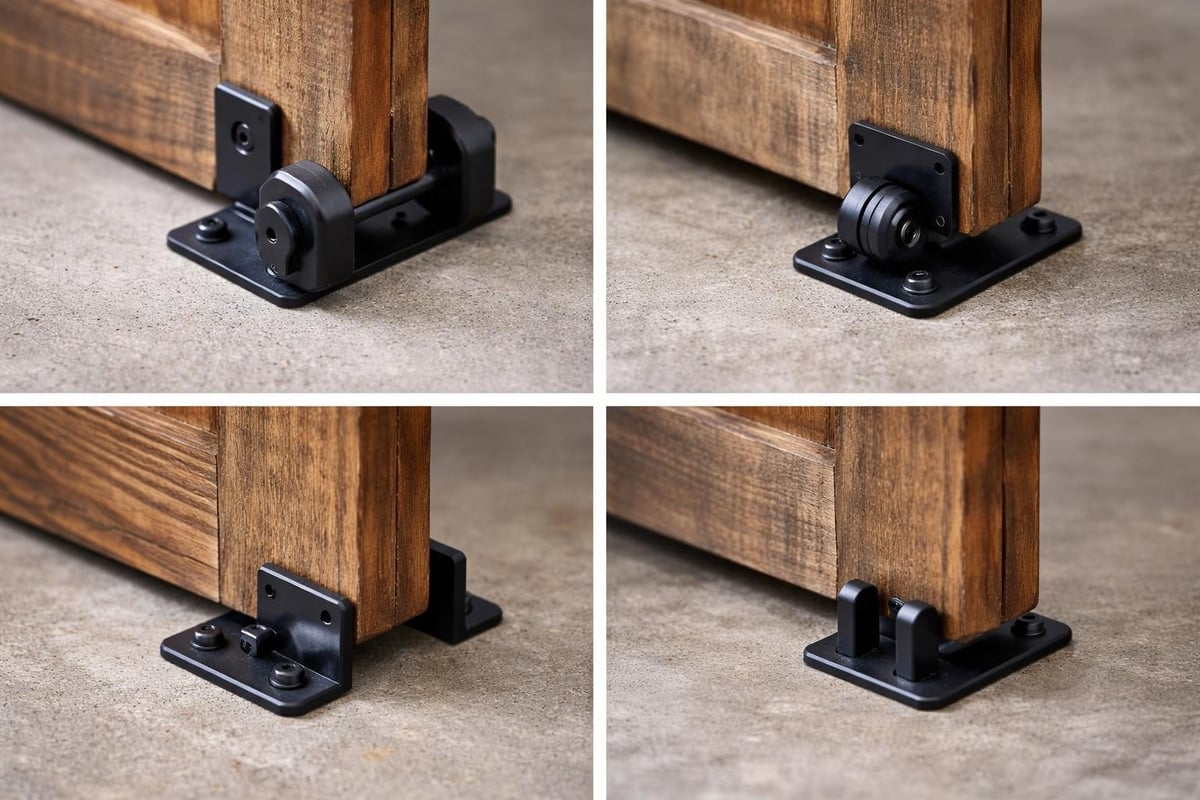
Floor Guide Systems
Ever watched a barn door swing wildly at the bottom? That's a missing or inadequate floor guide. In garage applications, floor guides are absolutely essential. They prevent the door from swaying when you close it forcefully (which happens more often in garages than anywhere else).
Choose between:
- Recessed floor guides that mount flush with the floor
- Surface-mounted guides for concrete slabs where cutting isn't feasible
- Adjustable guides that accommodate floor irregularities
Browse the complete selection of floor guides to find the right solution for your concrete, epoxy-coated, or rubber-matted garage floor.
Practical Applications: Real Garage Transformations
Let me share some real-world examples that might spark ideas for your own space.
Workshop Separation
Sarah, a furniture maker in Portland, needed to separate her finishing area from her cutting station. Sawdust and wet stain don't mix well. She installed two sliding barn doors for garage workshop division, creating a dust barrier while maintaining easy access between zones. The 8-foot-wide opening would have required massive hinged doors, but her sliding setup glides effortlessly on heavy-duty hardware rated for industrial use.
Climate-Controlled Storage
In Minnesota, where winter temperatures plummet, homeowners often create insulated storage rooms within their garages. Mike used sliding barn doors for garage storage enclosures, adding weather stripping to the door edges. His holiday decorations and paint supplies now stay protected from freezing temperatures without requiring a complete room build-out.
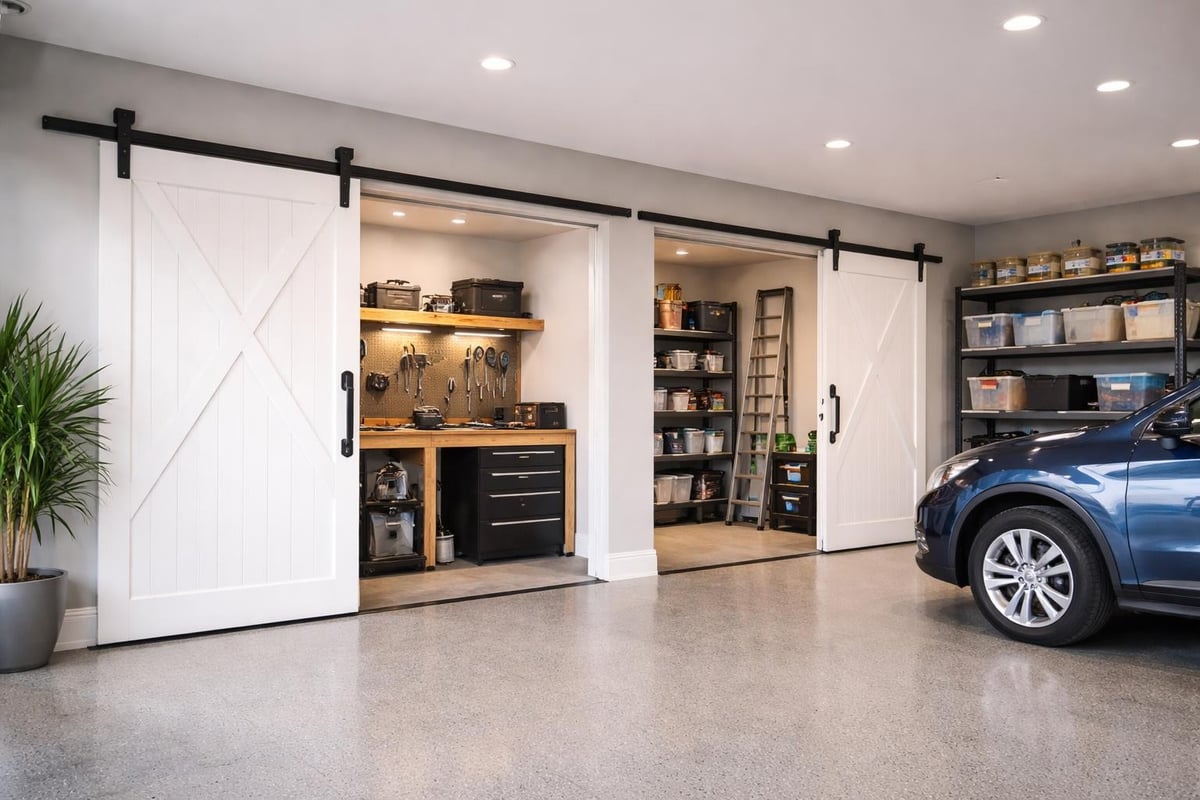
Multi-Bay Organization
Three-car garages offer incredible potential for customization. By installing sliding doors to create separate bays, you can designate specific areas for:
- Vehicle parking
- Workshop and tools
- Sports equipment and seasonal gear
- Home gym or hobby space
The bypass door configurations work beautifully for creating overlapping door panels that cover wide openings while maintaining a compact footprint.
Design Styles That Work in Garage Settings
You might think barn doors only work in rustic settings, but that couldn't be further from the truth. Modern garages embrace various aesthetic approaches.
Industrial Modern
Clean lines, metal finishes, and minimal decoration define this look. Powder-coated black or brushed steel hardware complements metal doors or dark-stained wood. The track becomes a design element rather than something to hide.
Traditional Farmhouse
Classic wood construction with visible hardware creates that authentic barn feel. X-brace patterns, vertical planking, and natural wood finishes bring warmth to an otherwise utilitarian space. This style pairs perfectly with exposed ceiling beams and vintage lighting.
Contemporary Minimalist
Concealed hardware systems offer the sliding functionality without visible tracks and rollers. Smooth panel doors in neutral colors slide seamlessly, creating a clean, uncluttered appearance. The hidden roller systems deliver this streamlined aesthetic while maintaining full functionality.
Western Rustic
Reclaimed wood, iron hardware, and weathered finishes transport your garage back to frontier days. This style works especially well in rural settings or for homeowners who want their workshop to feel like a traditional blacksmith shop.
| Style | Best Door Material | Hardware Finish | Typical Application |
|---|---|---|---|
| Industrial Modern | Metal, dark wood | Black, steel | Urban homes, modern builds |
| Traditional Farmhouse | Natural wood, painted | Oil-rubbed bronze | Rural properties, traditional homes |
| Contemporary Minimalist | Smooth panels | Brushed nickel, hidden | Suburban garages, clean aesthetics |
| Western Rustic | Reclaimed wood | Antique iron, black | Ranch properties, hobby workshops |
Maintenance Requirements for Long-Term Performance
Unlike interior applications, sliding barn doors for garage use face harsher conditions. A little preventive maintenance goes a long way toward keeping everything running smoothly.
Quarterly Maintenance Tasks
Every three months, spend 15 minutes on these simple tasks:
- Clean the track with a shop vacuum to remove dust and debris
- Wipe down rollers with a dry cloth to prevent buildup
- Check all mounting bolts to ensure they remain tight
- Test door alignment by watching it slide across the full opening
Annual Deep Maintenance
Once a year, perform a more thorough inspection:
- Remove the door from the track
- Clean the track thoroughly with degreaser if needed
- Inspect roller bearings for wear or damage
- Lubricate moving parts with appropriate lubricant
- Check weather stripping and replace if deteriorated
- Tighten all hardware connections
The detailed maintenance guidance from Vallisco offers specific recommendations for keeping your system operating like new for decades.
Safety Features and Code Compliance
Your garage doors need to function safely, especially if children or pets access the space. While sliding barn doors for garage applications don't typically fall under the same strict regulations as motorized overhead garage doors, they still require thoughtful safety planning.
Finger-Safe Design
The gap between the door and wall can pinch fingers. Consider these solutions:
- Soft-close mechanisms that slow the door before contact
- Rubber bumpers at the end of the track
- Handles and pulls positioned to guide hand placement away from pinch points
- Clear signage for young children about safe door operation
Proper Clearance
Building codes generally require adequate clearance for emergency egress. If your sliding barn door blocks a required exit, you'll need to ensure it can be quickly moved or consider alternative configurations. The applications and compliance standards from Horton Automatics provide helpful context for various installation scenarios.
Locking and Security
Garages often house valuable tools and equipment. Standard locks and latches designed for barn doors provide adequate security for internal garage partitions. For doors providing exterior access, consider heavy-duty deadbolt-style locks that secure the door to the wall framing.
Cost Considerations and Budget Planning
Let's talk money. Sliding barn doors for garage installations vary widely in cost depending on your choices.
Hardware Investment
Quality hardware is your foundation. Expect to invest:
- Basic kits for lightweight doors: $150-$300
- Standard residential kits for typical garage doors: $300-$500
- Heavy-duty commercial-grade systems: $500-$1,000+
- Custom configurations for unique openings: $800-$2,000+
Don't skimp here. Cheap hardware fails quickly under garage conditions, and reinstalling everything costs far more than buying quality components initially.
Door Construction Costs
You can build your own door or purchase pre-made options:
DIY Door Construction:
- Materials (wood, hardware, finish): $100-$400
- Time investment: 8-16 hours
- Skill level required: Intermediate woodworking
Pre-Made Doors:
- Stock sizes: $300-$800
- Custom dimensions: $800-$2,000
- Premium materials or finishes: $2,000-$4,000
Installation Expenses
Installing sliding barn doors for garage use is straightforward for experienced DIYers. If you're hiring out:
- Basic installation (standard walls, simple configuration): $200-$400
- Complex installation (masonry walls, multiple doors): $400-$800
- Custom fabrication and installation: $1,000-$3,000
Customization Options to Match Your Needs
Your garage is unique, and your door system should reflect that. The beauty of barn door systems lies in their adaptability.
Door Panel Customization
Express your personality through custom panel designs:
- Window inserts for natural light without sacrificing privacy
- Metal mesh panels for ventilation in workshop areas
- Chalkboard paint for project planning and notes
- Custom millwork matching your home's architectural details
- Two-tone finishes creating visual interest
Hardware Finish Options
The various finishes available in hardware kits let you coordinate with existing garage features. Match your hardware finish to garage door handles, light fixtures, or shelving brackets for a cohesive look.
Track Configurations
Standard single-track systems work for most applications, but consider these alternatives:
- Bypass configurations for overlapping doors covering wide openings
- Bifold systems for space-constrained installations
- Ceiling-mounted tracks to maximize wall space
- Double-track systems for passing doors that stack
The bypass hardware options prove particularly useful in three-car garages where multiple doors need independent operation.
Environmental Considerations for Garage Doors
Your garage experiences temperature and humidity swings that interior spaces don't face. Choose materials and finishes that withstand these challenges.
Material Selection for Climate Resilience
Wood doors require proper sealing to prevent warping:
- Apply exterior-grade finish to all surfaces
- Seal end grain thoroughly
- Consider marine-grade varnish in humid climates
- Reapply finish every 2-3 years
Metal doors resist moisture but can rust:
- Choose powder-coated or galvanized materials
- Inspect for scratches that expose bare metal
- Touch up damage immediately with appropriate paint
- Consider stainless steel in coastal areas
Composite materials offer excellent durability:
- Resistant to moisture and temperature changes
- Won't warp, crack, or split like wood
- Lower maintenance requirements
- Often more expensive initially but cost-effective long-term
Insulation and Temperature Control
If your garage serves as a workshop, temperature control matters. Sliding barn doors for garage workshops can incorporate insulation:
- Rigid foam core between door panels
- Weather stripping along all edges
- Threshold seals at the floor
- Magnetic seals for improved closure
Remember that even insulated sliding doors won't seal as tightly as traditional hinged doors with compression seals. For critical climate control, consider supplemental heating or cooling in your workshop area.
Common Mistakes to Avoid
I've seen plenty of barn door installations go sideways. Learn from these common errors:
Insufficient Track Length
Installing a track that's too short means your door can't fully clear the opening. Always follow the "opening width plus door width" rule minimum. Better yet, add an extra 6-12 inches for visual appeal and complete clearance.
Weak Mounting Points
Mounting into drywall alone leads to eventual failure. Every bracket must anchor into solid framing. Use lag bolts of appropriate length-typically 3-4 inches to penetrate studs adequately.
Ignoring Floor Level
Garages rarely have perfectly level floors. An unlevel floor causes your door to roll to one side. Use shims behind track brackets to ensure the track runs perfectly level, regardless of floor slope.
Wrong Roller Selection
Standard rollers designed for interior doors may not handle garage conditions. Look for sealed bearing systems that resist dust intrusion. The quality rollers from American-made systems deliver the reliability garage applications demand.
Overlooking Door Clearance
Doors need clearance behind them as they slide. Account for:
- Wall texture and protrusions
- Light switches and outlets
- Shelving or storage units
- HVAC vents or electrical boxes
Plan for at least 2 inches of clearance between the door back and any wall obstruction.
Integration with Smart Home Systems
Modern garages increasingly incorporate technology. While sliding barn doors for garage use don't typically require automation like overhead doors, smart features can enhance functionality.
Motorization Options
For extra-heavy doors or accessibility needs, motorized operators exist:
- Linear actuators that push/pull the door along the track
- Motorized trolleys that ride the track pulling the door
- Smart home integration allowing voice or app control
- Automatic closing with adjustable timers
Security Integration
Connect your barn door to your home security system:
- Magnetic sensors detecting open/closed status
- Motion sensors triggering alerts
- Security cameras monitoring door access
- Smart locks controllable remotely
These features work particularly well for detached garages or workshop spaces with valuable equipment.
Future Trends in Garage Door Design
The barn door market continues evolving. Here's what's emerging:
Sustainable Materials
Reclaimed and recycled materials are gaining popularity. Barn wood from demolished structures, recycled metal panels, and sustainably harvested lumber appeal to environmentally conscious homeowners.
Multi-Functional Designs
Doors that incorporate storage, fold-down work surfaces, or integrated tool racks maximize garage utility. Imagine a sliding door with magnetic tool holders or pegboard panels that moves with the door.
Advanced Finishes
UV-resistant coatings, antimicrobial surfaces, and ultra-durable powder coating technologies extend door life in challenging garage environments.
Modular Systems
Increasingly, manufacturers offer modular components allowing easy customization and future modifications. Need to change your door configuration? Swap components rather than starting over.
The modern hardware options available today demonstrate how far the industry has come from simple agricultural sliding doors.
Making Your Decision
Choosing sliding barn doors for garage applications ultimately depends on your specific needs, budget, and design preferences. Consider these final questions:
What's your primary goal?
- Space savings?
- Visual appeal?
- Functional separation?
- Workshop organization?
What's your skill level?
- Confident DIYer who can handle the installation?
- Prefer professional installation?
- Somewhere in between with specific tasks hired out?
What's your timeline?
- Immediate need or long-term planning?
- Ability to stage the project in phases?
- Weekend project or extended renovation?
What's your budget?
- All-in immediate investment?
- Start basic and upgrade over time?
- Balance between quality and cost?
Your honest answers guide you toward the right system for your situation. There's no single perfect solution-only the solution that works best for your garage, your budget, and your lifestyle.
Sliding barn doors for garage spaces offer a practical, attractive solution for organizing and enhancing your most hardworking room. Whether you're building out a workshop, creating storage zones, or simply adding character to a utilitarian space, the right hardware makes all the difference. Since 2016, The Barn Door Hardware Store has helped thousands of homeowners transform their garages with quality hardware systems backed by expert support and a limited lifetime warranty. Ready to reclaim your garage space? Explore their complete selection of barn door solutions with free shipping across the continental US.
